Showing posts with label Sewell. Show all posts

Thursday, July 26, 2012

The Case for Impeaching Federal Judge Mark Fuller

Suppose that you were having to sue someone. A car wreck, perhaps; or maybe you needed them evicted from the house you were renting them. You know you’re in the right, and you go to the courthouse on the day of the trial, confident that, with the facts and the law both on your side, the judge will render a proper judgment in your favor.

Then, when you lose the case, you are dumbfounded. You file an appeal, but you can’t figure out how you could have lost.
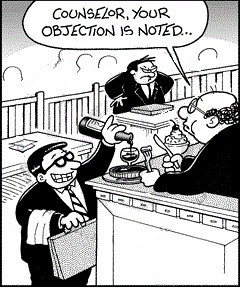
Only after the trial, while the appeals court is considering your case, do you find out that the judge who ruled against you has extensive business dealings with the party you were suing in front of him. Not only that, your opponent’s lawyer also represents your opponent in his business dealings with the judge.

If you picture yourself being outraged, then you have a pretty good idea how former Governor Don Siegelman felt about his 2006 kangaroo-court conviction before George W. Bush-appointed U.S. District Court Judge Mark Fuller.


At every turn of Siegelman’s trial, Fuller improperly ruled against Siegelman and co-defendant Richard Scrushy, and for the prosecution. He failed to take action when the Government failed to disclose evidence favorable to Siegelman, as he should have done under the rule of Brady v. Maryland, 373 U.S. 83 (1963). He silenced Siegelman’s
attorneys from making relevant and legal arguments to the jury. He let charges go to the jury which were later ruled improper by the U.S. Supreme Court. Not only that, Fuller failed to notify defense attorneys that a female juror, by the name of Katie Langer, had been passing notes through Judge Fuller’s bailiff, asking if the FBI agent sitting at the prosecution table was single. I can’t imagine how her not wanting Mr. Potential FBI Dream Date to be angry about an acquittal could have influenced her vote on the jury. (“In a criminal case, any private communication, contact, or tampering directly or indirectly, with a juror during a trial  is ... deemed presumptively prejudicial, United States v. Khanani, 502 F.3d 1281, 1291 (11th Cir. 2007)).


Fuller’s conduct in the trial (I have only named a handful of his pro-Government rulings) gave Siegelman’s attorneys lots of ammunition in his partially-successful appeal, and is doubtless going to provide them more fodder in the § 2255 proceeding that is likely going to be filed, now that the direct appeals are playing out.


But what do those violations of Siegelman’s rights have to do with the hypothetical case I described in the first paragraphs? To understand that, you have to know a little something about Judge Fuller. Even while serving as a district attorney for several years before being appointed a federal judge, Fuller found time to be a full-time businessman. His extensive business activity did not miss a beat when he took the presumably full-time job of federal judge.


Fuller was for years, including during the Siegelman trial, a principal of Doss Aviation, Inc.; some reports made him a 43% owner.¹ He was listed on corporate reports as the company’s CEO, even after becoming a federal judge. Doss Aviation’s 2002 Annual Report on file with the Alabama Secretary of State² shows Fuller as the corporate president, with his office listed as 1 Church Street in Montgomery. That just happens to be the United States Courthouse, where Fuller’s court sits.³ In his 2010 financial disclosure form as a federal judge, Fuller valued his interest in Doss at between $5,000,000.00 and $25,000,000.00; with an additional $500,000.00 t0 $1,000,000.00 in the affiliated Doss of Alabama, Inc. That’s enough coin to get even Mitt Romney’s attention.

So what does Doss Aviation do? I will let the homepage of its website speak to that: 
Founded in 1970, Doss Aviation, Inc. enjoys over 40 years [sic] experience in supporting the U.S. Government in flight training, aircraft maintenance, maintenance training, into-plane aircraft fuels and bulk fuels management, transient aircraft support services, air traffic control, and other airfield management/logistics services. The company built an enviable reputation in over 50 contracts performing a variety of services for the U.S. Army, U.S. Navy, U.S. Air Force, Defense Logistics Agency - Energy (DLA-E), NASA, FBI, and Department of Homeland Security.
In other words, Doss Aviation is extremely, if not exclusively, dependent on government contracts, many of them no-bid, that can disappear if the Air Force - or the administration in power - decides it isn’t happy with, say, the rulings of a leading shareholder. (Remember, at the time of the Siegelman trial, the administration was Republican.) The conflict of interest is obvious to even a layman. Despite this, Fuller has, throughout his career as a federal judge, regularly decided cases involving the Air Force.  A summary of the reported cases follows:
  • Webster v. Wynne, 2010 WL 5394752 (M.D. Ala. 2010). Civil employee of the Air Force alleged employment discrimination against the Air Force. Summary judgment granted to Air Force. 
  • United States v. 22.58 Acres of Land, 2010 WL 431254 (M.D. Ala. 2010). Action seeking condemnation of certain real property located in Montgomery County at the request of the Air Force. Landowner’s motion to dismiss denied.
  • OSI, Inc. v. United States, 510 F.Supp.2d 531 (M.D. Ala. 2007). Owner of property adjoining Air Force base sued United States government and officials, stemming from alleged dumping of Air Force hazardous wastes into landfill on property. Summary judgment granted to Air Force.
  • Waid v. United States, 2006 WL 1766808 (M.D. Ala. 2006). Driver of automobile injured in accident with Air Force vehicle sued for injuries. Claim against Air Force dismissed.
  • Keel v. U.S. Dept. of Air Force, 256 F.Supp.2d 1269 (M.D. Ala. 2003). Plaintiff, a white male, claimed that defendants terminated him on the basis of his race and sex in violation of Title VII, and retaliated against him by barring his access to Air Force base. Summary judgment entered for Air Force.
In another questionable case where the Air Force was not a party, Houston v. Army Fleet Services, L.L.C., 509 F.Supp.2d 1033 (M.D. Ala. 2007), Fuller denied summary judgment to an employment discrimination defendant - which is a competitor of Fuller’s company. I did not find one reported opinion in which Fuller was the judge, in which the Air Force lost the case.


The legal standard for a judge to recuse himself is simple, straightforward, and clearly reaches Fuller:
Any justice, judge, or magistrate judge of the United States shall disqualify himself in any proceeding in which his impartiality might reasonably be questioned. 28 U.S.C. § 455(a). 
What person wouldn’t reasonably question the impartiality of a judge whose (at least) $5,000,000.00 investment could become worthless overnight if one of the parties is unhappy with his rulings? Yet, even after Siegelman’s and Scrushy’s attorneys learned of the Doss Aviation link (after the trial), Fuller repeatedly refused to recuse himself.

You don’t have to take my word that there was a clear ethical mandate for recusal. Judicial ethics expert, and Georgetown University Law Center Professor, David Luban had this to say:
This one is a politically charged case involving a former governor in which political leaders in Washington, D.C., who ultimately exercise tremendous control over the process of military procurement contracts, are likely to take great interest. Given the amount of money Judge Fuller’s company gets from government contracts, any reasonable person would question how impartial he could be. He should not have taken this case, and with a recusal motion made, he had no option but to drop out.
So, we have established that Mark Fuller is an unethical
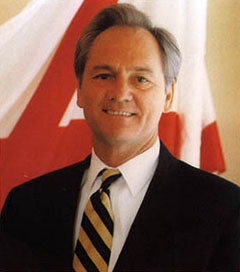
sleaze who flaunts his legal duty to recuse himself. Sadly, it doesn’t end there. In Don Siegelman’s case, there is an added Doss Aviation issue. One of the prosecutors at the table in the Siegelman trial was Assistant U.S. Attorney Stephen Feaga. Feaga’s smiling face may be seen in the photograph to the right. What’s that, you say? Feaga doesn’t look like a federal prosecutor? He looks like some sort of Air Force officer?? Well, that’s because he was an Air Force officer (he retired in 2011) - of the weekend warrior reserve variety. But not just of any sort; he was a Colonel in the Judge Advocate General Corps - the Air Force’s legal arm. And at the time of the Siegelman trial, he was in a unit that reviewed, and had to approve, Doss Aviation contracts.


In the words of a Great American, Whoa, Nellie!” 

Put aside the fact that Mark Fuller was appointed as a judge because of his Republican activism, and a Siegelman conviction was a Republican political priority. As Fuller presided over Siegelman’s trial, he knew that the George W. Bush administration could wipe out $5,000,000.00 (or more) of his personal wealth if it was unhappy with his rulings. But he also knew that one of the prosecuting attorneys probably could, too. Only Choctaw Bob Riley or Dick Cheney would deny that Fuller’s impartiality might reasonably be questioned.

If any member of Congress needs further reason to impeach Fuller, the hapless part-time judge is more than willing to provide it. It seems that, if the United States Congress and the Judicial Council of the Eleventh Circuit haven’t had enough of Mark Fuller, his wife, Lisa Boyd Fuller, has. In April, she filed for divorce after 30 years of marriage. While Mark Fuller’s lawyers promptly got the divorce file sealed, what emerged before then was serious enough to merit the investigation of any federal judge. Discovery requests served on Mark Fuller covered such judicially unbecoming topics as prescription drug addiction, driving under the influence, an extramarital affair with a Court employee whom he supervises, and domestic violence. Normally, such accusations are best viewed with a gimlet eye in a divorce case. But Ms. Fuller’s lawyers have listed the pharmacies whose records they want to subpoena, and the very number of different pharmacies sends up Limbaugh-like addiction warnings. There’s every reason to believe Ms. Fuller will settle the divorce case for a large chunk of Mark Fuller’s wealth before lots of judicial mud is made public, and it’s hard to blame her. But that doesn’t mean she can’t - or shouldn’t - be interviewed, and subpoenaed if necessary, by Congressional investigators.

As regular readers of my posts know, I always strive to provide them with some positive action to take. In this case, that action involves getting Congressional investigators talking to Lisa Fuller, and otherwise looking into Mark Fuller, and the Siegelman case generally. If this is going to happen, we are going to have to be the squeaky wheel that demands its grease. His Majesty, Barack the Appeaser I, has shown that his administration has its collective head inserted all the way to its collective hepatic flexure on any matter of interest to the Alabama Democratic Party. What I propose is that we do what we can to garner the attention of Democratic members of Congress who might be willing to do the right thing. I urge Alabama Democrats to contact the following members of Congress by the means indicated:

  • Congressman John Conyers (D-Michigan). Conyers is the ranking Democrat on the House Judiciary Committee, which would have jurisdiction over any impeachment or investigative proceedings regarding Fuller or the Siegelman case. You can leave a message on his office website here.
  • Congressman  Steve Cohen (D-Tennessee). Our neighbor from Memphis, Cohen is a lawyer, and has never worried about stepping on GOP toes. He is also on the House Judiciary Committee. You can leave a message on his website here.
  • Senator Pat Leahy (D-Vermont). Leahy is the chair of the Senate Judiciary Committee, which has the corresponding jurisdiction in the Senate. He is a former prosecutor, so he’ll get his head around the issues in a heartbeat. You can leave a message on his Senate website here.
  • Senator Amy Klobuchar (D-Minnesota). She is not only on the Senate Judiciary Committee, she chairs the Subcommittee on Administrative Oversight and the Courts, which would have primary jurisdiction at the subcommittee level. You can reach Senator Klobuchar on her office website here.
  • Senator Bernie Sanders (I-Vermont). Although an independent, Sanders caucuses with the Democrats. He is also the most willing member of the Senate to call out Republicans on issues of greed, injustice, and corruption. Because of his state relationship with Leahy, his support could be invaluable. You can message Senator Sanders on his office website here.
  • Senator Al Franken (D-Minnesota). We all know how courageous and outspoken Franken is. He is one of the few non-lawyers on the Senate Judiciary Committee. You can leave a message on his Senate website here.
  • Congresswoman Terri Sewell (D-Alabama). Sewell is a lawyer who understands both the legal and political issues involved. She’s also the only Alabama Democrat in either house of Congress, thanks to the Obama Administration allowing Fuller to judicially defame the Alabama Democratic Party. I haven’t been thrilled with her silence on these issues to this point, but maybe if she realizes they are important enough to us, that will change. You can contact her Washington office at 202-225-2665, fax it at 202-226-9567, or write it at 1133 Longworth HOB, Washington, DC 20515. Or if you prefer to contact her online, she will take your message here.
Please include a link to this blog post in your message to these members of Congress. That will save you the effort of having to write in great detail about the underlying facts.


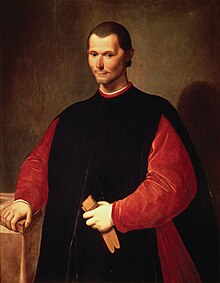
There is much at stake here. If Fuller isn’t stopped and discredited, and the Alabama Democratic Party allowed to start rebuilding, Alabama minorities will continue to suffer from political irrelevance they haven’t known since the days of Jim Crow. From a purely political angle, bringing Fuller’s sordid record to light will help remind Democratic and independent voters nationwide this fall how important it is to keep judicial selection out of GOP hands. And I wouldn’t be myself if I didn’t put on my Machiavellian hat and say to each of these members of Congress: Fuller is so dirty, that whoever comes after him first is going to look like a cross between Mother Freaking Teresa and Clarence Darrow. Happy hunting, and post a comment below or email me here if you need further help; I’ll get back in touch.

¹ Doss Aviation was acquired in December 2011 by J.F. Lehman and Company. It is unclear whether Fuller received cash, or Lehman securities, for his shares in Doss Aviation. Lehman is itself a defense contractor, so if Fuller is now a shareholder of it, the conflict of interest issues remain.
² For some mysterious reason, Doss Aviation’s Annual Reports for subsequent years - including those during which Fuller presided over the Siegelman case - are no longer available online on the website of Secretary of State Beth Chapman, a heavyweight Republican partisan. Since the company is still in good standing, it has obviously been filing those reports. I personally had previously viewed those reports online, and noted that they showed the registered office for service of process on Doss Aviation as c/o Mark Fuller, at his Courthouse address of 1 Church Street in Montgomery.
³ Misuse of federal funds and equipment and the time of federal employees may be grounds for criminal convictions. United States v. Wilson, 636 F.2d 225, 227 (8th Cir. 1980). Another basis for Fuller’s removal from office.
⁴ Besides not reporting the Katie Langer jury tampering to defense counsel, Feaga also failed to turn over conflicting statements of former Siegelman aide Nick Bailey, the Government’s sole witness who claimed that he witnessed Siegelman make the deal that was the basis of the Government’s case. Had Siegelman’s lawyers had those statements, Bailey’s credibility would have been destroyed. Alabama Rule of Professional Conduct 3.8 states that a prosecutor shall not willfully fail to make timely disclosure to the defense of all evidence or information known to the prosecutor that tends to negate the guilt of the accused. Despite the fact his actions were well-documented, widely reported in the media, and not disputed by the Government, Feaga has not been publicly disciplined for this violation. After his partisan Republican protector, former U.S. Attorney Leura Canary, was finally replaced by the dilatory Obama administration, Feaga left the U.S. Attorney’s office for a staff job at the Alabama Securities Commission in February 2012.

Saturday, July 10, 2010

How Many Members of Congress Does Hoover Need?

It is amazing what facts get lost in the hustle and bustle leading up to an election.

Geography, for instance.

Come with me, if you will, to the quiet, suburban streets of Hoover, Alabama. There, we find street after street of cookie-cutter homes, and manicured lawns. We find none of the problems one has to encounter if one lives in the 7th Congressional District, in places like Ensley, Bessemer, Greensboro, or Eutaw. No poverty. No unsightly substandard homes. No unemployed men and women hanging around on the corner, because there are no jobs to look for. We find nice homes, here, like this one:


This nice home, located at 6053 Waterside Drive in Hoover, is just the sort of home respectable people live in. They live there to have respectable neighbors, not the riffraff you'd be living next to in other parts of the county. In fact, Waterside Drive is in an exclusive gated community, so that all that riffraff can't just wander in off the street and do all the things we know they want to do in nice neighborhoods. For the most part, the nice neighbors here are respectable Republican neighbors. After all, this nice house at 6053 Waterside Drive is represented in the U.S. House of Representatives by Republican Spence Bachus, since it's in his 6th District. It's represented in the Alabama House of Representatives by Republican Paul DeMarco. In the Alabama Senate, it is currently represented by GOP Senator Hank Erwin, but fellow Republican Cam Ward will take over that seat in January. And of course, since it's in Hoover, the mayor is former Republican legislator Tony Petelos. Let's look at these fine, Republican gentlemen:


Yes, they all look like nice, safe neighbors. Not like "those people" you'd have to live next to in, say, the 7th Congressional District. Well, maybe Spence looks like he needs a Rolaids, and that Petelos guy looks a little too Greek, but, hey, he's Republican, so he must be OK. So who owns this nice, safe, gated house in Hoover? Well, the nice lady who does is trying not to be seen there these days. She has an apartment over on Third Avenue North in Birmingham, in the 7th Congressional District. Why on earth, you ask, does she need an apartment in such a dangerous part of town (close to them!), when she owns this nice, safe suburban home behind a gate? Well, it seems she's running for Congress from that 7th Congressional District. Yes, boys and girls, 6053 Waterside Drive in Hoover is the home of Congressional candidate Terri Sewell.

Now, I know what you are going to say. It is clearly set out in U.S. Const., Art. I § 2, that:

No person shall be a Representative who shall not have attained to the age of twenty five years, and been seven years a citizen of the United States, and who shall not, when elected, be an inhabitant of that state in which he shall be chosen.
I know. Nothing in there about residing in the district. And I know Sewell claims to be a resident of the 7th District, in her downtown apartment. But let's see, who does the whole I-live-in-an-apartment-downtown shtick remind us of? Oh, yeah. Him. Funny, when Larry Langford was running for mayor, The Birmingham News ran any number of stories on whether Langford's apartment was his bona fide residence. We read about his multi-room NFL cable package in his Fairfield home, and about the lack of basic amenities in his Birmingham apartment. But, a search conducted for any articles at www.al.com containing the words "Sewell," "apartment," and "residence," turns up no articles on Sewell's home in Hoover. Of course, the News has endorsed Sewell, and it opposed Langford at almost every step of his political career. While it appears that history will be none too kind to Langford, what's sauce for the gander is sauce for the goose.

Neither is Ms. Sewell apparently ready to burn her gated community bridges behind her. She continues to own her home in Hoover, and while several homes on her street are listed in the Birmingham MLS as for sale, hers is not among them. Of course, in 2008, when Ms. Sewell wanted to be a delegate to the Democratic National Convention, she claimed 6053 Waterside Drive in Hoover, in the GOP 6th Congressional District, as her residence. I can understand that; there weren't nearly as many people in Republican Country who wanted to be Democratic Convention delegates, so the running was easier. Is Ms. Sewell legally a resident of the 6th or the 7th Congressional District? I don't know. Only a court can make that determination. And, as I noted above, district residency is not a requirement for election to Congress; the only way a court could become involved would be if she were prosecuted for illegally voting in the wrong precinct (including, presumably, for herself). Let's hope it doesn't come to that, but if it does, let's hope a high powered former Wall Street lawyer like her knew not to keep a toothbrush in Hoover.

Where that residence can, and does, make a difference is in Sewell's image of herself, and that has a lot to tell us about her ability to empathize with, and relate to, the residents of the 7th Congressional District. Ms. Sewell did not grow up in poverty. Her parents were both public schoolteachers (as were mine). While not wealthy, schoolteachers in Alabama were no longer skipping meals by the time Ms. Sewell came along. (Thank you, AEA.) She spent several years as a partner in a Wall Street law firm where per-partner profits were well over a million dollars a year. She is now a partner in one of the most elite law firms in Alabama - perhaps the most elite. Her choice of home was certainly not constrained by her income. No longer married to anyone with an interesting history, she need not worry about the size of the home or yard.

Now, I realize that Birmingham has not reached the critical mass of a black upper class, so as to have historic black upper-class neighborhoods, like Atlanta's Collier Heights, or newer such areas in other parts of that city. But it does have decent neighborhoods in predominantly black areas, and it certainly has excellent housing available in more urban settings. My issues with Artur Davis, the departing Congressman from this district, are well known. His choice of residence - currently on Fifth Avenue South in the heart of Birmingham's Southside, his only residence in Alabama - is not one of them. Barack Obama, though his wife's income could have made a mortgage payment anywhere in Chicago, moved onto the South Side.

Sewell's first instinct was to move into a home where her next door neighbor could be - and likely listens to - Glenn Beck. That simply doesn't communicate to me care or concern for the sort of folks she will be called on to represent if she is lucky enough to win election. Should a person of color be precluded from living anywhere he or she can meet the mortgage payment? Of course not. They should even have the right to remove themselves behind gated fences. But representative democracy has at its root a presumption of a community of interest between constituent and representative. Spencer Bachus has a lot in common with the residents of Waterside Drive in Hoover, and his voting record shows that he reflects those interests well. If and when Sewell has to cast votes on financial reform and job creation, will her instincts be those of Tuxedo Junction, or those of the brokers and bankers on Waterside Drive? Hoover has one of its own in Congress. It doesn't need another.

Thursday, July 8, 2010

Random Thoughts Before the Runoff

There's less than a week to go before the July 13 runoff, and a few recent developments in the news have caught my eye. Normally, I prefer providing perspective to reporting developments, but these new facts do have places in analyses I have previously made. The fact that they all bear on runoff races mean they won't be timely after next Tuesday, so here goes.

The GOP Gubernatorial Runoff. As I predicted - and ironically suggested - Byrne has pulled out the stops, hitting Bentley with attack ads based on Bentley's alleged links to AEA. There are two such ads up, and both seem to be getting a pretty decent GRP buy:


It is amusing the way the Byrne ads gratuitously toss in Dr. Reed's photo to make sure Bubba knows that Bentley is in cahoots with "them." This is straight out of the Guy Hunt 1990 playbook, where GOP ads also liberally showed Dr. Reed. I wonder how Republican admakers will telegraph race when Dr. Reed retires at AEA? In any event, Bentley is now feeling the sting of negative for the first time, and that will have to have some impact. AEA doesn't get a strong reaction from mainstream voters, but it is loathed by party activists, who will constitute a larger portion of the runoff electorate. The Riley quote, in case you hadn't yet heard it, underscores how heavily the GOP establishment is rallying behind Byrne. Bentley also suffered a minor self-inflicted wound from his own ad, which arguably exaggerated his Vietnam-era war record.

[SEE CORRECTION AT END OF POST] On the other hand, there has been an interesting development out of Tuscaloosa County, as reported this week by The Tuscaloosa News. It seems that, since the June 1 primary, the voter rolls in Tuscaloosa County have been fattened by over 10,000 new names, an increase of roughly 10% in just a few weeks. This is an astronomical registration surge in such a short time. The most logical explanation is that Bentley's strong primary showing created a sensation of viability, that has awakened favorite-son interest in his candidacy. If there is that kind of excitement on the ground in the Druid City, Bentley can only benefit, as the GOP primary turnout in Tuscaloosa was an anemic 16.2%. While there is some conflicting data and analysis in the literature, it seems to be the better view that recent registrants turn out at higher levels than typical voters, particularly when their registration is keyed to a particular event or current election. This, of course, would be the case with any new voters drawn to Bentley as Tuscaloosa's favorite son. One key question, not addressed in the News article, is whether this is the result of a spontaneous groundswell of Bentley support, or of a concerted GOTV field operation. If the former, it's a truly remarkable phenomenon. If the latter, less so, but still significant. It's not that difficult to register voters; all you need is some basic information on a postcard. Even if this is the result of a field operation, it's still a good sign for Bentley. The low turnout in Tuscaloosa in the primary indicates that Bentley did not have a good GOTV op there in the first round. Just the outreach necessary to get 10,000 postcards filled out is going to create a buzz, and that can boost turnout Tuesday. Maybe the Doc got something more for his money (paid to Huckabee's son in law) than just the endorsement.

Just how important is a bloc of votes that size? Well, considering that Byrne's margin over Bentley in the primary was only 13,772 votes, and overall turnout is usually lower in runoffs, it's potentially significant. From another perspective, extrapolating the most recent GOP gubernatorial runoff turnout (15.4% from 1998) to current active registration figures, produces a potential turnout of about 388,000. Since you would only need half of that to win, or about 194,000, that could be a big block. In any event, the polarity of the break, and the turnout, of the former James and Moore vote, will probably have a more decisive impact than the Tuscaloosa surge. But if the race becomes close, everyone will be waiting on the AP report from Greensboro Avenue.

Considering the potential impact of the Moore and James votes, the two runoff candidates seem to be focusing most of their face time in the closing weeks in counties in which they led in the primary, apparently placing a premium on turnout over persuasion.

One poll released late this week, and being touted by the Bentley camp, shows him with a 20% lead over Byrne. I have frequently cautioned about the reliability of primary polls, and this one has more problems than most. It doesn't specify the contact method (robocall vs. live caller), and they are using data from recent primaries in 2008 and 2006 to adjust for turnout. This is not a sound practice, as neither of those primaries was a runoff, and neither featured a contested gubernatorial race. Finally, the poll admits that it outsources its sample list. This is the polling equivalent of buying a car from a maker that admits it buys its engines from an outside supplier. I still think it comes down to turnout. If turnout is low, party insiders deliver it to Byrne. If enough non-insiders show up, it breaks to Bentley. For what it is worth in that department, Tuesday's forecast for Birmingham, which seems to be typical for the state:

Tuesday
July 13

Scattered T-Storms
Scattered T-Storms

High 90°
Low 74°

Precipitation 40%


7th Congressional District Runoff. One of the rules of being a candidate is, that when an organization has endorsed you, and set up a debate between you and your opponent, it's not a good idea to stand up the event, and let it be turned into a rally for your opponent, in front of your endorsers. As Terri Sewell did last week at a Birmingham New South debate. For a campaign that dropped a money bomb on the district for a first place finish in the primary, the Sewell team is doing some strange things this close to the runoff. For one thing, the candidate was working the canapé circuit in Mountain Brook as recently as Tuesday night of this week. Normally, a slower finance event like this, this close to D-Day, would indicate a campaign with an empty piggy bank. If not that, one with a strange sense of candidate time utilization. With so little time left to connect to voters, a candidate's time is normally better spent working a Piggly Wiggly parking lot or a Little League crowd. Sewell strikes me as the sort of candidate who would much prefer canapés in Mountain Brook to pressing the flesh (think John Kerry), and it may be that her staff simply didn't get its druthers. Look for some second guessing if Smoot's frenzied crowd-working pays off and she edges Sewell.

Attorney General Democratic Runoff. This has been a relatively quiet campaign, with both candidates making interesting and progressive statements about the death penalty. Perkins's more forceful call for a moratorium hasn't gotten a lot of play in the mainstream media, but there are rumblings that it's been noted - and appreciated - in the black community. Anderson, for his part, has not gone full throttle for the runoff, apparently wanting to save cash on hand and untapped donors for a fall contest with "Big Oil" Luther Strange. Given that the Business Council will finance Strange handsomely, this is not an irrational strategy. Perkins will doubtless close the substantial gap between himself and Anderson, but Anderson should emerge the winner, with his campaign treasury undepleted by runoff expenses.

The deadlines for registration and non-emergency absentee voting are past, so all that remains to remember is 7A to 7 P, and show up and vote.

CORRECTION: Just a few minutes ago, I got an email response to an inquiry I made about the extent of the Brantley ground effort in Tuscaloosa County. It seems The Tuscaloosa News printed a correction this morning, acknowledging that the report of 10,000 new voters there since the primary was an error. I can't find the correction on their website, but I did snag a visual from their front page at newseum.org:

Now, I don't want to make accusations while the facts are out, but that's a pretty big "error." More importantly, the original story, linked above, quoted this Viselli person responding to why there was such a huge increase. Now, even if the reporter made an honest mistake (as the correction claims), surely Ms. Viselli knew the 10,000 figure was wrong. I think I'd notice the difference in processing one application every other day, and about 330 every working day. This report generated a lot of political buzz across Alabama, favorable to Bentley, and the retraction isn't even online. Either Ms. Viselli, the News, or both, need to come forth with a better explanation. As for Bentley's chances, my earlier analysis premised on a better Tuscaloosa turnout is obviously invalid. And if only 24 new voters appeared in Tuscaloosa since Bentley's campaign gained the appearance of viability in the primary, there's no reason to think turnout will be any better in Tuscaloosa than it was in the first round. I don't know if Paul the World Cup Octopus is making a prediction in the GOP runoff, but I think he just swam a few inches further from the Bentley flag.

Tuesday, June 22, 2010

The 7th Congressional District - Who Shall Represent the Pettus Bridge in Congress?

Winding from the downtown skyline of Birmingham, southward through Selma, and almost to Mobile, is Alabama's 7th Congressional District. This is a district of history, providing Alabama with its first black Congressman since Reconstruction, and again poised to make history this year by electing its first woman to Congress, other than the widow of an incumbent. In terms of this blog, it also occurred to me that if I want to say something about this district, I'd best be typing, as the general election vote in this 63.3% black district promises to be one of the great yawners of November. The action, as it has been from this district's birth in the 1992 cycle, is in the Democratic primary.

This is, of course, an open seat, vacated by Artur Davis in his Quixotic bid to become a triangulating black governor of Alabama. The runoff gives voters a choice between Jefferson County Commissioner Shelia Smoot, and Birmingham lawyer Terri Sewell. Sewell led the primary with 36.8% of the vote, with Smoot getting 28.6%. State Representative Earl Hilliard, Jr., of Birmingham, son of the former Congressman from this district, narrowly missed the runoff with 26.8%, and Martha Bozeman, a former Davis staffer, trailed with 7.8%.

The Horserace. The traditional saw that a primary frontrunner is the presumed favorite in a runoff may have some impact here, but there are a lot of wild cards in this deck. The governor's race is no longer on the ballot, so spontaneous turnout might be limited. This would put a premium on the organization best poised to get its voters to the polls. Hilliard has not, and (I understand) is not expected to make an endorsement in the runoff. However, the Alabama New South Coalition, which endorsed him in the primary, has endorsed Sewell. The New Jefferson County Citizens' Coalition, which also endorsed Hilliard, has not made any statement in this round, but has a scheduled meeting on July 9, just before the runoff. Smoot has picked up the endorsements, which went to Hilliard in the primary, of two of the most influential black members of Congress, Majority Whip Jim Clyburn of South Carolina, and Homeland Security Committee Chairman Bennie Thompson of Mississippi. Smoot remains endorsed, as she was in the primary, by the ADC.

Smoot's advantage is her base in Jefferson County, where she is known from years of television news reporting, and from service on the County Commission since 2002. She split that base with Hilliard in the primary; their districts overlap. With Hilliard out, she should have a clear field to the "Friends and Neighbors" vote in Jefferson County. Sewell's lead in the primary was largely a creature of her 66.9% share of the large turnout in Dallas County, combined with a close second to Smoot in Jefferson with 34.0% there to Smoot's 36.0%. Hilliard ran ahead of his district average in most of the more rural counties in the district, including showings of 41.1% in Wilcox and 37.7% in Choctaw. The key to the runoff may well be which candidate does best in these more rural parts of the district.

Despite being the officeholder remaining in this race, Smoot has struggled, as did Hilliard, to match the money dump wrought by Sewell, which brought her from a struggling third (in some polls I saw) to the lead. Through the May 12 F.E.C. reports, Sewell outraised Smoot, $783,333.00 to $99,723.00. (Though Smoot does have a history of amending statements to adjust upward. One of her reports indicated that the employment of her own campaign treasurer, who has to sign the report, was "unknown.") Of Sewell's total, $295,028.00 came from Alabama, and of that, $58,000.00 came from her present law firm, Maynard, Cooper & Gale. $132,352.00 of Sewell's total came from New York, much of that from the law firm of Davis, Polk & Wardwell, where she formerly practiced. Sewell's reports do not reflect the same focused generosity of the Bush-Cheney-aligned AIPAC (America Israel Public Affairs Committee) that the 2002 campaign of Artur Davis received, but rumors persist that AIPAC has looked for ways to help her off the books. These rumors center on "street money," which has a way of being impossible to prove - or disprove. If AIPAC was in the primary, it is unlikely they will invest in the runoff, as they no longer have to worry about Hilliard, Jr., making an Orestean career in Congress. Regardless of the relative finances of the two, Smoot has shown that she can vastly outperform her bank account at the ballot box. One final note in the "horserace" discussion: beware the Anzalone poll that the Sewell campaign is touting, showing her with a comfortable lead. Just a few weeks ago, that shop was predicting a comfortable Artur Davis win in the gubernatorial primary. Nuff said.

The Merits. From my perspective, this is not an ideal runoff. (This is as good a time as any to disclose that I was an unpaid advisor to the Hilliard campaign in the primary.) Hilliard would have provided this district with an able, intelligent, articulate Congressman, without any of the issues provided by the two remaining candidates. Smoot brings with her the baggage of being a member of the Jefferson County Commission, one of the most dysfunctional local governments in America. Even if hers is only guilt by association, being lumped with the indictments, convictions, bond defaults, bankruptcy threats, and litigation beyond measure, would give Mother Teresa an image problem. Smoot has passed on opportunity after opportunity on that Commission to exercise the sort of leadership that would truly make her stand out as a candidate for higher office. It's difficult to be too hard on her, as any systemic reform requires two other votes, but at least some advocacy of tougher measures would have been nice.

And yet. And yet, we come to the compelling life story of Terri Sewell. Raised in Selma, the child of public school teachers. Princeton, Oxford, Harvard Law. So far, the stuff of which movies are made. But at this point, the resume diverges from what one would expect of a woman seeking to represent one of the poorest Congressional districts in the country. After a stopover as law clerk to Judge U.W. Clemon in Birmingham, Sewell took a position with the Wall Street law firm, Davis, Polk & Wardwell. She worked in the firm's securities department, which handles much of the legal work of such firms as Goldman, Sachs and J.P. Morgan Chase. In other words, this firm is one of the handful of Wall Street megafirms which lawyered the maze of derivatives, swaps, securitized debt obligations, mergers, and acquisitions, that allowed Wall Street to spend the 90s and 00s ripping off America, and nearly brought it to its knees in 2008. (And, coincidentally, not unlike the shell game deals that left Jefferson County swimming in red ink.) From Wall Street, Sewell returned to Alabama in 2005 to join the Birmingham firm of Maynard, Cooper & Gale. There, she works in public finance, according to her campaign bio. Politically, Maynard, Cooper is known for being the general counsel of the Business Council of Alabama, the
de facto finance arm of the Alabama Republican Party. (Yes, they do keep Democrats on the firm roster, and I know a few. Still.)

In one regard, I can't fault Sewell for her career choices. If someone is going to be paid $700 an hour to engineer the plutocrats' plunder of the rest of us, I think that the gravy train ought to be open to people of every gender, race, creed and orientation. Even Yankees fans. But then I consider what other Harvard Law grads, with even humbler backgrounds, have done with their degrees. For instance, Hank and Rose Sanders came back to Selma, with no stops in New York, London or Birmingham, to help bring justice to the Black Belt. And of course, Barack Obama took his Harvard sheepskin back to the streets of Chicago as a community organizer. It puts a Wall Street career in a whole new perspective.

Then there is one little issue about Sewell's choice of Wall Street firms. As I noted above, she was a partner in the firm of Davis, Polk & Wardwell. That is,
Davis, Polk & Wardwell. The "Davis" in that firm name is John W. Davis. (1873-1955, pictured on the right.) Davis founded the firm in large part to serve as the general counsel to the J.P. Morgan banking family. To this day, Davis holds the post-Civil War record for the most cases argued before the U.S. Supreme Court on behalf of parties other than the Federal government. What makes Davis's biography relevant to this Congressional race is his participation in his last case before that Court - Brown v. Board of Education, 347 U.S. 483 (1954). This is, of course, the famous case in which school segregation was held to be unconstitutional. In a perfect world, Sewell could tell a stemwinder tale about how Davis's fight for equality led her to join the firm. Except for one problem: Davis was the lead counsel at oral argument for the segregationists! Not only was he on the way-wrong side of history on this case, he handled the case for free as a personal favor for the governor of South Carolina. Nor was this stance unusual for Davis. He had opposed antidiscrimination legislation in New York, opposed Harry Truman's civil rights measures, including an anti-lynching bill, and refused to join other Wall Street legal titans in an amicus brief supporting the Scottsboro Boys. I cannot pretend to be an expert on the history of Sewell's former firm. For all I know, it has given millions of dollars to Tuskegee Institute and the UNCF to make amends for Davis's record. I do not even know if there has been any push among civil rights activists to have the firm name changed, though one comment (10th from the top) that I turned up in a Google search indicated that Davis's role in Brown has been redacted from the firm's promotional brochures. In any case, someone of Sewell's considerable education and intellect cannot have joined the firm without a full knowledge of the history of its namesake.

For all I know, her departure from the firm came as the result of the firm's refusal to change its name. (I would welcome authoritative information to this effect, from Ms. Sewell or anyone authorized to speak on her behalf. Commenting is unmoderated on this blog, as long as it's kept civil and legal. ) And maybe I am the only one who cares, but it strikes me that the Congressional district including Selma should not be represented by an alumna of a law firm with the leading segregationist lawyer of the Twentieth Century on its brass plate. I personally find that name as offensive as I would that of Lester Maddox. And I know the 7th District wouldn't abide Maddox's name on a candidate's resume.

To her credit, Sewell took one look at the glazed eyes of Artur Davis as his severed head rolled to a stop at her feet on June 1, and re-emphasized her earlier support of Obama's health care reform efforts. (I have schadenfreude reading the page. "Now confined to a wheelchair Terri works closely with her family to care for her father. " She is? Or he is? And "Terri is on the Community Advisory Board for UAB’s Minority Health Resource Center that helps to decrease the disparity in health care that exist [
sic] in minority communities. Her work there helps close the health care disperity [sic] gap for rural and underserved communities." Yes, Princeton will tell.☺) But what worries me about Sewell's Wall Street background is the prospect that she will revert to it when the spotlight is not so glaring as it was on health care reform. That landmark bill was not Artur Davis's only Republican-pandering big business vote. Without much notice, he voted for the so-called Bankruptcy Abuse Prevention and Consumer Protection Act of 2005, which substantially hurt sick, disabled and laid-off workers in bankruptcy. In other words, the people in his district. Sewell's website platform pages are ominously silent on her positions on legislation to stop the abuses and corruption of Wall Street, Big Oil, and tax-dodging billionaires. She has made some generic calls for "transparency" in financial services, but that is securities-lawyer-speak for "set up a public derivatives trading exchange, and the all-knowing 'free market' will take care of everything." What is needed is comprehensive reform, including, at a minimum, some reinstatement of Glass-Steagall, and restrictions against deposit institutions holding securitized debt obligations, in which they have no clue about the creditworthiness of their end-use counterparties. I'm glad she was and is for health care reform, but it's done with for a few years. These "Big Mule" issues, as Big Jim Folsom would have called them, are the fights of the next Congress. What will Sewell do? Given that she has made a very lucrative career out of helping engineer Wall Street deals (Sewell was a partner at Davis, Polk & Wardwell. In 2009, per partner profits there were $1,655,000 - in a down market), I find it hard to think she'd endanger a post-Congressional spot on K Street or Wall Street with any real pushback.

If I have missed clear statements by Sewell on these issues, I hope she, her staff, or her supporters will help me out with some links in the comments box. And Lord knows, I wish the average Alabama member of Congress had half of Sewell's academic credentials and intellectual horsepower. But unless I were to see some solid answers to the concerns I have raised, my gut instinct is that Smoot would be a more loyal member of both the Democratic majority, and the Congressional Black Caucus, and would thus serve her constituents better. And she
did graduate from Michigan State, which helped send Nick Saban on his way to Tuscaloosa.

NOTE: I want to make one thing abundantly clear. Although, as I stated above, I served as an advisor to the Hilliard campaign, I speak solely for myself in this post. I did not discuss it with Earl Jr. before writing or posting it. In fact, the only communication I have had with him since the night of the primary has been an exchange of text messages, in which I told him to enjoy his vacation in the Smokies. And that I hope to see him in public office again someday.