
In my last post, I discussed the inexcusable votes cast by Alabama’s entire Republican Congressional contingent to de-fund a program to replace aging weather satellites. Those satellites played a key role in the advance warnings that, in turn, saved hundreds of Alabamians in the April 27 tornadoes. Those votes were the product of brainless, lockstep GOP party discipline, maintained in the name of preserving Bush tax cuts for multimillionaires; the lives and property of working Alabamians be damned. Today, I want to shift the focus a little, and look at the Republican philosophy of government, as it pertains to a related topic - disaster management.
This is a rich vein for Democrats to mine. It illustrates, in a concrete manner most voters can grasp, the benefits of a competent, professional approach to government, and the folly of the Republican disdain for all things public. When the horror of last month’s storms gives way to a more routine discourse (and given the Republican Legislature’s desire to continue spanking AEA, that will be soon), we need to be in a position to effectively advocate our position.
Return with me to 1992. Under George H.W. Bush, the Federal Emergency Management Agency (FEMA) was directed by Richard Stickney, a New Hampshire GOP hack with no background in emergency management. The agency was roundly criticized for its handling of several national disasters, most notably Hurricane Andrew in South Florida in 1992. A staff report of the U.S. House Appropriations Committee found in the aftermath of Andrew that “FEMA is widely viewed as a political dumping ground, a turkey farm, if you will,” where political cronies could be rewarded.
 Among the Arkansans who followed Bill Clinton to Washington was James Lee Witt, who had served under then-Governor Clinton as head of Arkansas’s state emergency management agency. Witt was the first director of FEMA with a professional background in emergency management. Witt changed the entire atmosphere at FEMA. Senior jobs were rewarded not to political patrons, but to emergency management professionals. The agency’s historical emphasis on preparedness -
 remember all those fallout shelters in the 50’s and 60’s? - was renewed. As a professional, Witt knew that preparedness dollars go a lot further than mitigation dollars.
In 2000, we all remember what happened.Millions of voters five Republican judges decided that America had had enough of peace and prosperity, and put George W. Bush in the White House. After an interlude, FEMA found itself being run by the famous Michael D. Brown. Brown’s emergency management experience consisted of a brief term on the city council of Edmond, Oklahoma, and his tenure as Commissioner of the International Arabian Horse Association.  Given the scandal that led to his resignation from that job, and the insolvent Association’s takeover by a rival group, perhaps that can be considered “disaster” experience.
Brown, of course, is best known as the head of FEMA during its utter failure to respond in a timely and effective fashion to Hurricane Katrina in 2005. Brown’s entry into the political lexicon, to the delight of Jay Leno and David Letterman, came in the form of George W. Bush’s praise of Brown’s ineptitude in - of all places - Alabama. The famous phrase, “Heck of a job, Brownie,” was uttered at the Mobile airport, where Bush had stopped on a tour of stricken areas four days after the hurricane hit.
In 2009, Barack Obama and the Return of Competence led to the appointment of W. Craig Fugate as the administrator of FEMA. Unlike his Republican predecessors, Fugate is a career emergency responder. He began as a volunteer firefighter in his Florida hometown, and in true Horatio Alger fashion, worked his way up to the top post of Florida’s emergency management agency, before being tapped by Obama. Fugate has brought back Witt’s emphasis on preparedness, and infused FEMA with a sense of hustle that Alabamians normally only demand from their college football players.
This emphasis on experience and competence paid dividends for afflicted Alabamians in recent weeks, as FEMA crews were opening aid centers in places like Hamilton, Tuscaloosa and Rainsville almost before the debris had all hit the ground. Compared to the near-week it took Bush to leave his Texas ranch to survey Katrina damage, Obama was on the ground in Tuscaloosa within 40 hours of the tornadoes. This is even more impressive, now that we know he was simultaneously keeping track of the developments that led to the elimination of Osama bin Laden.
We all remember what a key role the American public’s revulsion at Bush’s incompetent response to Katrina played in significant Democratic gains in the 2006 elections. This fact, having strong visceral appeal, and being amenable to as brief a message as a 30-second ad, was recognized as a key to the Democratic wins that year, both at the time, and in subsequent review and analysis of the results.
Unfortunately, the absence of Katrina-scale incompetence is not so easily encapsulated in a television spot. (Though with over a year to work on it, something may come to us.) Generally, the distinction between the parties is a little more fact-intensive, and requires more than 60 seconds. There is, however, one medium in which this would be a killer theme. I am thinking of the manifold speeches given by Democratic nominees and Party officers every election cycle to civic and business groups like Rotary and Kiwanis clubs, Jaycees, and chambers of commerce. It’s tempting, in such a venue, for a nominee to focus on “me, me, me," at the expense of the Party message. But unless a Democratic nominee can persuade these business and professional types that there are reasons to vote for any Democrat, the nominee’s time is wasted giving the speech. The Republican predominance in such audiences - and don’t doubt that predominance for a minute - rests in large part on the GOP’s ur-message that “we are good managers, like you successful businessmen, and the Democrats aren’t.” Nothing could put the lie to that story line like a 20 minute talk that starts out, “Let me tell you ladies and gentlemen why I am a Democrat ...,” and then outlines the above information. Nominees, take note: you have to open their minds to voting for a Democrat before they’ll listen to your pitch to vote for you. And if we start picking up votes in that generally secure, if not affluent, cohort, the GOP is in deep Macaca.
This is a rich vein for Democrats to mine. It illustrates, in a concrete manner most voters can grasp, the benefits of a competent, professional approach to government, and the folly of the Republican disdain for all things public. When the horror of last month’s storms gives way to a more routine discourse (and given the Republican Legislature’s desire to continue spanking AEA, that will be soon), we need to be in a position to effectively advocate our position.
Return with me to 1992. Under George H.W. Bush, the Federal Emergency Management Agency (FEMA) was directed by Richard Stickney, a New Hampshire GOP hack with no background in emergency management. The agency was roundly criticized for its handling of several national disasters, most notably Hurricane Andrew in South Florida in 1992. A staff report of the U.S. House Appropriations Committee found in the aftermath of Andrew that “FEMA is widely viewed as a political dumping ground, a turkey farm, if you will,” where political cronies could be rewarded.
 Among the Arkansans who followed Bill Clinton to Washington was James Lee Witt, who had served under then-Governor Clinton as head of Arkansas’s state emergency management agency. Witt was the first director of FEMA with a professional background in emergency management. Witt changed the entire atmosphere at FEMA. Senior jobs were rewarded not to political patrons, but to emergency management professionals. The agency’s historical emphasis on preparedness -
 remember all those fallout shelters in the 50’s and 60’s? - was renewed. As a professional, Witt knew that preparedness dollars go a lot further than mitigation dollars.
In 2000, we all remember what happened.
 Given the scandal that led to his resignation from that job, and the insolvent Association’s takeover by a rival group, perhaps that can be considered “disaster” experience.
Brown, of course, is best known as the head of FEMA during its utter failure to respond in a timely and effective fashion to Hurricane Katrina in 2005. Brown’s entry into the political lexicon, to the delight of Jay Leno and David Letterman, came in the form of George W. Bush’s praise of Brown’s ineptitude in - of all places - Alabama. The famous
 phrase, “Heck of a job, Brownie,” was uttered at the Mobile airport, where Bush had stopped on a tour of stricken areas four days after the hurricane hit.
In 2009, Barack Obama and the Return of Competence led to the appointment of W. Craig Fugate as the administrator of FEMA. Unlike his Republican predecessors, Fugate is a career emergency responder. He began as a volunteer firefighter in his Florida hometown, and in true Horatio Alger fashion, worked his way up to the top post of Florida’s emergency management agency, before being tapped by Obama.
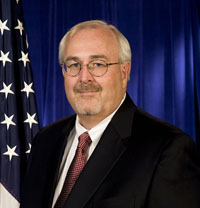 Fugate has brought back Witt’s emphasis on preparedness, and infused FEMA with a sense of hustle that Alabamians normally only demand from their college football players.
This emphasis on experience and competence paid dividends for afflicted Alabamians in recent weeks, as FEMA crews were opening aid centers in places like Hamilton, Tuscaloosa and Rainsville almost before the debris had all hit the ground. Compared to the near-week it took Bush to leave his Texas ranch to survey Katrina damage, Obama was on
 the ground in Tuscaloosa within 40 hours of the tornadoes. This is even more impressive, now that we know he was simultaneously keeping track of the developments that led to the elimination of Osama bin Laden.
We all remember what a key role the American public’s revulsion at Bush’s incompetent response to Katrina played in significant Democratic gains in the 2006 elections. This fact, having strong visceral appeal, and being amenable to as brief a message as a 30-second ad, was recognized as a key to the Democratic wins that year, both at the time, and in subsequent review and analysis of the results.
Unfortunately, the absence of Katrina-scale incompetence is not so easily encapsulated in a television spot. (Though with over a year to work on it, something may come to us.) Generally, the distinction between the parties is a little more fact-intensive, and requires more than 60 seconds. There is, however, one medium in which this would be a killer theme. I am thinking of the manifold speeches given by Democratic nominees and Party officers every election cycle to civic and business groups like Rotary and Kiwanis clubs, Jaycees, and chambers of commerce. It’s tempting, in such a venue, for a nominee to focus on “me, me, me," at the expense of the Party message. But unless a Democratic nominee can persuade these business and professional types that there are reasons to vote for any Democrat, the nominee’s time is wasted giving the speech. The Republican predominance in such audiences - and don’t doubt that predominance for a minute - rests in large part on the GOP’s ur-message that “we are good managers, like you successful businessmen, and the Democrats aren’t.” Nothing could put the lie to that story line like a 20
 minute talk that starts out, “Let me tell you ladies and gentlemen why I am a Democrat ...,” and then outlines the above information. Nominees, take note: you have to open their minds to voting for a Democrat before they’ll listen to your pitch to vote for you. And if we start picking up votes in that generally secure, if not affluent, cohort, the GOP is in deep Macaca.


