Showing posts with label DeKalb. Show all posts

Thursday, June 13, 2013

Why Lowell Barron Will Walk Away a Free Man, or, Why Luther Strange Will Never Be Governor - Part II

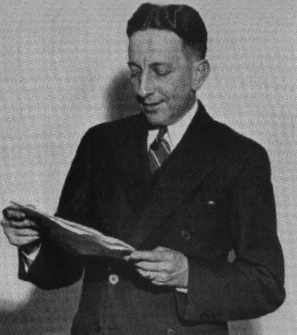
In the early 1930’s, an Attorney General of Alabama prostituted his office to the cause of injustice, in an effort to propel himself to the Governor’s Mansion. Thomas E. Knight, Jr., of Greensboro personally took charge of the appeals, and the subsequent rounds of trials, of the Scottsboro Boys. Knight is one of the more execrable characters in Alabama’s history. As Attorney General, he secured affirmances of the convictions of the Scottsboro Boys, with the first round of opinions written by Alabama Supreme Court Justice Thomas E. Knight, Sr. Weems v. State, 224 Ala. 524, 141 So. 215, rev’d sub nom. Powell v. Alabama, 287 U.S. 45 (1932). Arguing against the audacity of the suggestion that blacks should be allowed to serve on Alabama juries, he declared that it was “an attack on the sovereignty” of Alabama, presaging the states’ rights rhetoric of the current incumbent. When asked by defense counsel to address the defendants as “Mr.,” as he had done for white witnesses, rather than by their first names, he stated that “I am not in the habit of doing that.” He became so invested in the prosecution that, after being elected Lieutenant Governor in 1934, he secured appointment as a special prosecutor to continue working on the case. In one of the stronger arguments for the existence of karma, he died at the age of 38 in 1937, without ever attaining the governorship he so badly coveted.
 

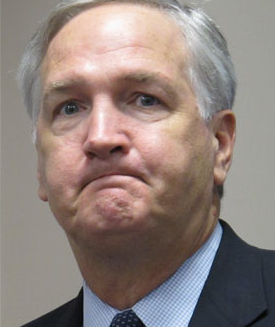
While the office of Attorney General has subsequently been ably filled with such forward-looking Generals as Bill Baxley and Don Siegelman, the present holder of that office is a full-bore regression to the disgraceful conduct of Knight. Once again, Scottsboro, which lies in the Eighth State Senate District, is involved. Luther Strange is just the sort of fellow the late, great Judge (and Senator) Howell Heflin had in mind when he coined the acid phrase, “the Grey Poupon Mountain Brook crowd, the Gucci-poochie-coochie shoe-wearing, Mercedes-driving, Rolex-wearing, polo-playing, Jacuzzi-soaking, Perrier-drinking, Aspen-skiing, ritzy rich, high-society Republicans who eat broccoli” to describe his 1990 opponent, Strange’s fellow Mountain Brookie, Bill Cabaniss. Like his predecessor Knight, Strange has stooped to prosecutorial misconduct by securing an unethical, fraudulent indictment of former State Senator Lowell Barron of DeKalb County, and Barron’s former campaign staffer, Jill Johnson, for political gain. The charges against Barron and Johnson are so weak that, despite the adage that a prosecutor can get a grand jury to “indict a ham sandwich,” Strange could not – despite repeated efforts – secure an indictment in Jackson County. He had to shop the case to a grand jury in more-Republican DeKalb to get the indictment, and even that took several months. In a previous post, I explained why it is not a violation of the Alabama Ethics Act to pay a worker in your political campaign. In this post, I will show that it is also clearly not a crime under the Fair Campaign Practices Act (“FCPA”) to pay a campaign employee.

The Ethics Act provision made the subject of some counts of the Barron-Johnson indictment is relatively simple. By contrast, the FCPA provision charged in that indictment is anything but simple. The often-convoluted language is as follows:

(a) A candidate, public official, or principal campaign committee as defined in this chapter, may only use campaign contributions, and any proceeds from investing the contributions that are in excess of any amount necessary to defray expenditures of the candidate, public official, or principal campaign committee, for the following purposes:
(1) Necessary and ordinary expenditures of the campaign.
(2) Expenditures that are reasonably related to performing the duties of the office held. For purposes of this section, expenditures that are reasonably related to performing the duties of the office held do not include personal and legislative living expenses, as defined in this chapter.
(3) Donations to the State General Fund, the Education Trust Fund, or equivalent county or municipal funds. Donations to an organization to which a federal income tax deduction is permitted under subparagraph (A) of paragraph (1) of subsection (b) of Section 170 of the Internal Revenue Code of 1986, as amended, or any other charitable, educational, or eleemosynary cause of Section 501 of Title 26 of the U. S. Code.
(4) Inaugural or transitional expenses. Ala. Code § 17-5-7(a).

Put into simpler English, this code provision says that money contributed to a campaign can only be used for “necessary and ordinary expenditures of the campaign,” expenses of the inauguration or office, or donated to a government or charity. These uses of the money are permitted; any other use of the money is a criminal offense.

Obviously, the most relevant of these legal alternatives is “necessary and ordinary expenditures of the campaign.” If the payments to Ms. Johnson fit that peg, the game is over and there is no crime. If Strange’s assistants try to argue to the Court that Ms. Johnson did not work for the campaign, which would make payments to her some sort of “expenditures of the campaign,” they will find themselves in contempt, and sanctioned by the Alabama Bar, in short order. As far as the statute goes, the only question is whether the payments were “necessary and ordinary.”

Granted, $58,000.00 and even a used, high mileage campaign car, are generous compensation. (The Kelley Blue Book value of a 2007 Toyota Camry, which is the car named in the indictment, in fair condition, is $5,945.00. I understand this was a high-mileage campaign vehicle.) At first blush, Strange might argue that this compensation was not “necessary and ordinary.” If one follows the letter of the statute, and presumes that payments this large were not “necessary and ordinary,” you could argue that the statute was violated, and a crime committed. But the first thing you have to look at here is that the $50,000.00 payment was made after Barron lost the 2010 election, and this looks like nothing so much as a proper severance payment to a loyal staffer who had worked for Barron for years; running campaigns, coordinating community events, and handling constituent matters; and who was about to be unemployed.

Even more significant, as I pointed out in Part I of this post, is that Strange is nothing if not a blithering hypocrite. As I related there, in the 2010 election cycle, Strange paid Jessica Medeiros Garrison, a fellow Mountain Brook resident, and her corporation, MDM27 Holdings, Inc., the vastly princelier sum of $227,727.99. This sum seems even more extravagant when you consider that Strange’s expenditure disclosures reveal that he had specialist firms – media, polling, and so
forth – doing most of the heavy work of his campaign. If what Lowell Barron did was a crime, then the only proper thing for Luther Strange to do is turn himself in immediately at the nearest police station that has an orange jumpsuit to accommodate his 6’9” frame.

At this point, it’s pretty clear that the FCPA was not violated by Senator Barron’s payments to Ms. Johnson. Pretty clear, but a really biased Republican would still say that there is enough of a chance that a motion to dismiss the indictment should not be summarily granted; that there is enough of a remote chance that a jury might find that the payments to Ms. Johnson, being as large as they are, were not “necessary and ordinary” expenditures of the Barron campaign, so as to allow the case to go to trial. Sorry, Republican partisan, that argument fails. It fails because a court not only has to look at the statute in a criminal case, it has to determine whether that statute, as applied to the defendant, violates the Alabama and U.S. Constitutions. One of the best known parts of the U.S. Constitution is that part that makes it possible for bloggers like me to tell the truth about a corrupt, unethical Attorney General: the free speech clause of the First Amendment.

The Federal Election Campaign Act of 1971, Pub. L. 92-225, § 104, 86 Stat. 3, 5 (1972), placed dollar limits on the amounts candidates for federal office could spend on advertising and broadcast media. In the course of striking down those expenditure limits, the United States Supreme Court stated:

The First Amendment denies government the power to determine that spending to promote one’s political views is wasteful, excessive, or unwise. In the free society ordained by our Constitution it is not the government, but the people individually as citizens and candidates and collectively as associations and political committees who must retain control over the quantity and range of debate on public issues in a political campaign. Buckley v. Valeo, 424 U.S. 1, 57 (1976).

This language has been construed to be “a broad holding that government does not have the right to pass judgment on how or why a person expends campaign resources.” Homans v. City of Albuquerque, 366 F.3d 900, 915 (10th Cir. 2004).

Game over. The chickens have hatched and can be counted. The fat lady has sung. As long as campaign contributions are expended on the campaign, the First Amendment absolutely prohibits regulation of how they are spent, or how much is spent. Government may not prohibit political speech expenditures simply because they are “wasteful, excessive, or unwise;” neither may it require, as the FCPA purports to
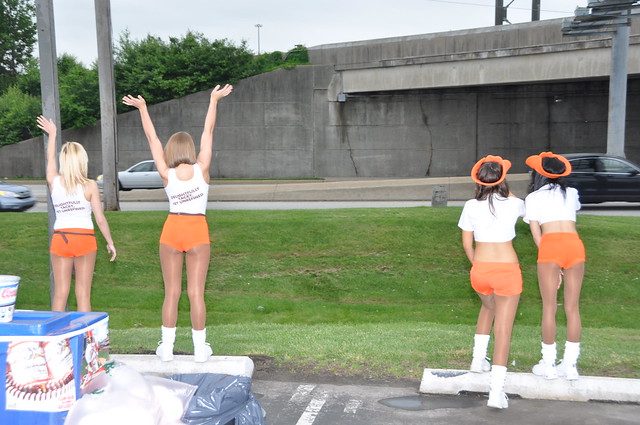
dictate, that they be “necessary and ordinary.” If Senator Barron had chosen to spend his entire campaign fund to hire Hooters Girls at $10,000.00 apiece for the day, to wave his signs at voters at polling places on Election Day, he would have been guilty of questionable taste. He might have even become as big a joke as Shad McGill. (It being Alabama, I will refrain from speculating about whether Barron might thus have beaten him.) But as long as the Hooters Girls stayed 30 feet from the front door of the polling place, there would have been no crime. As with the Ethics Act charges, the FCPA counts of the indictment are also due to be dismissed.

The Barron and Johnson cases are in front of DeKalb County Circuit Judge Randall Cole. Cole, a Democrat, is the most senior circuit judge in the state, and was re-elected to his final term in 2012. (He will be ineligible for further terms due to age limits.) For years, Cole was selected by his fellow circuit judges to sit on the Judicial Inquiry Commission, which investigates ethics charges against judges. For much of his time on that panel, he was selected by its members to be its Chairman. Cole’s assignment to the case is fortuitous for Barron and Johnson. Cole need fear no political blowback from (properly) dismissing the charges before trial, even if such pedestrian concerns ever influenced his rulings. While Strange could appeal a dismissal to the Court of Criminal Appeals, that Court would be more reluctant to reverse such an eminent trial judge. Even more troubling to “the Criminals” is that they are themselves all
elected judges, and should be disinclined to issue a ruling that subjected them to potential indictment. Presiding Judge Mary Windom (left, front in the photo), for example, paid her campaign operative Bill Goolsby $17,500.00 in her 2008 campaign. Was that salary criminally “converted to [his] personal use” under the Ethics Act? She also paid Auburn Network, Inc., and the affiliated Network Creative Media some $107,700.40, and we all know to whose “personal use” that got “converted.” Were those “necessary and ordinary expenditures” of her campaign? Reversing a dismissal would create a precedent that could get these Republicans indicted.

This brings us back to the way Strange is channeling the ghost of Thomas Knight, Jr. This indictment is pure, dirty politics. At least some political pundits view Strange as a potential primary challenger to Governor Bentley in 2014.
Note Strange’s less-than-supportive posture and visage during Bentley’s 2013 State of the State Address, while others are shown applauding. Strange’s fraudulent indictment of Barron and Johnson is nothing more than an effort to throw red meat to the Republican base. An additional Republican political motive comes from rumors that Barron is contemplating either an effort to regain his Senate seat, or perhaps the Lieutenant Governor’s chair, in 2014. While Strange knows that these charges are fraudulent and won’t stick, he doesn’t care. To the low-information voter, “Barron” and “indictment” now have a subconscious association. To combat this, we Democrats have to put on our A-game after the charges are tossed, to keep the spotlight on Strange’s unethical behavior. From comments on al.com to letters to the editor to statements by Party leaders, the drumbeat of Strange’s impropriety has to be maintained. Not only to make him suffer the consequence of his wrongdoing, but to undo the unjustified damage to the reputations of Senator Barron, Ms. Johnson, and the Party as a whole.


Before I close this Part II, I have to return for a moment to the petite, lavishly-paid Jessica Garrison, and her incredibly tall six-year-old son Michael. According to statistics maintained by the Centers for Disease Control, fewer than 5% of all boys are four feet tall at age six, and he’s obviously well past that.
Titian: David and Goliath
He’s going to make the basketball coach at Mountain Brook High School happy someday. Why, at this rate, he will grow up to be as tall as ... Goliath. Where did you think I was going with that, anyway??

Sunday, October 31, 2010

Focusing on a Local Sheriff’s Race, or, I Thought “Bray” Was What a Mule Does

It’s a small thing, in many ways, a local race for sheriff.

But in others, it can show you the soul of a party - what sort of stuff its rank and file are made of, unvarnished and unglossed by consultants flown in from Los Angeles and paid for by Wall Street money.

These are my thoughts as I contemplate a handful of photographs sent to me by a Democrat in DeKalb County. The first of these shows Lamar Bray, the police chief at Mentone (what does he do, arrest summer camp kids who aren’t in their cabins by curfew?), and the GOP nominee for sheriff, looking at a campaign sign he claims was vandalized in Crossville.


Bray, after making statements to the media that the sign was “vandalized,” said on his website only that it was “significantly damaged” on the night of October 24-25. But the item on the “significant damage” also refers to signs being “removed,” making the obvious implication that nefarious supporters of Democratic Sheriff Jimmy Harris were responsible.

Before joining Sherlock Bray on his search for these vandals, let’s review DeKalb County geography. Crossville is merely a couple of miles down the road from Geraldine. It is also close to the Boaz-Albertville area. Was anything in particular going on in that neighborhood the night Bray claims his sign was “damaged”? Well, according to the National Weather Service:

0417 AM TSTM WND DMG ALBERTVILLE 34.26N 86.21W
10/25/2010 MARSHALL AL EMERGENCY MNGR

DAMAGE NEAR THE INTERSECTION OF 431 AND HWY 75...AND
ALONG HWY 75 TO THE INTERSECTION OF HUSTLEVILLE RD. THE
KMART AT 431 AND HWY 75 SUSTAINED ROOF DAMAGE. POSSIBLE
TORNADO DAMAGE.


The storm damaged the Albertville K-Mart that night, just a few miles from Crossville, and The Sand Mountain Reporter said it was still closed for most purposes at the end of the week. My informant also sent me a photo from nearby Geraldine, from the Fort Payne Times-Journal.

Now, if a storm can do that to a house, it can sure do it to an eight-foot, wind-catching campaign sign. You think, Barney Bray? Or is there a bigger issue here about that “honest sheriff” claim in your sign?

Just remember in these closing days, and stay alert for misinformation. Have a rapid response capability ready to go at a moment’s notice!

And Happy Hallowe’en!

Thursday, October 14, 2010

Alabama’s “Little Ohio”?

In every Presidential election year, one thing is predictable. We might not know who will win, or by how much, or even (until the Holy Sacred Oracles of Iowa dictate to us), who will be the nominees of the parties. But we do know that the national media will obsess over the Buckeye State. Every poll, development, candidate visit (and they will be daily), or other jot of news out of Ohio will be mentioned on every national newscast.

There is a good argument for this focus on Ohio. Despite losing ground in the last several decades, it’s still a fairly large state, with 20 electoral votes. And, after inexplicably preferring Nixon over Kennedy in 1960, it has since sided with the winner of every Presidential election. Its block of electoral votes would have elected Gore in 2000, or Kerry in 2004, had those Democrats carried the state.

Which leads me to ask - do we have a similar bellwether county or region of Alabama? After playing with the numbers awhile, it seems that we do. Looking at the county-level gubernatorial and downballot statewide returns in the partisan-competitive era (1986 onward), there is a band of coterminous counties in North Alabama that seem to be key to the electoral fortunes of both parties. This region includes the counties of Limestone, Morgan, Cullman, Marshall, and DeKalb. These are not small, insignificant counties. Taken together, they accounted for 8.6% of the statewide vote Siegelman received in 2002.

To see this at its clearest, let’s look at the two gubernatorial elections in which Don Siegelman was the Democratic nominee. These are his landslide win in 1998, and the After-Midnight-Recount “loss” of 2002. (If you never follow another link from this blog, read Dr. Gundlach’s compelling statistical evidence that the 2002 election was stolen from Siegelman by Baldwin County election officials, which is the link in the previous sentence.) In the Siegelman win, all five of these counties went Democratic. In 2002, Riley took all five. In these five counties, Siegelman pulled 8,395 fewer votes in 2002 than he did in 1998; this loss alone was greater than his statewide loss. At the same time, Riley’s 2002 total in these counties was 12,055 larger than James’s 1998 tally. Either of these swings made a larger difference than Riley’s 3,120 statewide “win.” Together, the Associated Press’s aborted call of Siegelman as the winner would have withstood Republican larceny in Baldwin County. Also, although Siegelman lost other counties between these two cycles, most of the losses (Mobile being the main exception) were in lesser-populated counties in the Wiregrass, and in East Central Alabama, in the district Riley had represented in Congress.

One salient point bears note. As Gundlach notes, there was a strong correlation between Siegelman’s votes at the county level between the 1998 and 2002 elections. That is, Siegelman tended to get about 85% of the votes in a given county in 2002 that he got in the same county in 1998. (The lone sore-thumb exception was hapless, corrupt Baldwin, where Siegelman’s total dropped to 69.7% of his 1998 vote; this is one of the statistical “smoking guns” of stolen votes.) In our five counties, Siegelman secured 87.2% of his 1998 total. This shows some mathematical evidence that these counties have the potential for Democratic overperformance. In any event, if a Democratic statewide nominee carries these five counties, as a matter of raw arithmetic, there are not that many other places a Republican nominee can go to make up the deficit.

What are the practical implications of all this, as we wind down the 2010 general election campaign? First and foremost, these counties provide a great opportunity for statewide candidates to focus various forms of campaigning in the closing weeks. As they are coterminous, a candidate can make numerous media or public appearances in several of them in one day. For the Democratic candidate who’s smart enough to tap the manpower resources of unions and students in Birmingham, Gadsden and Huntsville, and put street sheets into their hands, all are close enough for some serious canvassing. The tendency of these counties to swing in the direction of a statewide winner means they are a much better use of this manpower than more urban counties like Madison and Jefferson, where individual neighborhoods tend to have set voting patterns, and are resistant to persuasion efforts. For example, as a Democrat, a candidate is going to carry Ensley, and community-based efforts are likely to be more useful than canvassers for GOTV efforts such neighborhoods need. On the other side, a Democrat can canvass Vestavia until volunteers are dropping from starvation; the vote ceiling is still pretty low.

You can also make a strong argument for considering the swing nature of these five counties in allocating media buys in a statewide campaign. Except for that portion of Cullman County from the City of Cullman southward, that part of DeKalb nearest Chattanooga, and part of the southern extreme of Marshall, this region is all in the Huntsville television market. If you spend your TV dollars in Montgomery (as many campaigns do to excess, so that staffers and Goat Hill insiders will see them), your dollar is being spent to reach West Montgomery and Macon County (congenitally Democratic), and Elmore and Autauga Counties (doomed by cretin genetics to be Republican). You aren’t changing a lot of R’s to D’s, even with a million GRP’s. It’s just a bonus that Madison County has some areas, mostly in Randy Hinshaw’s and Butch Taylor’s House districts, that tend to swing between the parties, much more so than outlying areas of metro Birmingham or the Montgomery region. Unless a campaign has a strategic reason to focus its buy on a particular TV market with a locally targeted ad - say, like the Oil-Spill-Is-Republican-Deregulation’s-Fault spot I am still waiting on the ADP to unleash in Mobile - a shift of GRP’s to the Huntsville market makes sense.

Each of these counties (except Marshall, which has three bi-weeklies) has a daily newspaper. Several have news/talk radio stations. These opportunities make candidate facetime a worthwhile investment in the closing days of the campaign. Just remember, to have something quotable to say when you’re calling. “Lazy” and “crook” get quoted; “honored” doesn’t even generate a story.

Downballot candidates should pay this region mind for one final important reason: this year, our gubernatorial nominee is from there. DeKalb County should be having a much higher turnout because of the Sparks candidacy, and his presence on the ticket will be breaking up straight GOP ballots. Once those folks are loose, their votes elsewhere on the ticket may be up for grabs. There may be a similar effect of broken GOP straight tickets in neighboring Marshall County. Friends and neighbors voting is alive and well in Alabama.

So, Mr. or Ms. Candidate or Campaign Manager - head on up to the home of the broilerhouse and beat your Republican opponent in these closing weeks. Or if you’re just a volunteer looking for something to do, offer to take a vanload of canvassers from Birmingham up to Cullman or Albertville. (Don’t forget your street sheet so you’re not wasting time ringing doorbells of nonvoters!) Alabama’s “Little Ohio” will welcome you.

Tuesday, July 6, 2010

Conventional Stupidity: The 4th Congressional District

The other day, I vented for a few minutes about the “Conventional Wisdom” as it pertains to the Fifth Congressional District. Actually, I vented for a lot longer than that; I just quit typing before I wrote something about the exponents of “Conventional Wisdom” that might get me in legal trouble. Today, I am going to tempt the fates again, and talk about how “Conventional Wisdom” has inflicted long-standing Republican control on a fundamentally Democratic Congressional district. Perhaps there are lessons to be learnt by the DCCC, that can avoid a similar episode of incompetence in the Fifth this year.

As the title gives away, I am talking about the Alabama Fourth District. This district has been held since the 1996 election by Republican Robert Aderholt of Haleyville. Aderholt is noted for being one of the most reliable votes in the GOP Caucus, so much so that he has failed, time and again, to bargain for goodies for his constituents. Indeed, he has frequently voted them out of a job, as with his deciding vote favor of CAFTA in 2005 that spelled the end of literally thousands of hosiery mill jobs in Fort Payne, that were lost to Central American competition. Whatever caused the change in hairlines in the two photos here (the one on the left, from his first campaign; the other current), it wasn’t from excessive activity underneath.

Because Aderholt was allowed to become entrenched in this district, it is widely viewed, especially among the Beltway-genius crowd, as one of the most reliably Republican districts in the country. This reputation is bolstered when, as this year, no Democrat qualifies for the contest. However, the district is Republican in the first place because that same Beltway Conventional Wisdom became a self-fulfilling prophecy in 1996. Before that year, the district had been held for 30 years by Democratic legend Tom Bevill of Walker County. Bevill had reclaimed the seat for the Democrats after its one term in GOP hands after the 1964 Goldwater surge in Alabama. Prior to that one term, the seat had been Democratic since 1901, and even that one-term Republican interval was occasioned by GOP control of the Congress, which seated Republican William Aldrich (as in Nelson Aldrich Rockefeller) under questionable circumstances.

Bevill was a master of the appropriations process, and spent all but the last of his last several terms as chair of the House Public Works Appropriations Subcommittee, the best seat in Congress for bringing bacon back home to the district. Aderholt, by contrast, strikes most observers as an acquiescent bobble-head who can’t find sufficient words to reassure the Republican leadership, and a Republican president when he has one, that he is their most reliable team player. Bevill was a genius at leveraging either issue concessions, or benefits for his district, by hinting that he was getting a lot of heat from his constituents about a bill, and might have to vote against it. (All without sacrificing core Democratic values.) Not so Aderholt. A district accustomed to considerable largess under Bevill has become one of the doormats of Federal appropriations as a result. Bevill’s mastery of the process is exemplified by a speech I recall at his district retirement dinner in his hometown in 1996. One of the speakers was a Corps of Engineers representative, who said she stopped a local policeman to ask for directions to “The Bevill Center,” the venue for the dinner. The cop scratched his head and asked her, “Which one?”

One reason this district is said to be permanently Republican is its voting history since Aderholt was elected in 1996. Now, for the strength to resist calling expositors of Conventional Wisdom what they really, truly are. The district is “Republican” because Aderholt has averaged 67.7% in his seven elections to the seat. Yet, when Aderholt first sought the seat, Bevill had averaged 91.7% in his last seven elections. This graph shows the relative strengths of the two in their last seven elections:


The point of my gripe - no, my fury - is that, in 1996, Democratic nominee, former State Senator Bob Wilson of Walker County, was denied funds from the DCCC (a nominal media buy that had been promised was pulled in favor of “more competitive” districts) on the basis that the district was “too Republican” for the DCCC to “waste” scarce resources - despite the fact its then-recent voting history was more Democratic than the now-Republican history used to write it off. This was being done while the national Republican Party, through PACs, party committees, and guided contributions, was channeling hundreds of thousands of dollars that cycle to Aderholt to take the seat. It is bad enough when such nonsense is propagated by Beltway punditry, but when it originates in the campaign offices of the Democratic Party, one wonders if a treason investigation isn’t merited. After Wilson, two strong Democratic candidates contested the seat before Aderholt could plant deep roots - Don Bevill, the former Congressman’s son, in 1998, and Marsha Folsom, the wife of Lt. Gov. Jim Folsom (then the former Governor) in 2000. Both had entered the race with promises of national party support, which, in both cases, was not forthcoming. Conventional Wisdom, you see, again said the seat was “too Republican.”

And I can hear the New Jersey-American accents pointing out to me, that “tings have changed,” that voters in the Fourth will “no longer vote for a Democrat in the age of Kerry and Obama.” Obama, personally, I concede, is a problem. The racial voting polarization was extreme in this district which, with only a 5.1% black vote, is Alabama’s whitest. Obama got 23.7% in DeKalb County, 21.3% in Marshall, and only 16.7% in Cullman. Overall, McCain got 76.2% of the district’s vote. (But since Bush only got 60.2% in 2000, it may be safe to assume the size of that margin is attributable to racial, not political, factors.) Neither have other Democratic Presidential candidates fared well in the district. However, one appears to be disqualified from status as a DC pundit if one knows that, especially in the South, GOP Presidential voting patterns are not always followed downballot. This is empirically established by the following table, which aggregates the 2006 party votes for those districts in the Alabama House of Representatives which are fully nested within the Fourth District:


PartySeats HeldTotal Vote% Vote
Democrats1194,39262.1%
Republicans357,64537.9%

Without taking time to likewise tally courthouse offices, anyone with enough familiarity with the district to have an opinion worthy of audience, knows that the county offices in this District are overwhelmingly Democratic. In fact, Democrats control the majority, if not all, of the courthouse offices except in historically Republican Winston County (a county whose Republicanism dates to Abe Lincoln; it attempted to secede from the state during the Civil War). Even in Marshall County, where Republican trends have been strongest in the district, Democrats still control the sheriff’s office and the probate court, two traditional local power centers. So, I don’t care if your name is “Cook,” or “Rothenberg,” or “Kowalski.” If you try to tell me that this district will not vote for any Democrat downballot because it votes Republican in Presidential elections, I am not paying the $200-$300+ a year you charge for your insider “knowledge.” I can put the cash to better use.

Wow, that felt better. And I managed to say what I wanted without using any of what Dennis the Menace called his dad’s “golf words.” Which leaves me in enough of a charitable and relaxed mood to observe that the performance of the DCCC in Southern districts has notably improved, as shown by their heavy presence in the Alabama Fifth in 2008. (I sense the gentle nudge of the boot of Howard Dean, implementing his successful 50-State Strategy over the objection of Conventional Wisdom insiders, who remain convinced we can elect a President and Congress with only New York and New Jersey.) So long as the Party maintains this 50-State Strategy, this district will be less of a challenge, even in Presidential years. When it was lost in 1996, the Clinton-Gore media buy in Alabama was exactly zero; Clinton lost the state by 6.9%. Had that margin been trimmed by a couple of points by some negative on Dole, this district would probably have still been Democratic today. Perhaps, when this district comes open, there will be some enlightened staffer who will realize the pickup opportunity this district represents.

And that day may not be far off. Rumors keep bubbling around the district - though never covered by the media - that Aderholt is looking for a parachute, preferably golden. Of course, there were more parachutes when there was a Republican in the White House, but the tales persist. (One wonders if the Obama political shop is sufficiently astute to see the possibility of something like the appointment of John McHugh, the Republican from the New York 23rd, as Secretary of the Army. Probably not. That appointment caused a special that elected that district’s first Democrat in 150 years.) It may be that Aderholt is waiting to see if the GOP can take the House back this time. A review of Aderholt’s May 12 FEC report shows that, through that date in this cycle, he has not made a single contribution to a candidate of his own party, and isn’t engaging in the sort of fundraising that intraparty support requires. That is not the behavior of a Congressman who wants to hang around, and thereby must grease the rails of his career advancement on the Hill. (And even I refuse to attribute that course entirely to his naïveté.) A smart local politician, or clever DCCC staffer, will keep one peeled eye on this district at all times.

In the meantime - and I almost dare not ask it - is this district winnable before Aderholt tires of life on the Potomac? The local voting fundamentals say yes, but realism dictates skepticism. Had the DCCC of 1998-2000 been on the ball, it was easily doable. Today, Aderholt has spoken, as the incumbent, at a lot of Rotary lunches and high school graduations. Many Congressional “statements” advocating heterosexuality, private ownership of automatic weapons, and the birth of unwanted babies, have been duly “reported” in local newspapers. A lot of voters over the age of 60 in 1996, who would remember what an effective Congressman can do, are no longer among the living. Still. It’s a little more than “a fella can hope, can’t he?” A close look at the voting trends above show that Aderholt has not performed particularly brilliantly against token, if noble, opposition. A review of returns in his, and other, races, indicates that the district has about a 25% straight-Democratic-ticket voting cohort; not bad for a 91% white Southern district. The overall trend of Aderholt’s vote share is downward (though it will rise with no opponent this cycle). A review of his expenditures this cycle reflects a lack of spending discipline, and a lot of funds expended for items of questionable political benefit. (e.g., repeated “staff lunches” at Ruth’s Chris Steak House; Ribeye, $37.00. Baked potato? $8.00 extra.) His cash on hand on May 12 was only $345,409.00, which, even by House standards, isn’t going to get him in the Richard Shelby Impervious Wall of Cash Club. Perhaps most importantly, he has issue vulnerabilities (see, 4,000 unemployed Fort Payne sock mill workers, supra), that could be exploited by an opponent.

Of course, a successful challenge presumes a successful challenger. I have some names in mind, but various more pressing political issues preclude me from dropping them. You know who you are, and when and if the opportunity presents itself, I will gleefully extol your viability to the world. In the meantime, a few thoughts about such a candidate. He or she will need some pre-existing name recognition, whether from politics, business, or elsewhere, simply to overcome Aderholt’s structural advantages as an incumbent. This race is going to require a lot of money to win. At a minimum, it requires media buys in the Huntsville and Birmingham television markets, and generally, Columbus, Mississippi. The candidate will need either the ability to self-finance, or an ironclad commitment from the DCCC, to the tune of several hundred thousand dollars. (A third possibility is some “Fairy Godmother” donor base, such as the Brown schoolmates who did so much to boost Josh Segall’s campaign in 2008, or Terri Sewell’s tap of her Princeton and Harvard Law buddies.) The balance could be raised once some negative goes up on Aderholt, and challenger viability is established. On issues, the candidate will need to be able to articulate the damage done to the pocketbooks of the district’s rural and small-city blue collar workers by Aderholt’s Republican non-ideas, with relentless discipline and ruthlessness. The task is not impossible, only arduous. But then, we are meant to earn our bread by the sweat of our brows. Unless, of course, we are Republicans.