Showing posts with label Barron. Show all posts

Thursday, June 13, 2013

Why Lowell Barron Will Walk Away a Free Man, or, Why Luther Strange Will Never Be Governor - Part II

In the early 1930’s, an Attorney General of Alabama prostituted his office to the cause of injustice, in an effort to propel himself to the Governor’s Mansion. Thomas E. Knight, Jr., of Greensboro personally took charge of the appeals, and the subsequent rounds of trials, of the Scottsboro Boys. Knight is one of the more execrable characters in Alabama’s history. As Attorney General, he secured affirmances of the convictions of the Scottsboro Boys, with the first round of opinions written by Alabama Supreme Court Justice Thomas E. Knight, Sr. Weems v. State, 224 Ala. 524, 141 So. 215, rev’d sub nom. Powell v. Alabama, 287 U.S. 45 (1932). Arguing against the audacity of the suggestion that blacks should be allowed to serve on Alabama juries, he declared that it was “an attack on the sovereignty” of Alabama, presaging the states’ rights rhetoric of the current incumbent. When asked by defense counsel to address the defendants as “Mr.,” as he had done for white witnesses, rather than by their first names, he stated that “I am not in the habit of doing that.” He became so invested in the prosecution that, after being elected Lieutenant Governor in 1934, he secured appointment as a special prosecutor to continue working on the case. In one of the stronger arguments for the existence of karma, he died at the age of 38 in 1937, without ever attaining the governorship he so badly coveted.
 

While the office of Attorney General has subsequently been ably filled with such forward-looking Generals as Bill Baxley and Don Siegelman, the present holder of that office is a full-bore regression to the disgraceful conduct of Knight. Once again, Scottsboro, which lies in the Eighth State Senate District, is involved. Luther Strange is just the sort of fellow the late, great Judge (and Senator) Howell Heflin had in mind when he coined the acid phrase, “the Grey Poupon Mountain Brook crowd, the Gucci-poochie-coochie shoe-wearing, Mercedes-driving, Rolex-wearing, polo-playing, Jacuzzi-soaking, Perrier-drinking, Aspen-skiing, ritzy rich, high-society Republicans who eat broccoli” to describe his 1990 opponent, Strange’s fellow Mountain Brookie, Bill Cabaniss. Like his predecessor Knight, Strange has stooped to prosecutorial misconduct by securing an unethical, fraudulent indictment of former State Senator Lowell Barron of DeKalb County, and Barron’s former campaign staffer, Jill Johnson, for political gain. The charges against Barron and Johnson are so weak that, despite the adage that a prosecutor can get a grand jury to “indict a ham sandwich,” Strange could not – despite repeated efforts – secure an indictment in Jackson County. He had to shop the case to a grand jury in more-Republican DeKalb to get the indictment, and even that took several months. In a previous post, I explained why it is not a violation of the Alabama Ethics Act to pay a worker in your political campaign. In this post, I will show that it is also clearly not a crime under the Fair Campaign Practices Act (“FCPA”) to pay a campaign employee.

The Ethics Act provision made the subject of some counts of the Barron-Johnson indictment is relatively simple. By contrast, the FCPA provision charged in that indictment is anything but simple. The often-convoluted language is as follows:

(a) A candidate, public official, or principal campaign committee as defined in this chapter, may only use campaign contributions, and any proceeds from investing the contributions that are in excess of any amount necessary to defray expenditures of the candidate, public official, or principal campaign committee, for the following purposes:
(1) Necessary and ordinary expenditures of the campaign.
(2) Expenditures that are reasonably related to performing the duties of the office held. For purposes of this section, expenditures that are reasonably related to performing the duties of the office held do not include personal and legislative living expenses, as defined in this chapter.
(3) Donations to the State General Fund, the Education Trust Fund, or equivalent county or municipal funds. Donations to an organization to which a federal income tax deduction is permitted under subparagraph (A) of paragraph (1) of subsection (b) of Section 170 of the Internal Revenue Code of 1986, as amended, or any other charitable, educational, or eleemosynary cause of Section 501 of Title 26 of the U. S. Code.
(4) Inaugural or transitional expenses. Ala. Code § 17-5-7(a).

Put into simpler English, this code provision says that money contributed to a campaign can only be used for “necessary and ordinary expenditures of the campaign,” expenses of the inauguration or office, or donated to a government or charity. These uses of the money are permitted; any other use of the money is a criminal offense.

Obviously, the most relevant of these legal alternatives is “necessary and ordinary expenditures of the campaign.” If the payments to Ms. Johnson fit that peg, the game is over and there is no crime. If Strange’s assistants try to argue to the Court that Ms. Johnson did not work for the campaign, which would make payments to her some sort of “expenditures of the campaign,” they will find themselves in contempt, and sanctioned by the Alabama Bar, in short order. As far as the statute goes, the only question is whether the payments were “necessary and ordinary.”

Granted, $58,000.00 and even a used, high mileage campaign car, are generous compensation. (The Kelley Blue Book value of a 2007 Toyota Camry, which is the car named in the indictment, in fair condition, is $5,945.00. I understand this was a high-mileage campaign vehicle.) At first blush, Strange might argue that this compensation was not “necessary and ordinary.” If one follows the letter of the statute, and presumes that payments this large were not “necessary and ordinary,” you could argue that the statute was violated, and a crime committed. But the first thing you have to look at here is that the $50,000.00 payment was made after Barron lost the 2010 election, and this looks like nothing so much as a proper severance payment to a loyal staffer who had worked for Barron for years; running campaigns, coordinating community events, and handling constituent matters; and who was about to be unemployed.

Even more significant, as I pointed out in Part I of this post, is that Strange is nothing if not a blithering hypocrite. As I related there, in the 2010 election cycle, Strange paid Jessica Medeiros Garrison, a fellow Mountain Brook resident, and her corporation, MDM27 Holdings, Inc., the vastly princelier sum of $227,727.99. This sum seems even more extravagant when you consider that Strange’s expenditure disclosures reveal that he had specialist firms – media, polling, and so
forth – doing most of the heavy work of his campaign. If what Lowell Barron did was a crime, then the only proper thing for Luther Strange to do is turn himself in immediately at the nearest police station that has an orange jumpsuit to accommodate his 6’9” frame.

At this point, it’s pretty clear that the FCPA was not violated by Senator Barron’s payments to Ms. Johnson. Pretty clear, but a really biased Republican would still say that there is enough of a chance that a motion to dismiss the indictment should not be summarily granted; that there is enough of a remote chance that a jury might find that the payments to Ms. Johnson, being as large as they are, were not “necessary and ordinary” expenditures of the Barron campaign, so as to allow the case to go to trial. Sorry, Republican partisan, that argument fails. It fails because a court not only has to look at the statute in a criminal case, it has to determine whether that statute, as applied to the defendant, violates the Alabama and U.S. Constitutions. One of the best known parts of the U.S. Constitution is that part that makes it possible for bloggers like me to tell the truth about a corrupt, unethical Attorney General: the free speech clause of the First Amendment.

The Federal Election Campaign Act of 1971, Pub. L. 92-225, § 104, 86 Stat. 3, 5 (1972), placed dollar limits on the amounts candidates for federal office could spend on advertising and broadcast media. In the course of striking down those expenditure limits, the United States Supreme Court stated:

The First Amendment denies government the power to determine that spending to promote one’s political views is wasteful, excessive, or unwise. In the free society ordained by our Constitution it is not the government, but the people individually as citizens and candidates and collectively as associations and political committees who must retain control over the quantity and range of debate on public issues in a political campaign. Buckley v. Valeo, 424 U.S. 1, 57 (1976).

This language has been construed to be “a broad holding that government does not have the right to pass judgment on how or why a person expends campaign resources.” Homans v. City of Albuquerque, 366 F.3d 900, 915 (10th Cir. 2004).

Game over. The chickens have hatched and can be counted. The fat lady has sung. As long as campaign contributions are expended on the campaign, the First Amendment absolutely prohibits regulation of how they are spent, or how much is spent. Government may not prohibit political speech expenditures simply because they are “wasteful, excessive, or unwise;” neither may it require, as the FCPA purports to
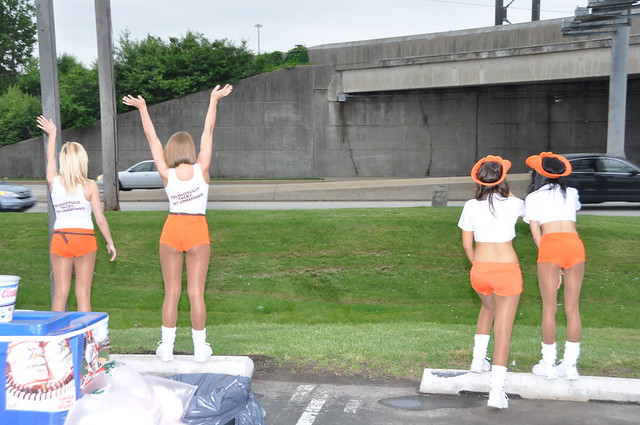
dictate, that they be “necessary and ordinary.” If Senator Barron had chosen to spend his entire campaign fund to hire Hooters Girls at $10,000.00 apiece for the day, to wave his signs at voters at polling places on Election Day, he would have been guilty of questionable taste. He might have even become as big a joke as Shad McGill. (It being Alabama, I will refrain from speculating about whether Barron might thus have beaten him.) But as long as the Hooters Girls stayed 30 feet from the front door of the polling place, there would have been no crime. As with the Ethics Act charges, the FCPA counts of the indictment are also due to be dismissed.

The Barron and Johnson cases are in front of DeKalb County Circuit Judge Randall Cole. Cole, a Democrat, is the most senior circuit judge in the state, and was re-elected to his final term in 2012. (He will be ineligible for further terms due to age limits.) For years, Cole was selected by his fellow circuit judges to sit on the Judicial Inquiry Commission, which investigates ethics charges against judges. For much of his time on that panel, he was selected by its members to be its Chairman. Cole’s assignment to the case is fortuitous for Barron and Johnson. Cole need fear no political blowback from (properly) dismissing the charges before trial, even if such pedestrian concerns ever influenced his rulings. While Strange could appeal a dismissal to the Court of Criminal Appeals, that Court would be more reluctant to reverse such an eminent trial judge. Even more troubling to “the Criminals” is that they are themselves all
elected judges, and should be disinclined to issue a ruling that subjected them to potential indictment. Presiding Judge Mary Windom (left, front in the photo), for example, paid her campaign operative Bill Goolsby $17,500.00 in her 2008 campaign. Was that salary criminally “converted to [his] personal use” under the Ethics Act? She also paid Auburn Network, Inc., and the affiliated Network Creative Media some $107,700.40, and we all know to whose “personal use” that got “converted.” Were those “necessary and ordinary expenditures” of her campaign? Reversing a dismissal would create a precedent that could get these Republicans indicted.

This brings us back to the way Strange is channeling the ghost of Thomas Knight, Jr. This indictment is pure, dirty politics. At least some political pundits view Strange as a potential primary challenger to Governor Bentley in 2014.
Note Strange’s less-than-supportive posture and visage during Bentley’s 2013 State of the State Address, while others are shown applauding. Strange’s fraudulent indictment of Barron and Johnson is nothing more than an effort to throw red meat to the Republican base. An additional Republican political motive comes from rumors that Barron is contemplating either an effort to regain his Senate seat, or perhaps the Lieutenant Governor’s chair, in 2014. While Strange knows that these charges are fraudulent and won’t stick, he doesn’t care. To the low-information voter, “Barron” and “indictment” now have a subconscious association. To combat this, we Democrats have to put on our A-game after the charges are tossed, to keep the spotlight on Strange’s unethical behavior. From comments on al.com to letters to the editor to statements by Party leaders, the drumbeat of Strange’s impropriety has to be maintained. Not only to make him suffer the consequence of his wrongdoing, but to undo the unjustified damage to the reputations of Senator Barron, Ms. Johnson, and the Party as a whole.


Before I close this Part II, I have to return for a moment to the petite, lavishly-paid Jessica Garrison, and her incredibly tall six-year-old son Michael. According to statistics maintained by the Centers for Disease Control, fewer than 5% of all boys are four feet tall at age six, and he’s obviously well past that.
Titian: David and Goliath
He’s going to make the basketball coach at Mountain Brook High School happy someday. Why, at this rate, he will grow up to be as tall as ... Goliath. Where did you think I was going with that, anyway??

Thursday, June 6, 2013

Why Lowell Barron Will Walk Away a Free Man, or, Why Luther Strange Will Never Be Governor - Part I


One of this year’s leading political news stories was the indictment of former State Senator Lowell Barron, shown here before his crippling tractor accident last year, and his former campaign employee Jill Johnson, on charges of violating the Alabama Ethics Act and the Fair Campaign Practices Act. As if on cue, media sources from across Alabama, which have never mentioned the corruption of “Choctaw Bob” Riley or Speaker Mike Hubbard, jumped on the story as an example of “corrupt Democrats.”

The relevant facts of this case are a matter of public record, fully disclosed in Barron’s campaign filings. Jill Johnson was a long-time political employee of Barron, and she is known all across his former district for her campaign and constituent services work. When Shad “Hands Off, He’s My Man!” McGill upset Barron in the 2010 general election, Barron had no further need of a campaign staffer. Like many grateful employers, Barron gave Johnson a well-earned severance bonus. He gave her title to the campaign’s high-mileage, four-year-old Toyota Camry, and two cash payments of $6,000.00 and $50,000.00. The indictment also charges Barron and Johnson for a payment of $2,000.00 during the campaign. I guess Republican Attorney General Luther Strange hasn’t practiced enough real law to know that it’s a crime under § 16 of the Fair Labor Standards Act (29 U.S.C. § 216) not to pay your employees their wages.

In fact, his lack of real legal experience notwithstanding, Strange knows that his indictment of Barron and Johnson is frivolous, perhaps to the point of being unethical conduct on his part as a member of the Alabama Bar. In this post, I am going to look at the Ethics Act charges against Barron and Johnson. In a future post, I will talk about the Fair Campaign Practices Act part of the indictment.


 When Alabama first adopted the Ethics Act in 1973, it was one of the first of its kind in the country. To be sure, over the years, it has provided the means for ridding Alabama politics of a number of unsavory political figures. Republican Governor Guy Hunt comes to mind. Sometimes, it has been criticized as being too strictly applied, as when the Ethics Commission has fined public employees for using the office fax machine for a local personal fax, at no cost to the taxpayers. In balance, though, the law has been beneficial for the state. It is Strange’s blatantly political use of the Act – in the year before an election in which Barron is rumored to be seeking to regain his Senate seat – that is so worthy of condemnation.

The provision of the Ethics Act that Barron and Johnson have been charged with violating is deceptively simple:

Contributions to an office holder, a candidate, or to a public official’s inaugural or transitional fund shall not be converted to personal use. Ala. Code § 36-25-6.

Now, the first thing anyone has to realize is that this part of the Ethics Law only reaches contributions to Barron’s campaign. This case does not involve one penny of taxpayer money. The second is, as noted above, that Barron properly disclosed these payments on his campaign disclosure reports, which are available to anyone online. Finally, according to lawyers involved in the case, Johnson reported receiving these payments on her income tax returns, and paid tax on them. I think we can safely assume that is true, because otherwise she would have been charged with tax evasion.

Let’s unpack the language of the statute. No one is denying that the funds were campaign funds, or, in the words of the statute, “contributions to an office holder [or] a candidate ...” The only question is whether the payments caused contributions to be “converted to personal use.” Now, if Barron had paid these funds to himself, there would be no question that the law had been violated. That is the thing – with inauguration contributions – that got Guy Hunt convicted. But none of the payments in the indictment were to Senator Barron. They were to Johnson. So, Barron and Johnson are only guilty of violating the Ethics Act if payments to her constitute “conversion to personal use.”

Obviously, that phrase “converted to personal use” is the key to these charges. The Ethics Act does not define “personal use.” This leaves no obvious answer to the question, whose “personal use” are we talking about? When it comes to the Alabama Ethics Act, I think it’s safe to say that no one knows more about it than the Alabama Ethics Commission, the independent agency that enforces it. Their staff spends a minimum of 40 hours every week thinking about it, and the Commissioners themselves spend countless hours studying it before and during meetings. In a 2005 opinion to Circuit Judge Joseph Brogden of Escambia County, the Commission had this to say about this statute:

Provided the disposition of excess campaign funds are not converted to the personal use of the candidate, a member of his or her family or a business with which he or she is associated, the disposition of excess campaign funds is controlled [only] by The Fair Campaign Practices Act, found in Title 17 of the Code of Alabama. Alabama Ethics Commission, Advisory Opinion No. 2005-15 to Hon. Joseph Brogden, p. 5 (April 6, 2005)(emphasis added)(approving transfer of surplus campaign funds to church of which officeholder was member, on proviso that he was not an officer or director, and advising that such a transfer was only subject to the FCPA).

In other words, if the transfer is not to the candidate/officeholder, his family member, or his business, Ala. Code § 36-25-6, which is what Barron and Johnson are charged with violating, does not apply to the transfer, and there is no crime. Yes, this Opinion adds words (“a member of his or her family or a business with which he or she is associated”) that are in the statute only by implication, limiting “personal use” to the candidate/officeholder or his family. But when you think about it, no other reading of the law makes sense. 

First, at some point, when campaign contributions are spent on the campaign, they are going to be “converted” to someone’s personal use. When a candidate buys a radio spot, the funds are “converted to the personal use” of the owner of the radio station. Purchase of a newspaper ad means campaign contributions are “converted to the personal use” of the owner of the newspaper. The newspapers that have been condemning Barron without a trial ought to think long and hard about what that interpretation means to their owners. And today, every campaign above the level of dogcatcher has at least one paid staffer. There is no real difference in the legitimate remuneration of a staff member, and the purchase of an ad in the media. If candidates are to exercise their First Amendment right to campaign, contributions to their campaigns have to be “converted to the personal use” of their staff and vendors. “If the First Amendment has any force, it prohibits ... fining or jailing citizens, or associations of citizens, for simply engaging in political speech.” Citizens United v. Fed. Election Comm’n, 558 U.S. 310, 349 (2010). Hiring and paying a campaign staff member is “simply engaging in political speech.”

Secondly, the interpretation of the Ethics Commission makes even more sense when you think about the obvious purpose of this section. Both the Ethics Act and the Criminal Code have bribery provisions. This provision is just a backstop to them. If it weren’t there, a candidate or officeholder could evade a bribery charge by just having the bribing party make a contribution to his campaign, then disburse the funds to himself, rather than directly pocketing a bribe. That’s obviously not an issue when the money goes to a staffer who is not a candidate’s family member.

Finally, the Federal Election Campaign Act of 1971 has a very similar prohibition stating that a “contribution or donation described in subsection (a) of this section shall not be converted by any person to personal use.” 2 U.S.C.A. § 439a(b)(2). The Federal Election Commission has interpreted that statute to prohibit only transfers to the candidate or his family, and even then, allows such payments if the payment to a family member for campaign work is not “in excess of the fair market value of the services provided.” 11 C.F.R. § 113.1(g)(1)(H). Ms. Johnson, it goes without saying, is not a member of Senator Barron’s family.

In short, Senator Barron’s payment of compensation to his staffer, for work done, is not a violation of the Alabama Ethics Act. Attorney General Strange and his assistants know this, and should never have charged Senator Barron or Ms. Johnson. In fact, this law is so clear, that Attorney General Strange has probably violated Rule 3.8 of the Rules of Professional Conduct of the Alabama Bar, which states that a “prosecutor in a criminal case shall ... refrain from prosecuting a charge that the prosecutor knows is not supported by probable cause.” A criminal defense lawyer I know recently pointed out to me that there have been many cases where both trial and appellate courts have thrown out convictions of even clearly guilty murderers because of intentional prosecutorial misconduct. He went on to tell me that he had searched the back issues of The Alabama Lawyer, in which all disbarments, suspensions, and reprimands of lawyers are published, and had never found a single case in which a prosecutor had been given a sanction for prosecutorial misconduct. (I welcome any correction to that observation in the Comments.) Not even when that misconduct was in a death penalty case. Perhaps this will be the case that changes that.
North Carolina disbarred Mike Nifong, the district attorney who brought bogus rape charges against members of the Duke University lacrosse team in 2006. At least Nifong had a witness who claimed to have been a victim of an actual crime. Perhaps someone with skin in the game will file a complaint with the Alabama Bar when these charges are disposed, and we can do as well as North Carolina.

There is another rule – this one a rule of common sense, involving glass houses and stones – that Attorney General Strange seems to have violated. Meet Jessica Medeiros Garrison. The photo below shows the petite Ms. Garrison next to the 6’9”, former college basketball player, Mr. Strange.
Like Ms. Johnson, Ms. Garrison spent 2010 working for a
candidate. In her case, the candidate was her fellow Mountain Brook resident, Luther Strange. She also owns a corporation, MDM27 Holdings, Inc., which tells the Secretary of State that its purpose is to provide “political marketing services.” As Strange’s 2010 campaign expenditure disclosures show, one of MDM27 Holding’s clients was his campaign. As calculated by the blog Legal Schnauzer, based on these compiled expenditure disclosures, Ms. Garrison and her corporation “converted to [her] personal use,” by Strange’s definition, some $227,727.99 of the campaign contributions to the Strange campaign - over three times what Senator Barron paid Ms. Johnson. You can review these reports, and a compilation of the sums paid Ms. Garrison, and check Legal Schnauzer’s math, here:

Ms. Garrison was paid for all this “work” while, as these reports show, Strange had different firms and consultants handling most of the parts of his campaign, such as media, polling, direct mail, and so forth. During part of the time in which she was getting these payments, she had joined the payroll of a white-shoe Birmingham law firm, Balch and Bingham, and couldn’t have been working full time for Strange. Nice work if you can get it.

Now, since the Attorney General is doing the exact same thing for which he indicted Senator Barron and Ms. Johnson, may we presume he will demand that he and Ms. Garrison be indicted, as well? That would, of course, be the honorable thing. And surely, the Attorney General is an honorable man. His fellow Republicans – Governor Bentley and Speaker Hubbard included – allowed contributions to their campaigns to be “converted to personal use” by their staffs.
Will Mr. Strange see to it they are indicted? That would be the honorable thing, and surely the Attorney General is an honorable man. So are they all, all honorable men.

I would ask that the readers of this post, and the coming post on the Fair Campaign Practices Act, do a service for their State, but more importantly, for Senator Barron and Ms. Johnson. Attorney General Strange has played this case for maximum political effect. His investigator arrested Ms. Johnson, and coordinated her arrival at the DeKalb County Jail with the news media. The major media in this state, especially our three largest newspapers and their joint website, have relied almost exclusively on the Attorney General’s office for the “facts” and “law” of this case, and have accurately reported neither as a result. What I want you to do, reader, is bookmark this post, and the coming Part II, in your browser. Keep your eyes on both the TV and newspaper coverage of this case as it proceeds. If you see a story about the case that does not point out the identical behavior of Mr. Strange and Ms. Garrison, or fails to point out the interpretation of the law by the Ethics Commission means there was no violation, get the reporter’s email, and send them a link to this post and/or Part II. Tell them you expect them to do better, since the information about the Attorney General and his “consultant” is also a matter of public record. Tell them you expect them to accurately report the law, as these posts set out, and attorneys for Senator Barron and Ms. Johnson will doubtless do in court. Send letters to the editor. 

This is not a criminal prosecution, because there has not been a crime. As a result, these charges will not stand up, regardless of what the media report. But if we can keep the media honest, not only will Senator Barron and Ms. Johnson walk away vindicated, the real criminal in this case – Luther Strange – will limp back to Montgomery with his dream of riding Barron and Johnson into the Governor’s Mansion in tatters. We can control the headlines with pressure on the media.

Before I close this Part I, let’s return to the cute, petite, pixyish Ms. Garrison. What on earth would Ms. Garrison do with that kind of money “converted to [her] personal use?” Well, it costs a lot to raise a proper Mountain Brook kid these days. Meet Michael Garrison, who just turned six in March, sitting next to Mommy, and, as you can see with your own eyes, already reaching her ears. Isn’t he a cute, tall six-year-old, growing like a weed on triple-13?

Stay tuned, friends, for Part II. And would someone get General Strange something to drink? He is not looking at all well over there.

Tuesday, October 12, 2010

Shadrack McGill - The Republican Ethical Standard (Or, How to Win After the Indictment)

We all remember the Exilic tale of Shadrach, Meshach, and Abed-nego. (Though, being well-educated Democrats, we spell the first name correctly, unlike the subject of this post.) These three loyal servants of God refused to obey the edict of Nebuchadnezzar to worship the golden image he had set up. Cast into the fiery furnace, they were not only saved by divine intervention, upon their emergence Nebuchadnezzar repented and promoted them to even higher offices than those they had previously held; a truly Sunday School happy ending.

The devout today are hearing from a thousand pulpits across Alabama, that not only do Democrats favor such sinful activity as gambling, they are taking all sorts of bribes to do so. (I still don’t grasp why we have to be bribed, if we are so wicked and depraved in the first place.) One Republican nominee in particular, Shadrack McGill of Woodville, has interjected himself into the gambling indictment story by claiming to have testified to the grand jury that he was offered $15,000.00 not to run against Democratic Senator Lowell Barron in the 8th District. The claim is patently absurd. McGill is enough of a nonentity that no sensible political boss would spend more than $5,000.00 to keep him out of the race.

More to the point, we would do well to consider the source. McGill’s orthography is not the only indicium of his Biblical unfamiliarity. He seems to be even less conversant with the Mosaic edicts so well defended by former Chief Justice Roy Moore. Especially the one about “Thou shalt not steal.” (Ex. 20:15). Meet Ronnie and Shelia Johnson of Jackson County. According to their court filings, Ronnie and Shelia wanted to live the American dream, and own their own business. Mr. McGill happened to own one, a restaurant in rural Jackson County. The Johnsons agreed to buy McGill’s restaurant from him, for payments of $1,330.26 for 60 months at 20.2% interest. (McGill apparently thinks Lev. 25:36, “Take thou no usury of him, or increase,” doesn’t apply to him, either. Republicans are good at overlooking inconvenient Bible verses.) This January, the Johnsons claim, they tendered the final payment and were ready to take delivery of the deed to their restaurant. Only there was no deed forthcoming. On looking into matters with a lawyer, the Johnsons found out that, contrary to what he had told them, his restaurant had either a mortgage or his own land-sale contract obligation encumbering it, which he apparently hadn’t been paying. (McGill, being a fine Christian, did decline to accept the final payment.) Even if he had given the Johnsons their deed, the property would apparently be of little net value to the Johnsons because of the encumbrance. Meanwhile, McGill can probably buy a lot of yard signs for his campaign with the Johnsons’s $78,485.34. For those who want more detail, this is the complaint as filed in Jackson County Circuit Court:


Now, if McGill had been the Republican nominee against Barack Obama, The One would probably still be munching lotus, wondering why McGill didn’t simply succumb to his charm and drop out of the race. Unfortunately for McGill, he’s not running against Obama; he’s running against Lowell Barron, who has been fighting Republicans successfully since The One was a scholarshipped basketball player at Honolulu’s elite Punahou School. (Alabamians, think of Altamont and Indian Springs.) Unlike Obama and his “genius” political staff, Lowell Barron knows what to do when handed a perfectly good baseball bat, and there’s a Republican within arm’s reach:


If Barack Obama’s political skills were as good as Lowell Barron’s, we Democrats would be looking at losing 10 House seats and two Senate seats, tops. And if Obama had Barron’s willingness to answer Republican lies with hard-hitting, yet truthful, counterpunches, we would probably have, at least, public option health insurance, and maybe even a single payer plan. Who knows, if Obama had the wit to quit trying to be a philosopher-president and fight, he might have gotten a big enough stimulus bill, that the unemployment numbers wouldn’t be wreaking their current havoc on Democratic poll numbers.

While Obama is apparently too busy pandering to Republicans by throwing Shirley Sherrod under the bus to tell his Attorney General to fire the last remaining Rove hack in a U.S. Attorney post, there are things we can do to fight back against the GOP sham indictment. We must miss no opportunity to talk about Bob Riley, and his un-investigated $13,000,000.00 from Mississippi Choctaw casino owners. Individual Republicans have their own Achilles’ heels; Kay Ivey drove PACT into the ditch, and Luther “Big Oil” Strange paid for much of his Mountain Brook mansion with oil lobbying money. (In case the ADP missed the memo, oil companies aren’t popular along the Alabama coast this year.) There can be no stop to exposing the seamy underside of the Shadrack McGills (and Mike Hubbards) the GOP is offering the voters to bring “ethics” to Goat Hill. We have to get some paid media up on these issues, and we have to reinforce that message in canvassing, letters to the editor, and just Hardee’s coffee table talk. If I sound like a broken record, or worse yet, a scold, it’s because I haven’t seen the focus and intensity on this point I need to see from a winning Party campaign. I keep hearing “we did a press release on that last week.” Good. Glad you did. But have you or your candidate or Party been quoted on it today?? As a hapless Crimson Tide learnt on the south side of Columbia this weekend, when you lose your focus, you lose. Don’t let it happen to us.

And yo, Shad. Welcome to the furnace, dude.

Tuesday, August 10, 2010

The Battle(s) of Goat Hill - Part II

A few weeks ago, I took a detailed look at a handful of local races for seats in the Alabama Legislature, with a view to dispelling the GOP line that they will certainly be in control of Goat Hill come January. Once again, the Republican Party has issued press releases, announcing the inevitability of its takeover of the Alabama Legislature in 2010. Once again, its obedient friends in certain editorial offices have dutifully repeated their masters’ story line for thousands of readers. A recent headline in The Birmingham News informed readers that “Alabama GOP Sets Sights on Taking Control of State Legislature” - not the most neutral headline, and the article has some neutrality issues on its own. In referring to the race in Senate District 13, it said:
... if Dial, a longtime senator who is well-known in his community, can’t beat newcomer Varner in what is now a Republican-leaning district, chances are Republicans don’t have much of a chance to win the Senate.
OK, exactly who said it’s a “Republican-leaning district”? Looking at the map, a lot of that district consists of hard-line Democratic counties, represented in the House by the likes of Rep. Richard Lindsey (D-Centre). The courthouses in that district are overwhelmingly Democratic. It may be a GOP pickup chance, it may not. Former Democratic Senator Gerald Dial - who lost the Democratic primary in 2006 - is making a comeback try as a Republican. He will be well known, but his last outing in this district was an “L.” But out there as unquestioned, if unsupported, news, is that it’s a “Republican-leaning district.”

The article meets the de minimis balance test, in that it quotes Democratic Chair Joe Turnham and other Democrats, but their quotes are not the best points that could be made. They are not quoted pointing out several prime Democratic pickup opportunities that are likely to offset any GOP gains, and may exceed them. I don’t blame these leaders for not being quoted saying these things, because I know from personal experience the most telling points you make often get edited out of a news story. But there are a few salient points that need to be made about the lay of the land, and they don’t bode well for the Republicans.

Statewide trends and considerations. But first, a word from our sponsor. Well, not really. But if you read my first post on legislative races, you recall that the linchpin of the GOP strategy collapsed when Artur Davis did not win the gubernatorial primary. The GOP had counted on him to pull several white Democratic nominees to defeat with himself in November. A second shell landed in the GOP legislative foxhole on the day of the runoff, when Bradley Byrne went down to defeat. That is when our “sponsor” - AEA, so says the GOP itself - attained its foremost electoral goal of the cycle. The cha-ching! you just heard was something, probably at least two million dollars, that AEA would have spent attacking Byrne in the general, landing in the coffers of Democratic legislative nominees everywhere.

On the other side of the coin, the Republican National Bank, sometimes known by its legal name, the “Business Council of Alabama,” maxed its credit card trying to nominate Bradley Byrne for the governor’s mansion. The Business Council isn’t used to having to contest the GOP nomination, and their lack of spending discipline showed. While Alabama Power and other Big Mules will never run out of money, they will be playing hurt in the Big Game in November. Another self-inflicted Republican injury is political. The bruising GOP runoff between Bentley on one side, and Byrne, Hubbard, and the GOP establishment on the other, has left cracks and fractures all over the Republican edifice. Yes, everyone kissed and made nice in public this last weekend, and the peaceful reunification of the GOP was dutifully reported in The Birmingham News. But don’t you believe it. The wounding of Mike Hubbard in the gubernatorial race has already led him to renounce another term as Republican State Chairman. Despite the Marcus Welby figure Dr. Bentley has managed to cut so far this year, people around Tuscaloosa tell me he has a vindictive side. He isn’t likely to forget Hubbard’s barely-concealed support of Byrne, and if he gets a chance to plunge the dagger into Hubbard’s hopes for the Speaker’s chair, he will. With Hubbard wounded, others have been rumored to be quietly sounding out Republican House members about the possibility of replacing him, whether as Speaker or Minority Leader. The upshot of all this is that there will continue to be distraction inside the GOP ranks as November approaches, and Hubbard will be tempted to overspend in safe districts to shore up his leadership support. Given the known character of Mike Hubbard, we can probably count on him to short-change his party for his personal benefit.

And for the local news from across Alabama. Again, this topic wouldn’t be complete without looking at a few districts time, space and the lack of runoff results kept me from writing about earlier.

Senate District 5. This district is centered on Walker County, a Democratic stronghold. It takes in the one sparsely-populated corner of Jefferson County in the Birmingport area, and parts of Tuscaloosa County into the fringes of Northport and Tuscaloosa. The Democratic nominee is Jasper lawyer Brett Wadsworth. While this seat has been in Republican hands for the last three terms, there have been extraordinary circumstances contributing to that. Well, there’s not anything particularly extraordinary about a lot of money. But the two Republicans - Curt Lee and Charles “Slugger” Bishop - have both been wealthy candidates who liberally (so to speak) self-financed. Neither of their Democratic opponents has been able to match the money dump. The GOP this time is fielding Greg Reed, a Jasper executive in a mid-small medical equipment company. While he’s not starving, Reed lacks the deep pockets that enabled Lee and Bishop to swamp their Democratic opponents with checks. The fact is, the base voting history of this district is Democratic, and Wadsworth is not obviously outgunned financially. As the photo indicates, he, or someone helping his campaign, has a good eye for snagging voter attention. This district should, at worst for the Democrats, be considered a tossup. A more factually-based evaluation would call it a Democratic leaner.

House District 8. This Morgan County district has been represented by Democrat Bill Dukes, who was noted for being the eldest member of the current Legislature. When health concerns induced him to drop his re-election bid a couple of months ago, the GOP got out their chalk and wrote “House-8” in their “takeaway” column. Not so fast. The Democratic nominee is Drama Breland (who many not have the most notable name in this post - keep reading). Breland is a well known Decatur businesswoman, and the wife of popular retired Judge David Breland. Despite the GOP’s claims to this as a pickup possibility, it’s really a carefully drawn Democratic district, which includes most of the black neighborhoods in Decatur. No Republican bothered to run against Dukes in 2006, and the last time one did in 2002, he handily held the seat, 74.0%-26.0%. There are a lot of GOP voters in Morgan County. They have been carefully quarantined in other districts. Forget the GOP hype, this is at least a Democratic leaner, if not a safe Democratic seat.

House District 26. This district in Marshall and DeKalb Counties is being vacated by longtime Democratic Representative Frank McDaniel. As soon as McDaniel announced his retirement a few months back, GOP mouthpieces immediately wrote this district into their “pickup” list. That may have been premature. The Democratic nominee is Randall White of Boaz. White recently retired after a 37-year career in adult education, and most of the people in this district with a G.E.D. know him and owe that certificate in part to his efforts. That’s a nice base to build from. White is also a deacon at the First Baptist Church of Boaz, and has staked out pro-life and Second Amendment positions that will make it impossible to paint him as Nancy Pelosi. The Republicans have nominated Kerry Rich, who held the other House seat from Marshall County (now held by Democrat Jeff McLaughlin) from 1990-94 before deciding re-election was futile. More importantly, while White was being feted by business and civic groups for his retirement, Rich was undergoing a primary and runoff fight that made Byrne-Bentley-James look like a Sunday School picnic. This was the sort of fight that leaves feelings hurt and coffers empty. One of Rich’s opponents filed a successful complaint with the FCC after Rich failed to take himself off the air of his radio station (as a DJ), or offer opponents equal time. This is at least a tossup race.

House District 38. Right in Mike Hubbard’s back yard, and held by a Republican incumbent, this district is not one the GOP needs to have to divert resources to hold. But divert they must. The Democratic nominee is - some things you just can’t make up - Huey Long, a former Chambers County commissioner. While Lee County, a rural part of which is in this district, has shown regrettable Republican tendencies in recent cycles, Chambers County is historically much more Democratic, and retains a strong local Democratic trend. Perhaps more worrisome for the GOP, in 2006, when Riley held a comfortable lead at the top of the ticket, Republican incumbent Duwayne Bridges only held onto this seat by a 50.7%-49.3% margin. Danny, at Doc’s Political Parlor, observes that “I believe the argument could be made that” Bridges is “as vulnerable as” at least one or two of the Democrats whose seats the GOP tout as “in play.” One subtle point I gleamed in looking at Long’s Facebook page: one of his Likers is former State Representative John Rice of Opelika. That’s Republican former Representative John Rice of Opelika, whose fierce partisan tendencies have long been notorious. While many regard Rice as something of a spent force, he should still be considered as a notable local Republican. If this indicates, as I suspect it does, any sort of split in the Lee County GOP, Bridges is in for a long election night.

Senate District 8. Some of the Republicans’ claimed “in play” seats are simply fantastic. Among them, they count the seat of Senator Lowell Barron (D-Fyffe). Barron’s opponent is one Shadrack McGill, who hails from the isolated mountains of western Jackson County. McGill appears to be a young Tea Party type who has become involved after listening to numerous political sermons at his rural church. Apart from whatever crumbs the state GOP throws his way, his finance will be negligible. Four years ago, when Barron was challenged by a seasoned GOP activist who prodigiously self-financed from his successful business, Barron handily won, 56.6%-43.4%. For the last quadrennium, Barron, undistracted by his previous duties as President Pro Tem of the Senate, has even more assiduously worked to cultivate the volunteer fire departments, high school bands, and Little League ballparks that are the meat and potatoes of legislative campaigns, especially in rural districts. Only this month, Barron again became a hero to every good ole boy in his district, when he brokered a compromise with the National Park Service that should allow continued four-wheeling in the Little River Canyon National Preserve. Among the broken links and jarring grammar of McGill’s website is the observation that “Shadd is pursuing a degree in Political Science.” He’s about to get a serious homework lesson. If the GOP thinks this seat is really in play, Loretta Nall has successfully infiltrated the GOP High Command.

As with my previous review of Legislative seats, my point is not that the Democrats are going to sweep the seats I have named. Even I will admit that’s unlikely. But it’s equally unlikely that the GOP will, either, and therein lies the fallacy of their PR campaign. When they tout their impending takeover of Goat Hill, they are counting every seat I have listed as a likely or solid pickup. That’s simply unrealistic. The problem is, most of the media in Alabama have not really challenged them on this. How can we get them to? Well, a first step is the labor-intensive process of educating first-tier media collectors - that is, reporters - about these individual races, and their impact on the overall numbers. If we don’t do that spadework, no amount of clever turns of phrase will reverse the hostile tenor of the resulting news coverage. As was done with some effect in the piece from The Birmingham News that opened this post, we can also remind the media - and the voters - that this is not the first time the GOP has proclaimed the coming of its Legislative Antichrist. It’s just the latest iteration. Those of us with long memories recall when, as recently as the 1970s, Birmingham’s George Siebels (actually quite moderate, considering his party affiliation), was the default Republican leader in the House, as he was the only Republican in either chamber. While a return to that golden age is unlikely, we need to remind the media that, despite the occasional court-delivered Republican governor, the Alabama voter has trusted the Democratic Party with the Legislature, and for good reason. The only thing more important is to fight to see to it that we continue to deservedly do so. These are tasks not only for the statewide Party leadership, but for each nominee for the Legislature and their local supporters. The links to these candidates’ websites provide another valuable opportunity to work for this worthy goal.