Sunday, January 30, 2011

Reports of the Alabama Democratic Party’s Demise Have Been Greatly Exaggerated

After a few weeks off to catch my breath, and to deal with everything from the real world that could be put off until after the election (including an unforeseen family health problem; thanks again, all, for the calls and emails), it’s time to take a look at what happened, and why, in last November’s elections.

What, we know. For the first time since the votes were counted by funny-talking guys in blue uniforms, Alabama will have a Republican legislature, and the Tennessee Valley will be represented by an elected Republican in the U.S. House of Representatives. Democrats suffered our first shutout ever in statewide offices. A number of elected local Democrats went down, but the casualty count there wasn’t as bad as it was upballot. Just to pull out some examples, Democratic Sheriffs Jerry Studdard in Talladega County and Jimmy Harris in DeKalb County, as well as Democratic Sheriff nominee Chuck Phillips in Jackson County, handily beat their GOP opponents, even while the statewide ticket was taking a thumping in their counties. So let’s start our analysis with the fact that, despite what you heard a “political scientist” proclaiming on television on election night, Alabamians, even white Alabamians, will vote for at least some Democrats.

Many pundits took the opportunity of this election to call it an ideological refudiation (to borrow a word from an execrable source) of progressive, Democratic ideology. Under this paradigm, moderate and independent voters were reacting to the “liberal” or “leftist” tilt of the Democratic Party. While the message mismanagement (and in some cases, nonmanagement) of the Obama Administration made this a plausible hypothesis, a closer look at the numbers doesn’t bear it out.

The biggest problem suffered by Alabama Democrats in 2010 was nothing less - or more - than a significant upsurge in the white voter turnout. To see clearly how much the white vote increased this year, compare the Democratic and Republican vote totals in two overwhelmingly white counties, and three black-majority Democratic strongholds, in the 2010 and 2006 gubernatorial races:


Democratic 2006Democratic 2010Republican 2006Republican 2010
Shelby10,69613,57737,16149,118
Cullman9,5378,80115,08121,083
Macon4,5416,6321,274919
Green3,2603,666973665
Perry3,0253,2771,2371,138

Note that the Democratic vote in Cullman did not drop off that much, and the Democratic vote in Shelby actually made a small uptick. This was not a matter of traditional white Democratic voters switching parties in significant numbers. This was, purely and simply, a case of a lot of white folks, who had not been voting in recent cycles, coming out of the woodwork last November. (Don’t let anyone tell you that the significant increase in Shelby County is attributable to population growth in the last quadrennium. In the wake of the Bush Recession, housing starts there shrank to a trickle in the runup to the 2010 election.) Neither were the increases in Macon and Greene Counties indicative of a statewide (and offsetting) increase in black turnout; local bingo shutdowns by Bob Riley were almost certainly responsible for those numbers.

Of course, the increased white vote was seriously polarized. Heavily white, but historically Democratic strongholds like Cherokee, Franklin, Marion, and Jackson Counties, went for Bentley. The correlation between race and party choice in this election is obvious:


You may have noticed that the correlation is not so strong in those counties where the black population is under 10%. This is a long-standing historical phenomenon, and many of those counties have been part of the Democratic base. The correlation strengthens significantly as the black population approaches and passes 30%. While this is in part the mathematical result of an overwhelmingly Democratic black vote becoming a larger portion of the electorate, historical precinct-level studies have confirmed that the phenomenon has been manifest within those counties, at the precinct level. This failure of these Democratic base counties to polarize as extremely as other counties provides significant statistical support for a conclusion that it was “new” voters, not switching voters (as in the media narrative), that caused the Republican surge.

What is harder to say is, what caused this increase in white turnout, and its polarization. In part, this is because there is not the depth of exit polling data available that typically follows a presidential election. But it doesn’t take a very seasoned political hand to guess what it was. In 2006, only a handful of political junkies in Alabama knew who Barack Obama was. In 2010, he was President, and the constant focus of the Republican campaign at every level. His what-me-worry messaging style only allowed the GOP to paint him as a scarier, more liberal, and less American figure. Yes, Alabama once again ran the race flag up the pole, and saluted it.

I can see one objection to this analysis, and it bears answering. If race was the determining factor in this year’s white turnout, why did the same thing not happen in 2008, when Obama was actually on the ballot? Why were Lucy Baxley, Bobby Bright, and then-Democrat Parker Griffith (does anyone still remember him??) not swamped in the same racist riptide that caught Jim Folsom, Jr., Susan Parker, and a raft of veteran legislators? It is my rejoinder to this objection that gives me hope for the Democratic Party’s future in Alabama.

To understand what made 2006 and 2008 different from 2010, we have to reset our mental worldviews to the earlier years. We have to avoid the historical amnesia that is more characteristic of Republican voters. In each of the earlier election years, potential voters were treated to a steady diet of Republican incompetence. Katrina, an un-caught bin Laden, two wars dragging on without results, and a growing stream of Bush scandals were part of the national zeitgeist in both election years. By the time of the 2008 election, Lehman Brothers (which was founded in Montgomery) had failed, and the economy had gone into free-fall, on Bush’s watch. Even Bubba, watching Fox News, couldn’t avoid his daily dose of this bad news. Anyone who doubts that this sort of steady diet of bad news can overcome the deepest prejudices or sympathies, needs only look around to see how many Auburn or Alabama sweatshirts (as the case may be) vanish from public view when one of those football teams is going 5-7. In that respect, racists (to their horror) are just like everyone else. Fair weather fans. They simply were de-energized by a tidal wave (no continuation of the football pun intended) of bad news, and stayed home in the 2006 and 2008 cycles.

Since the day of Hippocrates, diagnosis has been the better part of prescription. We cannot replicate the national disasters of the Bush years. (Neither, like the GOP House, should we seek to for political gain.) We cannot, apparently, tutor the President on effective progressive advocacy. But we, as Alabama Democrats, can do a more effective job of sharpening the differences between us and the Alabama Republican Party. We can do a much better job of bringing to voters’ attention the sordid figure of the Wall Street Wizard behind the “Christian” curtain. We can, with skill, create a large measure of both paid and earned media to trim the edges of racist enthusiasm (and, thus, turnout). We can, at long last, and despite sputtering efforts to claim we were doing so, finally have a cycle where the Democratic Party rings the doorbell of every regular Alabama voter, greets him or her by name, and asks for his or her support. I am optimistic about the prospects of this from the comments of newly-elected SDEC Chairman, Judge Mark Kennedy. In his acceptance speech, he promised that “We are going to eat their elephant one sound bite at a time.” This (along with my years of knowing Judge Kennedy, and having helped in his judicial campaigns) tells me that he at least sees where the problem is. I suggest we all do what we can to help Judge Kennedy keep this focus, and resist the “wisdom” of the cliques who would tell him to keep doing things the old way.
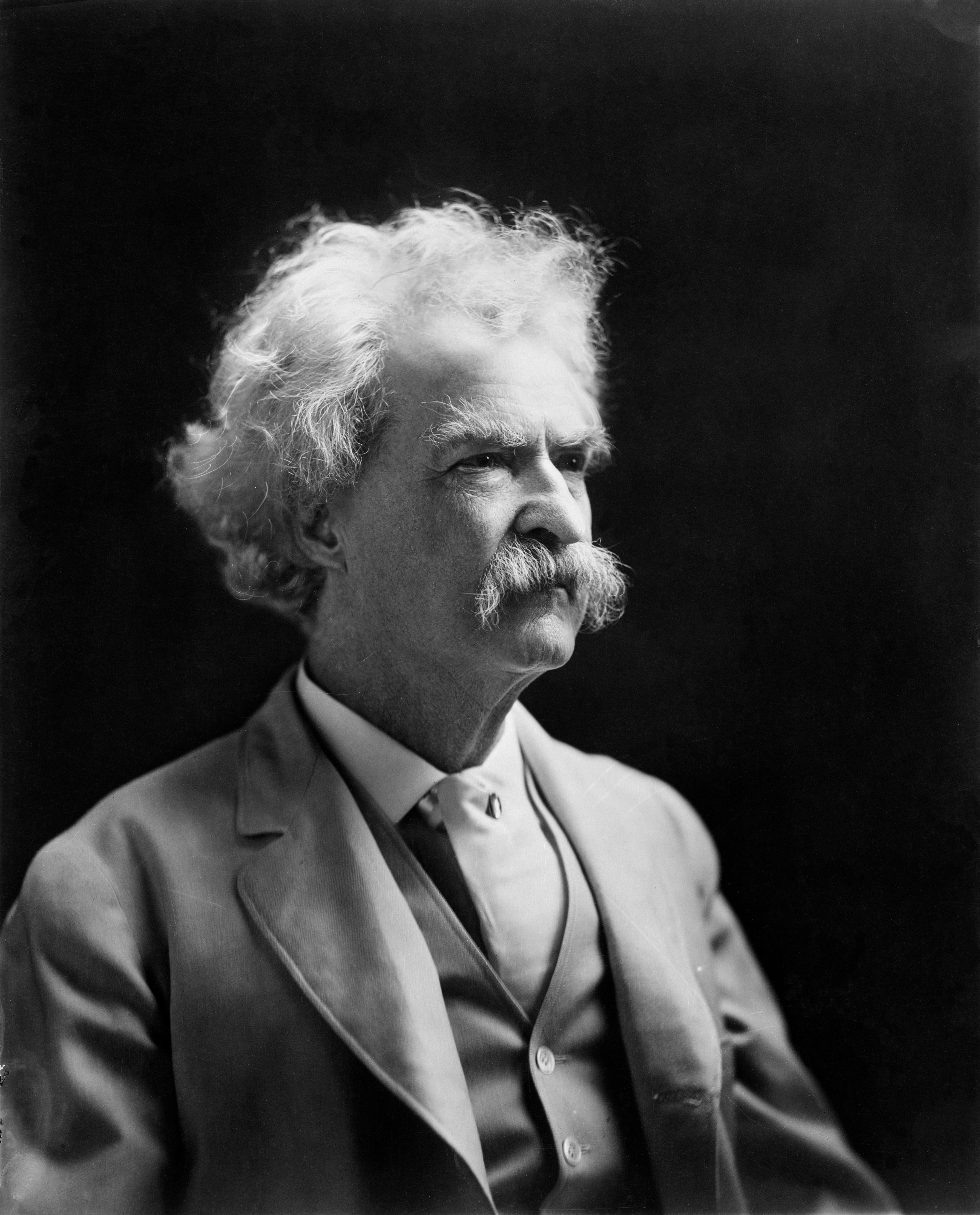
Take heart in this. Whatever you read in the pro-Republican “media” in many parts of Alabama, do not become too discouraged. It may well be that the reports of the Alabama Democratic Party’s demise have been, like those of the Sage of Hannibal, greatly exaggerated.

Monday, December 20, 2010

When Is Ethics Reform Not Ethics Reform?

I had hoped to have a brief sabbatical before resuming this space, but, alas, Choctaw Bob decided to call a special session of the new Republican Legislature, so at least one entry will be fueled by fruitcake and eggnog.

All you have to do in Alabama this week is pick up a major daily newspaper, (note the Publian throat-clearing on that page) or turn on the TV news, to hear how the Wonder of Ethics Reform has been ushered in by the new Republican monopoly on political power in Alabama. You would think no one ever testified under oath to Congress that Bob Riley pocketed millions in Choctaw casino money. Why, it probably all really went to those ethics-reform-killing Democrats who got voted out last month!

The Republican-Newhouse chorus of praise for restrictions on “lobbyist” expenditures depends, for its political effect, on the public’s failure to understand how lobbying really works. The rather simplistic public view - strongly supported by the editorial slant of the largest news outlets - shows most votes in the Legislature being determined over the tenderloin filet with Béarnaise butter at Sinclair’s or the chopped lobster over angel hair at SaZa’s. I won’t discount the impact this gustatory largess has on legislators (although both of the foregoing delicacies are within the per-meal limits of the new law), and its restriction will improve the moral atmosphere. But the real work of the lobbyist lies elsewhere.

The disproportionate influence of lobbyists in the Alabama Legislature stems from a number of factors. Perhaps the most underrated comes from their access to information not otherwise available to legislators. While legislators in many states have access to research staffs and personal staffs that are comparable to those in Congress, Alabama lags behind. The understaffed and underfunded Legislative Reference Service and Legislative Fiscal Office simply cannot provide anyone, including legislators, with much of the information needed to evaluate legislative proposals. Enter the lobbyist, or the interest group they represent. No one has performed this function as notably as the Alabama Education Association. No small part of the influence of Paul Hubbert and his employer comes from their mastery of the complicated budgetary and economic data necessary to balance a budget. In the coming GOP quadrennium, there will be new fights over how to deal with shortfalls in the education budget, but one thing will remain constant. If Governor Bentley’s staff says the Education Trust Fund will be X dollars in the black next year, and Dr. Hubbert’s staff says it will be Y dollars in the red, legislative leaders will be working from the latter presumption, even if they dare not admit it.

As much as lobbyists influence legislation by direct pressure, they earn their keep by simply tracking it, and counting the noses of supporters and opponents. Smaller groups, which don’t have a full time executive or staff in Montgomery, count on retained lobbyists to notify them if a bill impacting their members has been introduced, and then let them know where it is in the legislative process. Even the larger groups on Goat Hill - the AEA’s and the ALFA’s - largely use their lobbying staffs to send blast faxes or emails to members from Boaz to Brewton, to tell them it’s time to call their legislators about House Bill B. That sort of pressure, more than any martini, moves votes in the State House. Even, perhaps especially, in the case of big-ticket legislation, it’s the heavy-hitting principal, not the lobbyist, who makes the trek for deal-closing face time with a swing voter. John Archibald of The Birmingham News figured this out, when he noted (in attacking GOP Senator Scott Beason’s hypocrisy on “ethics reform”), that Beason didn’t wear a wire to talk to some briefcase-toting lobbyist lackey. He (allegedly) wore it to talk to Milton McGregor.

Of course, if you really want to move votes in the legislative process, donate. Fund those re-election bids. And while the “ethics reform” session put a few speed bumps in the path of redirected money, it came far short of erecting any roadblocks. Even the slight additional disclosure required under the PAC-transfer ban is likely to be of limited effect. Remember again AEA’s cannonade against Bradley Byrne during the GOP primary and runoff campaigns.


Even if Bill Maher got the source of the ads wrong, everyone in Alabama knew their origin. AEA’s sponsorship was the worst-kept secret in the history of Alabama politics. As with any step taken to dissuade future attackers, that bankrolling had to be an open secret to be effective. While the transfers to the “True Republican PAC” gave Tim James and Bentley a fig leaf behind which to hide, media buys of such an effective size can only come from a handful of places, and the old cui bono rule makes it easy to short-list the suspects. More to the point, despite the fact that everyone with a pulse knew the ads originated from AEA, they worked. Byrne went down in flames. In the meanwhile, the GOP “ethics” bills won’t particularly impede business interests funneling cash to “religious” groups, some 527 language in the bills notwithstanding. Those “religious” groups, in turn will continue to lobby for Christian stances, like corporate tax breaks, and will identify GOP nominees to their voter-members as “more aligned” with “Christian” positions.

The so-called “ethics reforms” may give the GOP some talking points, and may leave those unfamiliar with the daily grind on Goat Hill with the idea that things are now fine, but they really will not make any material change in how the people’s business is conducted at 11 South Union Street.

What we are left with is the inescapable conclusion that this session had nothing to do with ethics. It had everything to do with passing anti-AEA bills, banning teachers from running for the Legislature, and banning public entities from deducting AEA and ASEA political contributions from paychecks. (I am still waiting for the explanation of why it’s more unethical for a Democratic teacher to vote on an education budget, than it is for a Republican insurance agent to vote on a bill impacting the insurance industry.) Those bills would have been at serious risk of a Bentley veto come January, as well as being maneuvered behind budgets in a regular session. The 52-49 final House vote passing the payroll deduction bill shows that there was insufficient support to pass the bill in a regular session, with a governor more sensitive to employee rights.

Of course, as this blaring headline from The Birmingham News shows, the GOP and its media apologists have not wasted the opportunity to trumpet the “historic” accomplishments of Ethical Bob and his newly-empowered GOP Legislature. With few exceptions, the news coverage has repeated the Republican lie that Democratic Legislatures had “refused” to reform ethics, when in fact, Democratic proposals stronger than those on offer last week were passed by Democratic Houses, and filibustered or blocked by GOP minority blocs in successive Democratic Senates.

Perhaps - and it is our task as Democrats to help them do so - what the Republicans have done is to overreach in their giddy victory dance, and wakened a sleeping giant. In the early 1970’s, George Wallace, looking for some cash to spend as he chose, proposed a raid on the Education Trust Fund. Before this time, AEA had largely been a group of starving, underpaid professionals who gathered in Birmingham during spring break every year to get out of Scottsboro or Eufaula. Under the leadership of the recently-installed Dr. Hubbert, AEA rose with a unified voice, and hundreds of teachers jammed the halls of the Capitol, buttonholing every member of the Legislature. Not only was Wallace’s raid dead on arrival, before running for re-election in 1974, Wallace was careful to pre-empt AEA opposition by giving teachers a $1,000.00 a year across-the-board raise. (This would be close to $4,500.00 in 2010 dollars.) In recent years, while AEA has wielded unsurpassed clout by virtue of its focused financial support and lobbying effort, it has faded somewhat as a voting bloc. Some teachers look at their currently-comfortable paychecks, confuse themselves with members of the Mittelbourgeoisie, and vote Republican in response. Others heed the call of business-shill “clergy,” and vote Republican because Democrats aren’t trying hard enough to execute women trying to obtain abortions. Where the Republican attack on public education will be launched - reduced tenure rights to intimidate teachers, or diversion of scarce dollars to lower-paying charter schools - is not certain. That it will be launched is certain. Sooner, rather than later, any person with the wit to attain the baccalaureate which is a vocational prerequisite for teachers will realize these Republicans mean to do their wallets harm. The impact of 50,000 truly-ticked-off, college-educated-articulate men and women, with starting salaries of $36,000.00 from which to contribute, and all summer off work, can never be underestimated.

Wednesday, November 3, 2010

An Open Letter to Secretary of State Hillary Clinton

Hon. Hillary Rodham Clinton
15 Old House Lane
Chappaqua, NY 10514

Dear Secretary Clinton:

Please resign your position as Secretary of State.

I ask you to do this not because of any dissatisfaction with your work in that position. Indeed, among the members of the current Cabinet, you stand almost alone as one who has performed her duties in an efficient and effective manner, carrying out the progressive ideals the Democratic Party promised the American people in 2008. If Secretary of the Treasury Geithner and Attorney General Holder had performed their duties as competently as you have yours, tanning-bed freak John Boehner would not be the presumptive Speaker-elect of the House of Representatives today.

No, I am asking you to resign because a decent respect for the duties of a Cabinet member to the office of the President, demand that you no longer serve in the Cabinet of a President whom you intend to oppose for the 2012 Democratic Presidential nomination.

And I beg you to seek that nomination.

Fortune provided the Democratic Party in 2008 with the sort of opportunity that comes along once in a generation. Eight years of know-nothing ideological Republican mismanagement had tarnished that party’s image to the point that voters handed Democrats not only the Presidency, but the largest Congressional majorities we had enjoyed in 40 years. We had the opportunity to effect the sort of generational realignment that Roosevelt accomplished in 1932. Progressive reforms, accompanied by the modern version of Roosevelt’s explanatory Fireside Chats, would have effected a change for the better in America as profound, and as permanent, as the New Deal. Health care reform that provided a single payer or public option, meaningful financial regulatory reform, and a stimulus smart and bold enough to truly dent the Bush recession, would have left American a much better place. More to the point, properly and unapologetically sold to the American people, they would have left the 2008 Democratic mandate largely intact, and as long-enduring, as FDR’s majority, which lasted for decades. (By way of comparison, FDR gained 9 seats in the House, and 10 in the Senate, at his first midterms - despite undertaking a far, far more radical system of reforms than Obama timidly embraced. That is political acumen.)

Instead, we are faced this morning with the results of a pummeling. Why? DC pundits, wanting to sound sage and impartial (and wanting to be invited to the cocktail parties of a resurgent GOP) will tell us it is because Obama and the Congress tacked too far to the left in 2009 and 2010. That is, however, not the case.

The unvarnished and painful truth is that Barack Obama lacks the intellectual depth, the political savvy and skill, and the will to fight, to lead the fight against the Republican Party, and that is why I am asking you to challenge him for renomination.

I will use his incompetent management of health care reform to illustrate that point. As you doubtless hated to watch, his “campaign” for reform consisted of remaining aloof from the fight, and allowing Democrats in Congress - many of whom lost their seats yesterday - to carry the workload. Several competing plans bounced around the Hill for a year. When Obama finally weighed in, he unilaterally took single payer off the table, and meekly proposed a public option. This in itself showed that, while he may have “learned about diverse cultures” following his mother around Indonesia and the Pacific, he doesn’t understand the American legislative and political processes. As when buying a home, you don’t make your first offer what you really want to pay. You’ll only pay more, and get less, in the end.

Worse yet, rather than get behind one proposal early and use the “Bully Pulpit” to get its most appealing points across to the public, he vacillated between competing proposals, and allowed Republican obstructionists to define what “health care reform” meant in the public mind. As a result, when polled throughout 2010, most Americans said they were against “Obama’s proposal” or the “Democratic proposal,” and those beliefs were a principal cause of yesterday’s results. They were opposed to it because of what they had heard Republicans say about “death panels,” the loss of physician choice, and other horrors - none of which were, of course, in any Democratic proposal. But it’s only the Bully Pulpit, repeatedly used, that can rebut such lies. Your stance on health care during your 2008 campaign showed that you learned this lesson from your 1993-94 experience in the field.

That “Democrats went too far left” is further belied by polls conducted by Pew and other groups that described the Democratic proposal rather than labeling it. When respondents were asked about “a plan” that would, in essence, “require everyone to buy some kind of insurance, provide help to the poor to do so, require insurers to cover pre-existing conditions and prevent them from dropping those who get seriously ill,” - in other words, the final Democratic plan - the approval percentages were around 60%, with several percent disapproving because it didn’t go far enough. Yet Obama preferred getting some guys on the basketball court to show off his fadeaway shot to the cameras, to doing the heavy lifting of closing the information gap.

Obama and his inner political circle spent the first year and a half of his term believing the press reports of their own brilliance. This was an exercise in narcissistic folly. The tarnished Republican brand meant that any Democrat was going to win in 2008 (although Obama, trailing in September, came too close to losing). The structure of the primaries virtually guaranteed that whoever won the Iowa caucus would once again be the Democratic nominee. In the runup to that caucus, you were subjected to brutal and unrelenting media scrutiny, as you should have been. President Obama, pointedly, was not. You made some mistakes, from which your later campaigning showed you learned. Meanwhile, future President Obama’s aloof leadership style and shallow grasp of American democracy went unchallenged, and unrevealed. Unfortunately, the voters did a fine job of revealing them yesterday.

I will be the first to admit I am asking you to take a gamble. It is possible that the President has learned his lessons. Much too late, he adopted a more strident tone in his public rhetoric. But if he were as bright as his media reputation suggests, his obsession for bipartisan accommodation on major reforms would not have outlived Summer 2009. Yesterday would have been no more than a minor seasonal midterm adjustment. Perhaps you have a month or two to decide, but an effective challenge to a sitting President means that you need to be on the rubber chicken circuit soon. It is not as long a shot as you may think. Even before yesterday’s debacle, an Associated Press poll showed that 47% of Democratic voters think Obama should be challenged for the nomination.

Like so many Democrats, I so wanted this President to succeed. I have given him every chance I can. It is going to take someone of your stature and abilities to keep him from using the muscle of incumbency to secure renomination and further damage the Party and nation. I am willing to do my part, and I cannot be alone.

I will meet you in Des Moines.

Your friend and supporter,
PubliusIX

Sunday, October 31, 2010

Focusing on a Local Sheriff’s Race, or, I Thought “Bray” Was What a Mule Does

It’s a small thing, in many ways, a local race for sheriff.

But in others, it can show you the soul of a party - what sort of stuff its rank and file are made of, unvarnished and unglossed by consultants flown in from Los Angeles and paid for by Wall Street money.

These are my thoughts as I contemplate a handful of photographs sent to me by a Democrat in DeKalb County. The first of these shows Lamar Bray, the police chief at Mentone (what does he do, arrest summer camp kids who aren’t in their cabins by curfew?), and the GOP nominee for sheriff, looking at a campaign sign he claims was vandalized in Crossville.


Bray, after making statements to the media that the sign was “vandalized,” said on his website only that it was “significantly damaged” on the night of October 24-25. But the item on the “significant damage” also refers to signs being “removed,” making the obvious implication that nefarious supporters of Democratic Sheriff Jimmy Harris were responsible.

Before joining Sherlock Bray on his search for these vandals, let’s review DeKalb County geography. Crossville is merely a couple of miles down the road from Geraldine. It is also close to the Boaz-Albertville area. Was anything in particular going on in that neighborhood the night Bray claims his sign was “damaged”? Well, according to the National Weather Service:

0417 AM TSTM WND DMG ALBERTVILLE 34.26N 86.21W
10/25/2010 MARSHALL AL EMERGENCY MNGR

DAMAGE NEAR THE INTERSECTION OF 431 AND HWY 75...AND
ALONG HWY 75 TO THE INTERSECTION OF HUSTLEVILLE RD. THE
KMART AT 431 AND HWY 75 SUSTAINED ROOF DAMAGE. POSSIBLE
TORNADO DAMAGE.


The storm damaged the Albertville K-Mart that night, just a few miles from Crossville, and The Sand Mountain Reporter said it was still closed for most purposes at the end of the week. My informant also sent me a photo from nearby Geraldine, from the Fort Payne Times-Journal.

Now, if a storm can do that to a house, it can sure do it to an eight-foot, wind-catching campaign sign. You think, Barney Bray? Or is there a bigger issue here about that “honest sheriff” claim in your sign?

Just remember in these closing days, and stay alert for misinformation. Have a rapid response capability ready to go at a moment’s notice!

And Happy Hallowe’en!

Friday, October 29, 2010

Republican Mac Buttram: The Case of the Lying Parson in the 12th House District

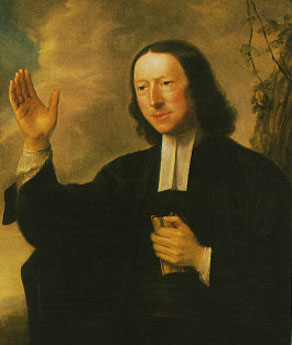
I am astonished that the BBC has not reported a major earthquake being felt in London, in the vicinity of Old Street Station, along City Road. There, in the garden of City Road Chapel, lies buried John Wesley, founder with his brother Charles of the Methodist movement. The Rev. Wesley is doubtless spinning in his grave with sufficient velocity to register on the seismograph at nearby King’s College.

Wesley’s eternal rest has certainly been disturbed by the actions of one of his ministers in the North Alabama Conference of the United Methodist Church. This comes about because the contest for the seat in House District 12 features not one, but two ordained Methodist ministers. The Democratic incumbent, the Rev. Rep. James Fields, made national news, being noted in The New York Times. This spotlight came because Fields, an African American, won the seat in a 2008 special election in a district that is 98% white. Fields is a retired state employment service staffer who is active as a Methodist minister.

His GOP opponent is the allegedly Rev. Mac Buttram, who is not only also a retired United Methodist minister; Buttram performed the wedding of Fields to his current wife, whom he married after Fields’s previous wife died. Buttram had officiated at the funeral of the earlier Mrs. Fields. Rep. Fields was also surprised to learn that Buttram planned to run for the seat, when Buttram (in the center, holding hands in prayer with Fields in the photo below) had been, for several years, a member of his weekly prayer-breakfast group meeting at the Cracker Barrel in Cullman.

John Wesley was no stranger to the toil and strife of life in a fallen world. Charged with slander in Georgia, and abandoned by his wife late in life in England, he endured his share of bruises. But even he would probably, at this point, be pointing a finger at the uncharitable candidacy of the allegedly Rev. Buttram.

Then there is The Ad.

Beginning last week, the Alabama Republican Party began running an ad on TV in this race, in which the Rev. Fields is accused of “trying to let murderers out of prison.” I will let the ad speak for itself:


I will leave for another day for the allegedly Rev. Buttram to explain why he should be opposed to a legislative act, sponsored by the Rev. Fields (HB 532, 2010 Regular Session), that embraces the sort of forgiveness and reconciliation that are supposedly part of the core of Christian belief. For now, I will suggest to the allegedly Rev. Buttram that he take a day off after the election to listen to a message from the Rev. Billy Neal Moore, a black Pentecostal minister from Rome, Georgia (whom I have heard speak, to my considerable benefit). The Rev. Moore was as close as having his head shaved to Georgia’s electric chair, when a series of events led the family of his murder victim to seek his eventual pardon, parole and release.

What I will not allow the allegedly Rev. Buttram to escape this morning is being asked, how dare he don the robe of a minister, and mount the pulpit and preach in God’s name, when he has not admitted and denounced the lies told by him, and on his behalf, including those in the above ad, and asked the Rev. Fields for forgiveness?

Columnist John Archibald of The Birmingham News, who tends to tack a bit Republican (or at least conservative), charitably referred to the ad as “dubious.” I will go further. The ad is a patchwork of lies and misrepresentations unworthy of a minister - or any Christian, for that matter. For starters, the bill sponsored by Rep. Fields (which died in committee) did not make all murderers eligible for release. It did not impact murderers on death row at all; they still would have awaited execution. It only impacted those who have been, or would be in the future, sentenced to life without parole for their murder. It did not direct their release. It set up an elaborate series of hoops through which they would have had to jump. First, the murder for which they were convicted would have had to have been the first felony conviction they suffered; this is a bill for “crime of passion” murderers, not career criminals. They would have had to have served a minimum of 20 years of their prison term. Then, they would have had to petition the judge who sentenced them (or one from his circuit) to reduce their sentence from “life without parole” to “life, but eligible for parole.” Then, and only then, could they have asked the Board of Pardons and Paroles for a hearing. Anyone familiar with that Board will tell you, it doesn’t take much of an objection from victims or prosecutors to block a parole request.

But the ad is even more misleading. Not just every murderer serving life without parole could have applied for the bill’s relief. In order to even apply to the sentencing judge, the offender (besides having to have served 20 years), would have had to have had:
  • No disciplinary action for assault on other inmates or Department of Corrections employees during the 10 consecutive years immediately preceding the date of the petition for consideration;
  • No disciplinary action for escape or attempted escape during the 10 consecutive years immediately preceding the date of the petition for reduction;
  • No disciplinary action for sexual assault during 10 consecutive years immediately preceding the date of the petition; and
  • No disciplinary action for illegal drug or alcohol use as determined by testing positive for these substances on a urine test during the five consecutive years immediately preceding the date of the petition.
In short, no one would have even been considered for parole under this bill who hadn’t lived at the foot of the Cross for a very long time. I’d be surprised if a half dozen inmates are even eligible.

But the lies of the allegedly Rev. Buttram do not stop there.

According to a report in The Cullman Times, the killer of the son of the couple appearing in the ad would not even be eligible for consideration for relief under the bill in question. (Am I the only one who thinks they look a little old to have had a kid as young as those in the photos, even as far back as the supposed murder date in 1992?) Also, that Times report relates that the allegedly Rev. Buttram continues to refer to a local murderer in Cullman County as one eligible for release under the Fields bill, even though Rep. Fields has publicly pointed out to Buttram that the person in question is an habitual offender, and thus would not have been eligible.

I have heard it said of several figures whom I admire that they are “too Christian to be in politics.” Jimmy Carter and the Rev. Fr. Robert Drinan come to mind. The Rev. Fields may be in that company. I keep hearing that he is reluctant to do more than defend his own character, and is hesitant to shine a light on the character of the allegedly Rev. Buttram, which is darker by two shades than the Rev. Fields’s skin. He has steadfastly refused to bring up the divorce of the allegedly Rev. Buttram (DR-1980-138 in Lauderdale County, while I understand he was pastoring a church there, for the curious). We can only hope the voters of the 12th House District realize what a Christian gentleman they have, and will vote accordingly. For my own less forgiving part, I conclude with three messages:

To the allegedly Rev. Buttram: You, sir, are a disgrace to the proud heritage of Methodist leaders like John Wesley, Francis Asbury, and John Emory. I beg you to abstain from the pulpit until you have renounced your violations of the Ninth Commandment and the Second Greatest Commandment, and asked for the forgiveness of the voters of the 12th District - the Rev. James Fields in particular.

To the Rev. Fields: I wish I had your ability to look past the sins of others. But I want you to consider this. The Rev. Dr. King, painful though he must have found it, had the kind of heart and spirit that could love and forgive even George Wallace and Bull Connor, and I am sure he did. That did not mean that he felt constrained to remain silent in the face of evil. Remember this, as you continue what I hope will be a long career of service in elective office.

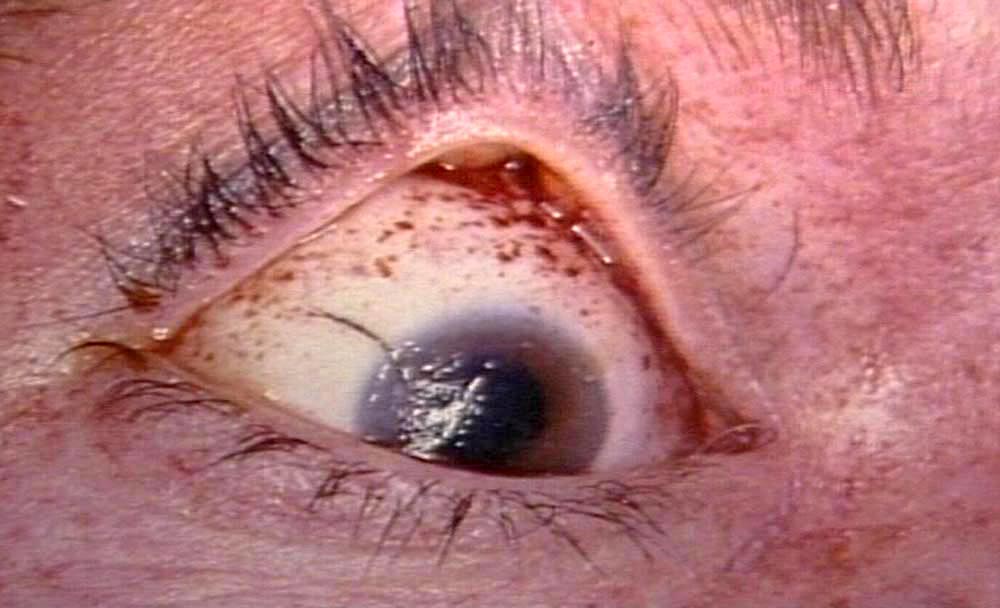
To the Rt. Rev. Dr. William Willimon, Bishop of the North Alabama Conference of the United Methodist Church: What kind of [earthy Episcopalian expletive] ecclesiastic discipline are you running over there, that this backstabbing, lying Mac Buttram hasn’t had his collar jerked off so hard he developed petechiæ? (Readers may share this sentiment with Bishop Willimon by clicking on the link in his name. Those who would like to share their opinions of the two candidates with the Editor of The Cullman Times may click on the link here.)


Wednesday, October 27, 2010

Kerry Rich - Another Problem with GOP Family Values

For a candidate who makes such a deal of his “faith,” Kerry Rich has some serious skeletons in the closet. After my post regarding his checkered past the other day, I got a suggestion to follow up on another lead. I did, and was saddened at what I found in the files of case number DR-2000-399 in the Circuit Court of Marshall County, Rich’s 2000 divorce from former wife Teresa Rich.

Kerry Rich 2000 Divorce

We all have our shortcomings, but we do not all have records of domestic violence. And while Rich may have repented and reformed, this disturbing part of his record at least gives the voters of his district another compelling reason not to vote for him. It is, after all, the Legislature which makes the laws under which perpetrators of domestic violence are punished, and prevented from doing further harm. Rich cast several votes against toughening child support laws, after being hauled back to court by his first ex-wife for nonpayment of child support. It is perfectly legitimate to worry that he would likewise vote against the victims of domestic violence, out of his apparent sense of identity with its perpetrators. Rich and this former wife eventually settled their disputes, and a consent divorce decree was entered in the case.

And it does make you wonder about the staff screening process at WJIA, the “Christian” radio station where Rich works today.

Tuesday, October 26, 2010

Déjà Vu All Over Again: Sparks Ascendant

“Déjà vu all over again.”

Of all of Yogi Berra’s assaults on the English language, none has entered common usage more than this one. Not only does it amuse with its classic Yogi structure, it captures a certain sensation better than many more erudite expressions.

The phrase generates over a quarter of a million Google hits. It has inspired television scripts, countless quotations, and even an album and song by John Fogerty:


It only seems appropriate to use it to describe the phenomenon we are witnessing in this final week of the gubernatorial contest. At this point before the May primary, anyone who was keeping up with events knew some sure bets. Bradley Byrne would lead the Republican ticket (he did), but would not have enough votes to win without a runoff (which he didn’t), so he would have to campaign another six weeks before being crowned as the GOP nominee and presumed governor-elect (the part of the Republican narrative which went terribly awry).

On the Democratic side, the safe bet was even safer. Smooth, debonair, educated, erudite Artur Davis would ride a tsunami of Obama-style black excitement, combined with a respectable portion of the white vote, to the Democratic nomination - whereupon he would probably be edged out after a respectable, “reform vs. reform” campaign, by Byrne. Rustic Ron Sparks, shackled with a community college education and running from the unglamorous base of the Department of Agriculture and Industries, was no match for a D.C. product who had shone at the 2008 Democratic Convention, giving Obama’s seconding speech.

As the internet meme puts it, “epic fail.”

Polls were repeatedly published in Davis-friendly media outlets such as The Birmingham News and the Mobile Press-Register, showing Davis with leads of 10% or more within a week or ten days of the primary. Despite that, when the smoke cleared election night, Sparks had trounced Davis by a 62.4%-37.6% margin. Basically, Sparks had done 20% or more better than the most recent pre-primary polls touted by the “mainstream media.”

I have spoken before about the unreliability of those polls. What is interesting is that, in publishing the recent polls showing Sparks rapidly closing the gap, the media have been close-lipped about the crosstabs on their polls. This is telling. My best educated guess is that the Bentley lead, such as it is, is based on an artificial polling result among black voters that gives him several percentage points among blacks that simply won’t be there on Election Day. For better or worse, black voters continue to rely much more heavily on party identification as a voting cue than do white voters. (I would, of course, say it’s better.) The result of this is that a Republican will benefit in polling results from random black respondents naming the Republican, when (if properly polled) would give responses betraying their Democratic intentions. To an extent, this explains the “surprise” showing by Siegelman in 2002, when media polls had essentially written him off.

Which is where we come to “déjà vu all over again.” Sparks is now as close to Bentley in those “media polls” as he was to Davis in late May, if not closer. More to the point, Bentley is finally beginning to show the strains of media scrutiny. Even the Newhouse outlets, which have endorsed him, have been reporting on his inability to produce a consistent and credible story about the extent of his ties with AEA in his runoff campaign against Byrne. The Republicans in Alabama have almost forsaken Pelosi-bashing as a campaign theme in favor of promises of “honest” government. This is in no small part due to the availability of Bush-appointed U.S. Attorney Leura Canary and her politically timed indictments of Democrats. The problem is, when you are trying to sell yourself as the non-political honest alternative, “credibility” is not the toe of your own on which you want to be stepping.

While Sparks has not had the advantage of the corporate money dump that Bentley is using, he has done a fairly brilliant job of playing the hand he has been dealt. He has done well in the Wiregrass with the bingo issue, and should run well ahead of the last few Democratic nominees in that area. As it is part of the GOP base, that is important. Sparks is also benefiting from one of the strongest African-American turnout efforts in recent gubernatorial history. Black totals may not equal those of the Obama campaign, but GOTV efforts are substantially more intense this round than they have been for any Democratic gubernatorial nominee in the last 20 years. I have been talking to astute observers across Alabama, and have not gotten any indication that any significant part of the black political community isn’t on board and full-speed-ahead at this point. The one place I would have liked to have seen Sparks doing better would have been with the BP issue in Mobile and Baldwin Counties. That, however, has been a tough issue to exploit. Sparks doesn’t have the corporate cash for a targeted local paid media push, and the Press-Register isn’t going to give him much of a free-media break on the issue by pointing the finger at Bush-era deregulation.

This is critical, because - and I do not mean to point fingers here, only accurately describe what happened - two razor-thin Democratic gubernatorial losses of recent years, 1994 and 2002, took place when certain key black political organizations or individuals weren’t fully exerting themselves. If you know what to look for on a spreadsheet, their inactivity sticks out like a sore thumb. And in both instances, the resulting lower black turnout was fatal to the Democratic nominee. Had those problems not arisen, we would likely have a current political narrative about “Democrats have won the last five governor’s races.”

Do you need further proof that there is no structural preference for Republicans in Alabama gubernatorial elections? Look at the aggregate votes from the last four gubernatorial general elections:


DemocraticRepublican
2006519,827718,327
2002669,105672,225
1998760,155554,746
1994594,169604,926
Total2,543,2562,550,224
%49.93%50.07%

Remember, when looking at that, the GOP vote in 2006 was artificially boosted by Baxley’s unwillingness (and financial inability) to go negative on Riley, and Riley’s financial leveraging of his incumbency. (Which, being translated, means “Choctaw casinos.”) The Democratic landslide in the table, 1998, was against the power of incumbency. Correct for those factors, and this is a seriously Democratic number. I do not care if you are a political scientist whose reputation is based on the historic success of the football team up the street, saying there is a presumption of a Republican governor in any given year is bad political science.

All in all, it should be an interesting night a week from tonight. I think a lot of people, who have been getting their news from the Usual Suspects, are going to be as surprised as they were on the night of June 1. There is no need for Democrats to relent at this point, and, in fact, we’re close enough that the last little effort can put us first past the post. Look inside, and find it, people.

Or, once again to quote The Yogi, “It ain’t over ‘til it’s over.”