Monday, May 9, 2011

Republicans Are Disasters, and They Can’t Even Manage One


In my last post, I discussed the inexcusable votes cast by Alabama’s entire Republican Congressional contingent to de-fund a program to replace aging weather satellites. Those satellites played a key role in the advance warnings that, in turn, saved hundreds of Alabamians in the April 27 tornadoes. Those votes were the product of brainless, lockstep GOP party discipline, maintained in the name of preserving Bush tax cuts for multimillionaires; the lives and property of working Alabamians be damned. Today, I want to shift the focus a little, and look at the Republican philosophy of government, as it pertains to a related topic - disaster management.

This is a rich vein for Democrats to mine. It illustrates, in a concrete manner most voters can grasp, the benefits of a competent, professional approach to government, and the folly of the Republican disdain for all things public. When the horror of last month’s storms gives way to a more routine discourse (and given the Republican Legislature’s desire to continue spanking AEA, that will be soon), we need to be in a position to effectively advocate our position.

Return with me to 1992. Under George H.W. Bush, the Federal Emergency Management Agency (FEMA) was directed by Richard Stickney, a New Hampshire GOP hack with no background in emergency management. The agency was roundly criticized for its handling of several national disasters, most notably Hurricane Andrew in South Florida in 1992. A staff report of the U.S. House Appropriations Committee found in the aftermath of Andrew that “FEMA is widely viewed as a political dumping ground, a turkey farm, if you will,” where political cronies could be rewarded.

Among the Arkansans who followed Bill Clinton to Washington was James Lee Witt, who had served under then-Governor Clinton as head of Arkansas’s state emergency management agency. Witt was the first director of FEMA with a professional background in emergency management. Witt changed the entire atmosphere at FEMA. Senior jobs were rewarded not to political patrons, but to emergency management professionals. The agency’s historical emphasis on preparedness - remember all those fallout shelters in the 50’s and 60’s? - was renewed. As a professional, Witt knew that preparedness dollars go a lot further than mitigation dollars.

In 2000, we all remember what happened. Millions of voters five Republican judges decided that America had had enough of peace and prosperity, and put George W. Bush in the White House. After an interlude, FEMA found itself being run by the famous Michael D. Brown. Brown’s emergency management experience consisted of a brief term on the city council of Edmond, Oklahoma, and his tenure as Commissioner of the International Arabian Horse Association. Given the scandal that led to his resignation from that job, and the insolvent Association’s takeover by a rival group, perhaps that can be considered “disaster” experience.

Brown, of course, is best known as the head of FEMA during its utter failure to respond in a timely and effective fashion to Hurricane Katrina in 2005. Brown’s entry into the political lexicon, to the delight of Jay Leno and David Letterman, came in the form of George W. Bush’s praise of Brown’s ineptitude in - of all places - Alabama. The famous phrase, “Heck of a job, Brownie,” was uttered at the Mobile airport, where Bush had stopped on a tour of stricken areas four days after the hurricane hit.

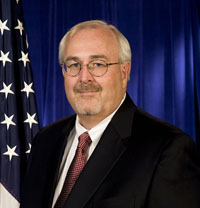
In 2009, Barack Obama and the Return of Competence led to the appointment of W. Craig Fugate as the administrator of FEMA. Unlike his Republican predecessors, Fugate is a career emergency responder. He began as a volunteer firefighter in his Florida hometown, and in true Horatio Alger fashion, worked his way up to the top post of Florida’s emergency management agency, before being tapped by Obama. Fugate has brought back Witt’s emphasis on preparedness, and infused FEMA with a sense of hustle that Alabamians normally only demand from their college football players.

This emphasis on experience and competence paid dividends for afflicted Alabamians in recent weeks, as FEMA crews were opening aid centers in places like Hamilton, Tuscaloosa and Rainsville almost before the debris had all hit the ground. Compared to the near-week it took Bush to leave his Texas ranch to survey Katrina damage, Obama was on the ground in Tuscaloosa within 40 hours of the tornadoes. This is even more impressive, now that we know he was simultaneously keeping track of the developments that led to the elimination of Osama bin Laden.

We all remember what a key role the American public’s revulsion at Bush’s incompetent response to Katrina played in significant Democratic gains in the 2006 elections. This fact, having strong visceral appeal, and being amenable to as brief a message as a 30-second ad, was recognized as a key to the Democratic wins that year, both at the time, and in subsequent review and analysis of the results.

Unfortunately, the absence of Katrina-scale incompetence is not so easily encapsulated in a television spot. (Though with over a year to work on it, something may come to us.) Generally, the distinction between the parties is a little more fact-intensive, and requires more than 60 seconds. There is, however, one medium in which this would be a killer theme. I am thinking of the manifold speeches given by Democratic nominees and Party officers every election cycle to civic and business groups like Rotary and Kiwanis clubs, Jaycees, and chambers of commerce. It’s tempting, in such a venue, for a nominee to focus on “me, me, me," at the expense of the Party message. But unless a Democratic nominee can persuade these business and professional types that there are reasons to vote for any Democrat, the nominee’s time is wasted giving the speech. The Republican predominance in such audiences - and don’t doubt that predominance for a minute - rests in large part on the GOP’s ur-message that “we are good managers, like you successful businessmen, and the Democrats aren’t.” Nothing could put the lie to that story line like a 20 minute talk that starts out, “Let me tell you ladies and gentlemen why I am a Democrat ...,” and then outlines the above information. Nominees, take note: you have to open their minds to voting for a Democrat before they’ll listen to your pitch to vote for you. And if we start picking up votes in that generally secure, if not affluent, cohort, the GOP is in deep Macaca.

Friday, May 6, 2011

Roby, Aderholt, and Brooks Vote for Kill Alabamians Act of 2011

I have a friend, a very bright fellow actually, who has a tendency to go through intellectual phases. A couple of years ago, he “discovered” libertarianism, and occasionally got preachy about how we Democrats were as intrusive as the Republicans, with our “nanny state.” It became a recurring theme of our conversations for me to rib him about his opposition to fire stations. (I think he was mainly excised about government prohibition of his preferred method of relaxation, and am happy to note he no longer is that hostile to us. Bush 43 taught him the folly of protest votes.)

Current Republican hostility to government, on the other hand, seems to know no bounds. A more sensible generation of Republicans like Eisenhower, Rockefeller, and even Nixon maintained a healthy skepticism about government programs. That skepticism and vigilance, in our Constitutional structure, forced progressive Democratic programs to be designed and run in a more cost-effective manner. At the end of the day, these Republicans were pragmatists; Nixon sought to fine-tune Johnson’s Great Society, not abolish it.

Then came Reagan. The Party of Slow became the Party of No.

You would think that simple concerns of electoral viability would moderate those impulses. But you would be wrong.

No, there is not in fact a bill entitled the “Kill Alabamians Act of 2011.” It is known as HR1, and is somewhat more innocuously titled as the Full-Year Continuing Appropriations Act, 2011. This is the linchpin of the budget debates, and shutdown threats, about which you have been reading in the news. Among its provisions is one that, had it been in effect a few years earlier, could have turned the horrible-enough tornadic events of Wednesday, April 27, 2011, into something so much worse, it barely bears contemplating.

To appreciate this, you have to look back to the newscasts and weather reports of the 48 to 72 hours before the devastation erupted. Forecasts were calling for strong storms that long before catastrophe hit. Then, hours before the actual onslaught, the National Weather Service issued a rare “high risk” warning that put the entire state of Alabama on a war footing. Schools canceled classes and sent children home, people turned on their radios and televisions, and everyone from the governor to volunteer firemen and Red Cross volunteers began leaning in the right direction to respond more promptly to what eventually transpired. Those preparations saved countless hundreds of lives.

Many things make those life-saving warnings possible. Supercomputers crunch weather data at a rate that
makes my head spin to contemplate. Research has greatly improved the mathematical models the computers use. But all the computers and all the formulae are worthless without the proper data to process. And a very large part of that data comes from weather satellites, which can track and measure atmospheric conditions everywhere and continuously, without relying on infrequent updates from discrete reporting stations.

Satellites, unfortunately, are like your car, or your microwave oven. They wear out or break down. In the case of geosynchronous satellites, they run out of the maneuvering fuel necessary to maintain their orbiting station. In other words, they have to be replaced. That replacement, of course, involves the expenditure of government funds.

Which is where Representatives Roby, Brooks and Aderholt (along with the remaining Republican members of Congress from Alabama) come in. To a man and woman, they voted for HR1. You will recall that the GOP House has insisted that the continuing esolution contain deficit-reducing cuts, as the Bush tax breaks for billionaires are considered sacrosanct. One of those cuts is that of a $700,000,000 program to replace the aging and failing weather satellite fleet of the National Weather Service. An expenditure that amounts to a couple of bucks for each person in America. When an EF-4 tornado (which may be upgraded to EF-5) passed within about 4 miles of me last week, killing over 30 people, I was at home, in a central hallway, not on the road as I might have been at that hour. I had put a fresh battery in my NOAA weather radio (and even it succumbed that night to the continuous alarms sounded). Was that “high risk” warning hours earlier worth two bucks to me? Would the average voter think it was worth two bucks to him? To quote a fast-falling star of the GOP, “you betcha!”

Simply put, without the irreplaceable data provided by these satellites, the National Weather Service, within a few short years, will be deprived of the ability to make the sort of predictions that saved countless lives last week. With those warnings, we mourn hundreds, but we could have been mourning a thousand or more. Any member of Congress who voted to subject voters to this risk, and any political party that so advocated, should be made to pay the political price for it. No one can say when, or exactly where, but within a few years, people will lose their lives to tornadoes because Representatives Roby, Aderholt and Brooks thought that tax breaks for their multimillionaire supporters were more important than the safety of their constituents. That is almost a mathematical certainty. I shouldn’t even have to mention that accurate weather forecasts are of extreme value and importance to American troops, sailors and airmen fighting around the world.

There will be voices that will say we must not “exploit” the tragedy of April 27 for political ends. We can be sure that the first mention of these irresponsible votes will garner squeals of “exploitation!” and “politics!” from the other party. To be sure, the issue must be discussed in a manner that respects the feelings of those who have lost homes and loved ones. “Bloody shirt” visuals are not necessary to make the point, and would not be appropriate. But it would be a greater disservice to those who suffered loss not to raise the issue, and raise it forcefully.

As to precedent, there is only one issue a society debates that is more important than quotidian public safety, and that is the decision to go to war. I do not have to remind any reader of the absolute politicization of the War on Terror that Bush, Cheney and Rove deployed in the 2002 and 2004 elections. Any Democrat, regardless of his or her record, was subjected to accusations of cowardice, disloyalty, and incompetence. Write letters to the editor calling these members of Congress, and their party, to answer for their votes. Come 2012, some negative paid media is in order. We cannot let them get away with hamming it up before TV news cameras and expressing their “concern” for tornado victims, while casting votes that assure there will be hundreds more of them in the future.

Georgia Democratic Senator Max Cleland, a triple amputee from the Vietnam War, was the subject of 2002 ads pairing his picture with those of bin Laden and Saddam Hussein; he was narrowly defeated by Republican Saxby Chambliss. If the Republicans do not hesitate to engage in tasteless lies, we must not hesitate to make forceful, truthful arguments about their records. Perhaps not this week, but throughout the remainder of the spring tornado season, we should all make this point.

Lest anyone think this is a “regional” argument only applicable in North Alabama’s Tornado Alley, we mustn’t forget that accurate weather forecasts are a vital interest of the other end of the state, including the GOP stronghold of Baldwin County.

More on the disaster of Republican disaster philosophy in my next post.

Monday, May 2, 2011

I Say Obama, You Say Osama, Let’s Call the Whole Thing Off


Wow. What a difference a few hours makes in politics.

As a wise Democratic street fighter of my close acquaintance noted on Facebook early this morning, “I hate to allude to Ross Perot, but ... the giant sucking sound you hear is the wind exiting 80 GOP freshman Congressmen, who are contemplating an Obama approval rating of 91%.”

Is this wishful thinking, or sound political analysis?

Let’s look at the inexorable downhill slope that was George W. Bush’s Gallup Poll approval rating:


Bush’s approval had dropped near 50% on the day before the 9/11 attacks. In their immediate aftermath, they reached for the sky, topping near 90%. As Bush failed to produce the cooling body of bin Laden, permitted his escape at Tora Bora, and was ridiculed for declaring “Mission Accomplished,” that number began to drop until his invasion of Iraq in 2003. The American instinct to support the volunteer troops of a democratic republic pushed him back up to around 70% at the start of the ill-advised Iraq invasion. After events like Abu Grahib became public knowledge and the American people watched Bush’s understaffed occupation allow an insurgency to blossom, his approval dropped again to around 50% - low for a wartime President.

Following the capture of Saddam Hussein on December 13, 2003, Bush saw a quick uptick to about 64%, a gain of 14% or so. It would not regain that point for the remainder of his term, and made only transient reversals of the overall downhill trend. So, which of the gains in popularity does Obama’s potential upswing most resemble?

Bush’s 9/11 leap of near 40% was a natural response to a national crisis, and probably can be largely attributed to a rally-around-the-flag sentiment, not unlike that enjoyed by President Carter in the immediate aftermath of the seizure of the U.S. Embassy in Iran. The 14% Bush jump in the aftermath of Saddam’s capture was impressive. While Saddam was never been popular in the United States, opposition to the Bush diversion into Iraq tempered that dislike among all groups except die-hard, fact-immune Republicans.

Osama, on the other hand, had a 97% unfavorable rating in an ABC News/Washington Post poll in late 2001 (I want to find the other 3%), and he never enjoyed a similar attenuation of that disgust. Any President could have had a live Osama given the Edward II treatment at Ground Zero without serious public blowback. If Bush got a 14% boost from catching Saddam, it stands to reason that the death of the undisputed culprit of 9/11 will give Obama a substantially larger boost. Given that the 90% Bush rating in the immediate aftermath of 9/11 probably represents an historical ceiling in Presidential “popularity,” and that Obama’s current approval rating, pre-Abbottabad, was about 46%, a figure in the mid-80’s is perfectly reasonable. Remember, while Obama has suffered some recent political wounds (a few, as I have noted, self-inflicted), Bush was toting a lot of political baggage on 9/10, and his numbers were not much better than Obama’s on April 30. If you watch (or watched) the visuals of cheering thousands in Lafayette Park and Times Square at 3:00 a.m. this morning, you will agree the mid-80’s figure is sensible.

This can be a game changer, for the entire arc of his administration, if Obama finds the wit (and the killer instinct so far lacking) to use it. I would dread this week at work, were I a fundraiser for Romney or Pawlenty. Or for the RCCC. While Bush’s meteoric rise in September 2001 was reflexive on the part of voters, Obama’s is going to be substantive, and merit-based. More to the point, it’s going to come at the expense of Karl Rove’s favorite bullet point since 2000: that Democrats in general, and Obama at the moment, are soft, and unwilling to pull the trigger in the name of national security. This morning, that talking point is sharing the same briny grave as Osama. Being substantive, it should be far more durable than Bush’s 9/11 boost - and that popularity spike was still at a healthy 69% on Election Day 2002. Remember, gentle reader, that the GOP scored a gain of two Senate seats and eight House seats that day, as well as gaining stealing the Alabama governorship.

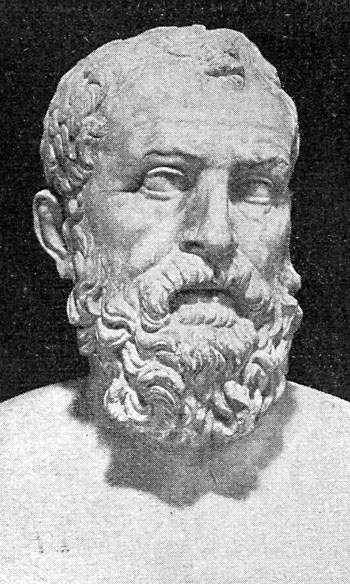
From a policy perspective, the potential parallel to classical Athenian history is hard to resist. In the aftermath of the Athenians’ triumph over the Megarians for possession of Salamis, c. 600 BCE, they were experiencing grievous turmoil between their wealthy oligarchs, and their growing population of disfranchised workers, debt slaves and tenant farmers. Solon had been the hero of the recent Athenian victory over Megara, and like the Americans to Washington in 1788, the Athenians turned to Solon to arbitrate their differences. What Solon accomplished made a true single payer health plan look like small potatoes. Using his military popularity as a springboard, he abolished debt slavery (freeing thousands), reformed citizenship laws to allow immigrants to attain citizenship, redistributed the property of large landowners to small farmers, and gave the poorest workers, the Θήται, voting rights, effectively founding Athenian - and Western - democracy. While worried, I am hopeful that Obama has actually read his Herodotus.

From a practical perspective, we Democrats have opportunities from this morning’s good news. Our talking points in the weeks ahead need to make several facts clear to voters:

  • Bush and the Republicans pulled the Special Forces and other elite units out of Tora Bora in 2001, allowing Osama to escape. Obama sent the SEALs into Abbottabad.
  • Competence and smarts - increasingly a Democratic monopoly - are more effective than swagger and bullying bravado in maintaining national security.
  • While we certainly give due credit to the skills and courage of the military and intelligence personnel, without whom this could not have happened, any reasonable person has to give credit to the resolve, determination, and - try not to use this in your letters to the editor - cojones of the President, who rolled the dice, pulled the trigger, and engaged in any other positive metaphor applicable in the premises.

Should we use this for political advantage? One last time, I quote my acquaintance who was busy last night on Facebook. After some probable Dittohead chastised him for one of the earlier quotes, he responded:

Mr. XXXXXXX, I am touched by your gentle rebuke. I shall refrain from further political comment on this great national occasion - to the full and same extent that the Bush Administration and the Republican Party refrained from politicizing the war on terror in the 2002 elections, and painted everyone who questioned their competence as traitors and cowards. (insufferably smug grin)
Preach on, brother.


Sunday, April 17, 2011

Three to Life - The Myths of Teacher Tenure “Reform”

JUNE 5, 2013 NOTE TO THOSE WHO FIND THIS PAGE: I HAVE NOTED ON MY TRAFFIC LOG THAT THIS PAGE CONTINUES TO GET A LOT OF HITS FROM SEARCH ENGINES, BASED ON SEARCHES FOR “ALABAMA TEACHER TENURE LAW.” I AM FLATTERED BY THE CONTINUED ATTENTION. YOU SHOULD KNOW THAT SB301 PASSED ON MAY 26, 2011, AND SOME, BUT PERHAPS NOT ALL, OF THE PROVISIONS OF SB310 DISCUSSED IN THIS POST ARE NOW LAW. YOU SHOULD CONSULT AN ATTORNEY OR, IF YOU ARE AN AEA MEMBER, YOUR UNISERV DIRECTOR FOR ADVICE ON THE LAW AS IT PASSED. THANKS!

One of the more closely watched bills at this stage of the 2010 Regular Session of the Alabama Legislature has been SB310, a Republican proposal to “reform” the teacher* tenure law in Alabama. The list of the bill’s sponsors reads like a Who’s Who of the hard-core GOP political apparatus: Senators Pittman, Dial, Waggoner, Marsh, Taylor, Beason, Williams, Blackwell and Whatley. The bill’s main sponsor, Sen. Trip Pittman of Baldwin County, has been quoted as saying the object of his bill is “making it easier for school boards to get rid of the bad ones [teachers].” (Please note how the linked story from The Birmingham News contains a couple of short “balance” quotes from AEA Executive Director Paul Hubbert, and devotes many column-inches to quotes and “horror stories” from the bill’s proponents. Nice balance, Si.) The Mobile Press-Register has fallen in line with the Business Council line on the bill.

Don’t believe that hogwash. This bill, pure and simple, has two objectives: (1) punishing teachers who, through AEA, supported Democratic legislative candidates in 2010, and provided support for Gov. Robert Bentley in the 2010 Republican Primary over Business Council insider Bradley Byrne; and (2) intimidating teachers from such political activity in the future.

Before getting into the specifics of the bill, let’s take a thumbnail view of the tenure rights of a classroom teacher under current Alabama law. (Slightly different standards and procedures apply to principals and other supervisors.) First off, a school board may non-renew a teacher’s contract before the end of their third year on the job for good cause, bad cause, or no cause at all. After that time, a teacher is considered tenured, or in the awkward language drafted by a lawyer, has “attained continuing service status.”

Let’s suppose that a tenured teacher is accused of having shown up at school on a couple of occasions under the influence of alcohol. The teacher denies this. Let’s assume for the sake of argument that the teacher was in fact as sauced as Otis Campbell on the days in question. Whether the superintendent and board of education propose to terminate the teacher, or suspend him for more than seven days, the procedures are roughly the same.

First, the board must give written notice to the teacher, setting forth the proposed discipline and the general grounds for it. A tenured teacher may only be fired for “incompetency, insubordination, neglect of duty, immorality, failure to perform duties in a satisfactory manner, justifiable decrease in the number of teaching positions or other good and just cause.” The teacher may then insist on meeting with the board before it votes, and that hearing must be held between 20 and 30 days of the notice. If the board votes to fire or suspend the teacher, the teacher may ask for a hearing before a neutral arbitrator. If the teacher and the board can’t agree on an arbitrator, one is appointed by the Federal Mediation and Conciliation Service, a federal labor agency. That arbitrator (called a “hearing officer” in the statute) must hold a hearing between 30 and 60 days after his or her appointment. The arbitrator may uphold the firing, may reverse it and order the teacher reinstated, or may impose a lesser sanction such as a suspension or reprimand. (Such a reprimand could be considered if the teacher ever screws up again, and an attempt is made to fire him.) Either party may ask the Court of Civil Appeals to review the arbitrator’s ruling, which may only be reversed if that Court finds the arbitrator’s ruling “arbitrary and capricious.” Suspensions of less than 7 days, or of transfers to another school in the same system, are subject to a similar procedure, except that the arbitrator’s ruling may not be appealed, and is final. A teacher’s contract is not “canceled,” i.e., he is not fired, until the hearing officer issues his or her opinion, and he must continue to be paid. This safeguards the innocent teacher from being starved into accepting a lesser punishment, transfer, or abandoning a meritorious fight for his job. Except for the substitution of a prompt hearing with an arbitrator for a hearing with the former State Tenure Commission, this is basically the law as it has existed since 1939.

So, if our hypothetical teacher actually did have a pint of Mr. Boston Vodka for breakfast, he will be fired in fairly short order, but not without an adequate opportunity to establish his innocence. He also has the right to prove to the arbitrator that he is in fact the best teacher in the system, the alcohol problem is the result of a recent family problem, that he’s getting help for it, and that both he and his students would be better off if he were given a lighter sanction. I guess the sponsors of the bill would rather replace this unfortunate chap with a rookie. Or someone who wouldn’t dare support a Democrat.

According to the Alabama Association of School Boards, which is pushing SB310, since the arbitrators replaced the Tenure Commission, they have heard 145 termination cases. The school boards have won 83 (57%) of those outright; the teacher was fired. Teachers have been reinstated without sanctions in only 20 cases (13%), and in 42 cases (29%); the arbitrator has imposed a lesser sanction on the teacher. It sounds like there is a real need for the current safeguards for a number of teachers, but that boards of education are well able to get rid of the true bad apples.

SB310 makes some draconian changes to the law that has worked well since 1939. Among these are:

  • Probably the worst aspect of SB310 is that it radically amends the procedure for a teacher to obtain neutral review of his or her dismissal. Instead of a speedy hearing before a neutral arbitrator, the teacher would be forced to file an action in the local circuit court, where it would go on the docket behind every other earlier case. Chief Justice Sue Bell Cobb recently ordered drastic reductions in court operations in response to budget shortfalls. In this environment, those reviews would take months - or more likely, years. Years during which, under SB310, the teacher would not be getting paid. And the circuit judge would not have the discretion an arbitrator has under the current law to impose a lesser sanction. The judge would have to work from a typed transcript of the board’s “hearing,” and could not observe the demeanor of witnesses, as they would in any other case, to assess the credibility of the witnesses. (Under current law, the hearing officer observes both the teacher and the witnesses against him at a live hearing.) Finally, the judge could only reverse the board on “an express finding by the court that the decision was arbitrary and capricious, a manifest abuse of discretion, or the product of a material violation of the procedural rights of the employee.”
  • In addition to the current limited grounds for firing, SB310 provides that a teacher could be fired for “a consistent or pervasive record of inadequate student achievement or performance under the employee’s supervision.” In other words, a first-rate career educator could be fired if her students perform poorly on tests, even if that’s because she’s teaching in an overcrowded, under-equipped school in a socioeconomic disaster zone, where students have never done well on standardized tests. The board doesn’t have to fire her, mind you, but if she dares support the wrong candidate in the next election, those scores are grounds for termination.
  • SB310 would eliminate all independent review of a suspension of a teacher for less than 45 days. No arbitrator, no independent hearing, no nothing. In case you don’t grasp the full import of this measure, consider that teachers are usually paid over twelve months for nine or so months’ work. A non-reviewable 44-day suspension would result in the loss of nearly a quarter of the teacher’s annual salary. If I were a superintendent wanting to settle a personal score, a 44-day suspension might work better than a termination that might be reversed on review.
  • The bill likewise removes all transfers to another school from the current review process. This may not sound like an issue to many non-teachers, but I have at least 15 teachers in my immediate extended family, and you can rest assured transfers have historically been used for retaliatory purposes. Transfers are often not benign. Suppose that I were a teacher at Orange Beach Elementary School in Baldwin County, and I had even bought a home near there after gaining tenure. If I dare support the opponent of an incumbent school board member, she can arrange to have me transferred to Vaughn Elementary School in Stockton which, according to Google Maps, is 63 miles and 1 hour 39 minutes from Orange Beach Elementary. In an era of $4.00 a gallon gas (those are stop-and-go, not freeway, miles), that’s not a hassle, it’s an economic hardship.

As I noted starting out, this is all being done in the name of academic standards. SB310 is even called “The Students First Act of 2011.” This proposal, and others like it, have occasionally garnered support from fuzzy-headed otherwise-progressive Democrats who also insist that charter schools wouldn’t re-segregate Alabama education. A news flash for them: educational employment in Alabama is already knee-deep in Big-P Politics. SB310’s virtual abolition of tenure would give incumbent local board members and elected superintendents a green light to fully politicize the hiring processes in their systems. (Which might have the unintended political effect of entrenching Democratic machine control in places like the Black Belt, where boards are solidly Democratic.) It also greases the rails for those local board members who need to transfer or fire a qualified, experienced teacher to make room for their niece or nephew who just got out of college and needs a teaching job in the home county. There’s nothing “Students First” about that.

One of the weak excuses given for this bill is that it’s “too hard to fire an incompetent teacher in Alabama, and we have to make it easier for the sake of educational standards.” It takes three years for a teacher to attain tenure under current law. Three years. Does anyone think it takes New England Patriots Coach Bill Belichick three seasons to decide if a player is good enough for his team? If a teacher is that substandard, three years is plenty of time to figure that out, and get rid of him.

The bill’s prospects are sadly good, in the current machine political atmosphere of Montgomery. A handful of Republicans like Sen. Cam Ward of Shelby County, and Reps. Blaine Galliher of Etowah County, Todd Greeson of DeKalb County, and Owen Drake of Jefferson County, seem to be vacillating on the bill because of its extreme reach. A veto by Gov. Bentley would not be surprising, given his political debts to AEA. Of course, a simple majority overrides a gubernatorial veto in Alabama, and the kleptocratic GOP leadership wants this bill badly. They have rebuffed Dr. Hubbert’s public offer to support any bill, in his words, “to expedite the hearings and have them quicker and more efficiently,” which would remove one of the major complaints of SB310’s sponsors. I, for one, would forgive any Democrat who reached out to these Republicans to encourage them to remain independent of the latter-day Boss Hoggs trying to impose their iron hands on the legislative process. This bill would also be a good opportunity for my readers to try out the site’s newest feature: a page with hyperlinks for e-mailing letters to the editor of most of the newspapers in the state.

Politicians have had it in for teachers since at least 399 B.C.E., when Anytus and Meletus, a couple of extremists in the Athenian Assembly, arranged for the execution of Socrates, whose teaching was not acceptable to the political powers that were. Opposing the contemporary version of this unibrow hatred of education is as good a cause as any to rally around in this session. And I wouldn’t be honest if I didn’t acknowledge my glee at the way GOP overreaching is turning teachers into Democratic activists at a pace Dr. Hubbert can only dream of achieving.

*Although I use the word “teacher” throughout this post, the tenure law also applies to a wide range of support personnel such as custodians, bus drivers, and cafeteria workers. I just figure you don’t want to read “and/or support personnel” 60 times.

Tuesday, April 12, 2011

What We’ve Got He-ah Is ... Failure to Communicate

No, the post’s title does not refer to the idyllic past to which the Alabama Republican Party wants to return the Department of Corrections, though I wouldn’t be surprised one bit if they would take it several steps in that direction if they could. Instead, I am thinking of another opportunity we Democrats have to move from our B Game to our A Game.

I am thinking rather of communications - and not the general concept of communications, which embraces everything from paid media to shoe-leather canvassing. I am thinking of “communications” in the sense it is usually used in the professional political world. In that sphere, the “communications” function is usually referring to the campaign’s or party’s point person for media relations. Of course, the state Party has for years had a communications director on board during election years, as have gubernatorial campaigns and other major campaigns. In both election and off years, the Party chairman and executive director have also undertaken part of this function, and the state Party has overall done a good job of it for some time.

Unfortunately, the state Party has to focus most of its attention on the major metropolitan dailies, the television news, the Associated Press, and to a lesser extent, the dailies in mid-sized cities like Anniston and Dothan. This leaves a big gap in an area where we Democrats have been getting our clock cleaned the last couple of cycles, and have to do a better job: smaller cities and rural counties outside the Black Belt. Across the Tennessee Valley, down the eastern and western borders of Alabama, and in a few pockets like Walker and Talladega Counties, these counties used to be part of our base. Now they are battlegrounds where we are barely holding our own. The immutable math of Alabama politics for the next decade looks a lot like this: we’re going to win the inner cities and the Black Belt. We’re going to lose in the white flight suburbs like Shelby, Baldwin, and Autauga Counties. If we’re going to regain legislative influence, and win statewide races, we have to regain ground in the mid-size and rural counties in the rest of the state. And a big part of that is going to be influencing the media atmosphere in those counties.

Now, I am not going to name names here. Or preach. But what I want to do is illustrate the sort of effort I have in mind. In trying to figure out how well local Parties have been getting the Democratic message into the news, I spent some time looking, with the help of Google and the search functions of several newspapers’ individual websites. I found a great article in The Demopolis Times, which ran during the 2008 Democratic National Convention.

The 2008 Democratic National Convention.

I don’t claim to have checked every non-metropolitan paper, and I won’t name the ones I did (as I am not finger pointing), but I was not able to find a story quoting a county Democratic chairperson in any non-metropolitan daily newspaper during the 2010 election cycle. (I spot-checked about 15 or 16 smaller dailies and larger weeklies.) Now, anyone is welcome to post a link in the comments, showing me one I missed - and I hope someone does. I want to recognize those local chairs who are doing a good job. But anything short of 100 links I somehow missed won’t change my conclusion: I should have found such a story in every paper I checked.

We are going to have to do a better job of presenting our case on the front pages of these non-metropolitan newspapers if we are going to overcome the Republican bias of Fox News and the Newhouse papers in Birmingham, Mobile and Huntsville. Fortunately, this is something that doesn’t take a significant amount of money, and really doesn’t consume that much time. It doesn’t take a county Democratic chair that long to say “The Republican Legislature has shown its true colors by refusing to take the sales tax off food.” - and that makes a great quote on page one.

Our new state chairman, Judge Mark Kennedy, has begun one thing I like. He has started releasing statements on a more regular basis than any of his predecessors, on a wide range of current issues. Not every one makes the lead story in the news, but some do. Do I expect county chairs to call their local papers daily? No, at least not until fall of 2012. But we can make some hay during the legislative session, and begin to posture ourselves for 2012 and beyond.

There are a few points to keep in mind in raising the local-media profile of your county Democratic Party:


  • Cultivate a regular contact. You don’t want to avoid anyone on the small staff of a local paper, but, as a local Democratic leader, you probably have a good idea who is the most sympathetic - or at least the least unfair - member of the staff. Your talking point has a much better shot at page one if it goes through such a writer.
  • Take the initiative. This is probably the most important point of all. Media folks are like the rest of us; they never have enough time for everything. This is even truer as media outlets reduce their staffs in the wake of the Bush Recession. If you wait for them to call you for a quote, the Democratic message will be unread in your county. Call your contact at least once a week during the legislative session, and every day during the general election campaign. Even if you don’t have a point to push (and you should), they may have a political story they’re working on, and that would give you the perfect chance to work the Democratic position into the story. Be ready with something worth saying, and the Democratic message will be read in your county.
  • Be confident. I know some people, even Party leaders, who don’t feel comfortable in the limelight. First and foremost, I promise you, no local Democratic chair is going to face a lectern like the one in this photo. Raising the Party’s media image is a matter of a phone chat, or talk over coffee, with a local reporter whom you already know well. If you absolutely, positively don’t feel comfortable doing this sort of thing, designate a vice chair or other person as your local communications director. Just keep in mind, at the local level, it is the chair the local media wants to quote.
  • Coordinate the message for repetition. I am hoping that one of the things Judge Kennedy will be able to do is establish some sort of message tree - based on email or text - out of the Party office in Montgomery. Ideally, this would send out “today’s talking point” on one issue or another. Repetition increases the effect of any message. If a voter hears our Supreme Court nominee say something on WSFA or reads Judge Kennedy’s comment in The Montgomery Advertiser, then reads the same point made by a local chair when turning to The Alexander City Outlook or The Troy Messenger for their local news, it’s a lot more apt to stick.
  • Tie in to the lead news story. This point is closely related to the previous one; it is likely that any coordinated effort will be closely linked to the lead story in that day’s news. But even in the absence of a lead from the state, a local leader should be alert for local opportunities. A perfect example is the story linked above from The Demopolis Times. If you look at it, you will note that it is essentially an Associated Press story, re-written by a local writer with a few localized quotes from Chairman Coplin. (If you closely read your local paper, you will see that is a common writer’s way of getting a long story with little work.) A story about the Democratic Convention that probably wouldn’t have made the local paper got in, because of what I suspect was good work by the Marengo County Party to make it happen.
  • Don’t forget local radio. This is a tricky one. A lot of smaller cities now have local news/talk radio outlets, and some of them actually have fair Arbitron ratings. On the other hand, this is a medium that the loony right has claimed as its own, and the demographics of that listener base may make it unworthy of a big investment of time. The important thing to avoid is giving them the chance to say “the Democrats wouldn’t come on the air with us.” On the other hand, if the issue is one where that audience might be receptive - the GOP refusal to rescind the legislative pay raise they ran against comes to mind - it might be worth calling in, or making yourself available in the studio.

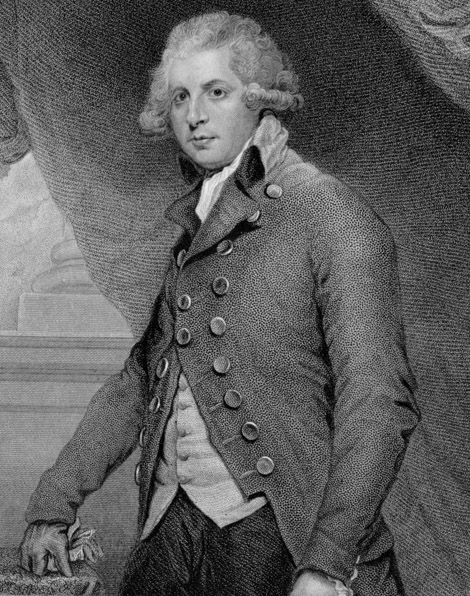
In his play The Critic, British poet and Member of Parliament Richard Brinsley Sheridan had one of his characters say, “The newspapers! Sir, they are the most villainous, licentious, abominable, infernal— Not that I ever read them! No, I make it a rule never to look into a newspaper.” As Democrats, we often feel this way about our local papers. A big part of putting our Party back in its historic position of leadership is doing our part to turn that image of the media around - or, more precisely, turning around our image in that media.

Saturday, February 26, 2011

Dance With the One That Brung Ya

My last post looked at the pitiful emerging story of a President, given a permanent (and prominent) place in the history books by the Democratic Party, who has apparently struck a deal to write off that party in an entire state. (Not that we are going quietly, Barry; just so you’re warned before the 2012 primary.) In this post, I want to talk about betrayal of a more overt and explicit sort, that of the party-switchers. This calls for more than a pained recital of the old country song that gives this post its title.

Since the November election, there has been a minor rash of defections of elected Democratic officials to the GOP. First, four members of the Alabama House of Representatives switched in November, less than a month after the election. Their defection gave the GOP a theoretically filibuster-proof supermajority in the House, that nearly came unraveled in “Bingo Bob” Riley’s “ethics” special session, when AEA leaned on the defectors hard enough that some balked at Riley’s anti-teacher legislation. Circuit judges in Marshall and Limestone Counties switched (though the Marshall County Republican Executive Committee voted a unanimous “not welcome” to the switcher there). The usual Republican media parrots all blared “TEN DEMOCRAT OFFICIALS SWITCH TO GOP” on a slow January news day. Only on reading the story did you learn that one large-county sheriff was the only one of note. I think the others were all constables or something in Covington County.

This phenomenon has been reported in the media without any real degree of historical perspective. Party switching in Alabama has been taking place for several decades, though never at any cataclysmic pace - not even today. Back in the late 1980’s, as Shelby County shifted from a reliably Democratic county (albeit of the George Wallace variety) to a Republican stronghold, Sheriff Buddy Glasgow and a couple of other local officials crossed into the Vale of Evil. Public Service Commission President Jim Sullivan, first appointed as a Democrat in 1983, switched to the GOP after his election to a second full term as a Democrat in 1988. Fob James made the switch to win in the national GOP surge of 1994, after his 1978 election as a Democrat, and 1986 and 1990 runs in the Democratic primary. Secretary of State Jim Bennett made the jump in 1995, after being one of a handful of victorious Democrats on the state ticket that year. Of course, that was after Richard Shelby waited until the day after the 1994 election (presumably to see which party would control the Senate) to announce his switch. Members of the Legislature have also made the switch before this year. The Alcibiades moment of Senator Larry Dixon was so far back in antiquity, he may have actually known Alcibiades. George Wallace, Jr., (who is actually George Wallace III) became a Republican between his unsuccessful run for Lieutenant Governor as a Democrat in 1994, and his successful run for the PSC as a Republican in 1998. And of course, we all remember Dr. Parker ... what was his last name again? The patient-killing guy from Huntsville?

Most of these defections have two things in common. One, they are always made in the name of conservative values which the defector suddenly realizes are a Republican monopoly. “I didn’t leave the Democratic Party; the Democratic Party left me ...” Secondly, and substantially eroding the credibility of the first, they come on the heels of some perceived erosion of Democratic electability at the national, state or local level. The point here, and it bears reminding a forgetful media, is that an environment that triggers switches is not likely to remain permanent. A few people switching does not call for the obituary of the Democratic Party.

This switch is frequently not the smartest political move. For one thing, it is often unnecessary, and based on an overreaction to a one-time trend. 1994’s national Democratic meltdown became Alabama’s 1998 Democratic surge, on the coattails of Don Siegelman, and Wallace and Bennett were barely able to scrape by with their wins. But in what is even more important to the unprincipled opportunist, it’s frequently not availing as a career-saving move.

Richard Shelby pulled it off, but he did so from a hard-to-copy position. He was already sitting on a mountain of cash after his 1992 re-election, and had four years to pile on more before facing the Quixotic opposition of Clayton Suddith, who mortgaged his pickup to pay his qualifying fee. Sullivan likewise enjoyed a long post-betrayal career, but PSC presidents have an historic tradition of seriously out-fundraising their opponents.

More typical is the experience of Sheriff Glasgow. Running in the Republican Primary in 1990, he was soundly beaten by his former chief deputy. And you don’t have to have the political memory of a Publius to remember what happened to the former Congressman Griffith in the 2010 Republican Primary. He was trounced so badly that he failed, for unspecified speculative reasons that can only bring a chuckle here, to even make it to the podium on primary night to make a concession speech.

So what are we to do about this phenomenon? There is no shortage of Democrats who say “good riddance,” and who wish that even more moderate or conservative officeholders would defect. Many of those are the same people who claim to be happy when imperfect Democrats like Congressman Bobby Bright go down to defeat in general elections. I understand and appreciate the sentiment, but I don’t necessarily share it. It’s still embarrassing to have officeholders defect. It gives the GOP media something to whoop about, and you have to spend a lot of time and money going after them in the next election. And however annoyingly conservative these switchers were, those in legislatures did formerly vote to organize their legislative bodies as Democrats. Our caucus in the U.S. House may be more pure and holy than it was in 2009, but it’s also in the minority. (As I have made clear elsewhere, I blame a White House that utterly failed at selling its anemic health care, economic, and financial reform policies, for failing to give these Blue Dogs necessary political cover.)

It’s incumbent on the Party leadership at every level, both in the Party proper, and among the caucus leadership in legislative bodies, to help remind the entire office-holding Party of the likely futility of switching. This is not something you want to do with a high degree of visibility, and even a private, but overt “conversation” might be over the top. But the occasional joke at a banquet about “One-Term Griffith” will not only bring a laugh, it will serve as a reminder. Post-switch retaliation, such as letters to the editor (and the occasional lawsuit!) demanding refunds of contributions are less effective, though a few switchers have been shamed into refunding Democratic contributions.
 
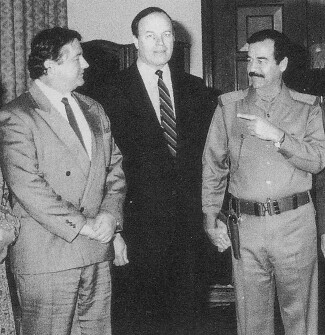
What may be more fun, and more effective in the long run, is to dig around on your hard drives (or, if you are Old School, your boxes of photo prints) for photographs of your favorite former Democrat, before his switch, smiling alongside some group that is bound to be anathema to his new Republican friends. I show here, a modest example.

For those who must rant to the editor, and I certainly see the therapeutic benefit, I leave you with one suggestion. There is a party-switcher about whom we should brag on such occasions, however futile his inflexible conservatism reveals an S.E.C. diploma to be. Former U.S. Senator Phil Gramm of Texas was elected to the U.S. House as a Democrat in 1978, and re-elected in 1980 and 1982. Shortly after his 1982 re-election, he chose to switch. However, he didn’t just change the animal decorating his House office. He resigned from the U.S. House of Representatives, stating that the voters of his district had voted him back in a few weeks earlier as a Democrat, and they deserved the opportunity to vote him out if they disapproved of his switch - without having to wait two years. A rare moment of GOP integrity. Of course, those who do write the editor should recount Gramm’s example, and call on the latest Benedict Arnold to emulate it.

Saturday, February 5, 2011

None Dare Call It Treason


No, I have not gone over to the cause of one of the all-time loopiest books ever written, which includes claims that Eisenhower was a Communist sympathizer, not to mention Kennedy and Johnson.

But the title of John Stormer’s book naturally leapt to mind when someone shared a bit of news this week that emerged from the always-interesting pen of Bob Martin at The Montgomery Independent. The lead item in Martin’s column was itself conspicuously absent from the pages of the state’s “mainstream media,” and will probably remain so until they can’t ignore it any longer. Martin cites a source who told him that outgoing Governor “Bingo Bob” Riley offered incoming Attorney General Luther Strange $2,000,000 in campaign financing for a 2014 GOP gubernatorial primary challenge against Governor Robert Bentley. Strange’s end of the quid pro quo would be to “protect” Riley’s two children (and from what would they need protection from the state’s lead prosecutor, pray tell?), and to divert state legal work to them when possible.

Unfortunately, that story wasn’t the shocker. Anyone with two brain cells and access to a media outlet not controlled by Si Newhouse knows what a crook Bob Riley is. The real alarm bells sounded as I read the second half of Martin’s column. In that, he revealed a plausible explanation for certain conduct of the Obama administration.

In other posts, I have taken the Obama administration to task for what I, perhaps with too much naïveté, presumed was inattention on Obama’s part to the continuing partisan reign of terror of Bush-appointed U.S. Attorney Leura Canary in the Middle District of Alabama. Martin cites a source who provides a far more troubling explanation. According to Martin’s source, Obama cut a deal with Senator Jeff Sessions, under which Sessions would not actively oppose Obama’s nominees to the U.S. Supreme Court, in exchange for which Obama would not remove Canary from her perch - a position from which she has masterminded the ethically-riddled persecution of Democrats from Don Siegelman to the bingo defendants.

(Blink.)

Yes, if Martin’s source is right, Obama wasn’t asleep at the switch. He and his politically inept White House actually knowingly cut a deal with one of the most rancid members of the United States Senate, and Obama’s part of the deal was to throw the Alabama Democratic Party under the bus. Obama cut this deal at a time when the Democratic Party had a 60-vote filibuster-proof majority in the Senate; Sessions should have been an ignorable, if odious, afterthought. This deal is just more proof of the political ineptitude of Obama and his Camelot-manqué staff.

Let’s put Obama’s action in perspective. Momentarily leaving aside the burning question of justice for Don Siegelman, leaving Canary at her post had the near-certain effect of further GOP politically motivated prosecutions in Alabama. Prosecutions that directly resulted in Republican political gains last November. Sessions knew that, and so did Obama. As a proximate and foreseeable result of Obama’s action, we not only have a Republican governor, we have a Republican legislature. As a proximate and foreseeable result of Obama’s action, African-American chairs of the House Ways and Means General Fund Committee and the Senate Education Finance Committee lost their positions to white Republicans. As a proximate and foreseeable result of Obama’s action, the national Party lost seats in the Second and Fifth Congressional Districts that were won by Democrats in 2008.

If Obama, who seems to know no fight from which he will not run, was determined to make a deal with Sessions, there were better ways to do it. Build the Air Force tanker in Mobile (oh, wait, the competitor for that is Boeing, based in Obama’s Chicago). Find some policy issue on which to throw him a bone, just don’t sell out the Democratic Party in an entire state.

John Stormer borrowed his book title from a line by Sir John Harington, one of the more interesting figures of the infinitely interesting Elizabethan era. A soldier, courtier, poet, and essayist, he also gained fame by being the inventor of the modern flush toilet (hence the term, “john”). Harington’s epigram has the ring of truth:

“Treason doth never prosper: what’s the reason?
Why, if it prosper, none dare call it treason.”

Perhaps. Even in the case of George W. Bush, many supposedly progressive Democratic voices in Washington flinched from the use of words like “idiot;” a word I would require considerable self-restraint not to use to Obama’s face after Martin’s revelation. Obama’s infantile political crew settled on Charlotte as the site for the 2012 Democratic Convention - the only contender with no unionized hotel staffs in the city - and organized labor is described as “fuming.” He appears more likely than ever to have some opposition in the 2012 primaries. He doesn’t need any embarrassing headlines, and we have something in Alabama called the “Radney Rule.” I’m just sayin’, Mr. President.

Postlude: For those of you who live in the Scottsboros, Andalusias, and Tuscumbias of the state, write the editor or publisher of your local paper, and suggest they contact The Montgomery Independent and start carrying Bob Martin’s column and other items. Yes, they frequently bust Democratic chops, when deserved. But when the deserving always get a chop-busting, Democrats win in the long run.