
Lasciate ogne speranza, voi ch’intrate.
Queste parole di colore oscuro
vid’io scritte al sommo d’una porta ...
D. Alighieri, Il Inferno, III, 9-11.
Years from now, when the issues debated with such fury and intensity at Saturday’s meeting of the State Democratic Executive Committee are forgotten by all but those most immediately touched by them, the one thing that will be recalled by those in attendance will be the dangerously stifling heat in the basement meeting room of the Madison Hotel in Montgomery. Combine outside temperatures in the upper 90’s, the humidity and body heat of over 350 attendees, and a broken-down air conditioning system, and you feel fortunate that no one succumbed to the heat. My earliest  memory of that same room is dancing in it at the YMCA Youth Legislature. I am not sure exactly when the Madison was built, but suffice it to say, the dance tunes at the time of my first visit weren’t from Saturday Night Fever, which hadn’t been filmed yet. The only argument I can make for not demolishing the Madison, is that citizens of the late 21st Century may want to see what passed for avant-garde in the mid-20th. But the Madison will never be Montgomery’s version of Mobile’s Battle House.
 memory of that same room is dancing in it at the YMCA Youth Legislature. I am not sure exactly when the Madison was built, but suffice it to say, the dance tunes at the time of my first visit weren’t from Saturday Night Fever, which hadn’t been filmed yet. The only argument I can make for not demolishing the Madison, is that citizens of the late 21st Century may want to see what passed for avant-garde in the mid-20th. But the Madison will never be Montgomery’s version of Mobile’s Battle House.
The heat, however, was not the only reason I was grateful for the absence of television cameras and their attendant Frezzi lights. The Republicans would have loved to have had those proceedings on the evening news. Not as much for what was done - the arcana of bylaws changes are not the stuff of which television news is made - but for the prospect that the Republicans would have used the visuals to reinforce their übermessage to white, working-class Alabamians that the Democratic Party is dominated by black “bosses” whose sole objective is to rig the political, legal and economic systems of the state to the benefit of their constituency, and to the detriment of whites. Simply put, the success of the Republican Party in Alabama is dependent on this racist message gaining traction among white working-class voters whose actual economic interests are much better represented by Democratic positions on progressive taxation, education, health, and a host of other issues.
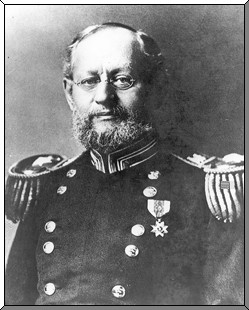 Reports of a 3.1 magnitude earthquake epicentered in Arlington, Virginia during Saturday’s meeting were later confirmed to be Brig. Gen. Henry Martyn Robert, spinning in his grave at Arlington National Cemetery. More than for his service in the Pig War and the Civil War, Gen. Robert is known for being the author of the first several editions of his Pocket Manual of Rules of Order for Deliberative Assemblies - better known as Robert’s Rules of Order. If none of the precepts of that classic work were exactly broken, a handful were badly bent. I am of two minds about that. With one possible, minor exception, I doubt that any of the parliamentary sleight of hand changed any result of what would have been obtained with more lengthy roll call or standing tally votes. There were legitimate reasons to conclude the meeting as rapidly as possible. The heat in that room was truly at a hazardous level. Prolonging it for no different result would have posed a greater risk to the portly, infirm or elderly there. At least two centenarians - Fuller Kimbrell, finance director for Big Jim Folsom, and longtime DNC member Ruth Johnson Owens of Birmingham - were present to be recognized at the meeting. Speeding the meeting was more than a matter of convenience or political advantage.
That said, there was visible (and audible) discontent about some of the actions of the Chair. At least one call for division of the house was “overlooked,” and other rulings of the Chair were debatable. Had any of these actions changed a result, or had the exigent circumstance of the extreme heat not been present, I would be critical of the short-circuiting. I do not expect that they will be repeated at future meetings, where the air conditioning will hopefully be functional. Further, those persons who were complaining about procedural issues often did not timely or properly raise their objections, and seemed unfamiliar with the provisions of Robert’s work, as well as the Party Bylaws. If we are going to have vigorously contested matters before the Committee - and Saturday shows that is likely - we would be best served if the parties on both sides of the divides took time to bone up on their parliamentary procedure. The rules may appear overly formal, and boring, and old-fashioned (all of which they are), but they do tend to ensure a fair proceeding for both sides, and they do help keep tempers in check. Most importantly, they make it less likely that someone will leave the meeting disgruntled enough to be discouraged. I also note, for what it’s worth, that at least two members of the Legislature, Sen. Vivian Figures of Mobile and Rep. Patricia Todd of Birmingham (both of whom are high on my list of favorite legislators), were present in their capacities as SDEC members. Both were generally opposed to the merits of the positions taken, both have solid credentials as opponents of Vice Chair Joe Reed (who was pushing the disputed positions), and both are necessarily familiar with parliamentary procedure as legislators. Yet neither chose to prolong the meeting with points of order and other maneuvers they clearly know how to make.
[Oops! Correction in the preceding paragraph: A kind reader has brought to my attention that the SDEC Bylaws provide that its authority for parliamentary procedure is not Robert’s, but the Rules of the Alabama House of Representatives. I am not sure when that changed, but based on my familiarity with both, I frankly think Robert’s would be the better fit. It’s still worth mastering, as it could be pointed to regarding an issue on which the House rules are silent.]
The matters actually taken up in this inferno largely pertained to the structure and governance of the SDEC itself. Other than the uncontroversial filling of some vacant nominations, the matters addressed at the meeting were:
- A Bylaws amendment to move the election of officers from January after the SDEC elections in the primary, to August. This proposal (which passed) shortened the incumbents’ terms, and elections were held immediately after it passed.
- A Bylaws amendment to increase black representation on the SDEC, so that its membership would reflect the percentage of black voters among those voting Democratic (passed).
- A Bylaws amendment to make the chair of the Alabama Federation of Democratic Women an automatically-elected member of the SDEC Executive Board (tabled).
- An appeal of a subcommittee ruling stripping Kenya Lavender Marshall of a Jefferson County Circuit Judgeship nomination (deferred).
The move of officer elections from January to August was really little more than a return to the historic practice of the SDEC. For many years, the SDEC organized itself immediately after the primary (since SDEC elections are won by the primary leader; they are not subject to a runoff). There are accusations circling that this change was designed to protect the current officers from the Committee’s wrath after some speculative Democratic massacre in November. Suffice it to say that some of these so-called Democrats sound like they would like nothing better than to see the Party suffer an electoral Götterdämmerung, since the primary voters had the audacity to reject their chosen messiah. Regardless of their motives, this is not a likely explanation for the move. First, to the extent there are factional alignments in the SDEC, there aren’t that many “swing” votes that would change, even if such an unlikely catastrophe occurred. Perhaps more important is the word I have heard for months, that Joe Turnham wants to leave the Chair after the 2010 elections anyway. In any event, I am uncertain that the Committee’s action in giving the change immediate effect (by electing new officers Saturday, right after the change was adopted) was legal. The SDEC has numerous “public electoral functions,” Fortune v. Kings County Democratic County Comm., 598 F. Supp. 761, 765 (E.D. N.Y. 1984), so its Bylaws are a “standard, practice, or procedure with respect to voting,” within the ambit of § 5 of the Voting Rights Act of 1965. Unless and until this amendment is precleared, it cannot be legally implemented. The election of officers was therefore legally void.
There is no doubt that the base structure of the SDEC, based on one popularly elected member of each gender from each State House district, underrepresents black voters within the Democratic Party. The equal representation of State House and Congressional districts, which did obtain substantial intra-party racial parity in the era of one-party politics, does not do so in a time when many such districts have negligible Democratic votes. For those seats selected by Congressional districts, the 6th, which is 11% black and in which McCain got 74% of the vote, has the same representation as the racially-diverse 3rd, which is 32% black and in which McCain only got 56% of the vote, and the black-majority 6th, which is 63% black, and in which Obama got 71% of the vote. (The Obama vote was probably much lower in certain overwhelmingly white State House districts, but such data is more onerous to derive.) There has been a mechanism in place to compensate for this, adjusting membership to reflect the Democratic portion of the gubernatorial vote, which has an attenuated racially equalizing effect. The amendment substituted presidential results for gubernatorial. Opponents of the change pointed out, with some merit, that racial polarization in the Obama elections in 2008 would result in overcompensation for the “white bias” inherent in the geographical seats. This amendment was pushed by Dr. Joe Reed, and was largely opposed by his critics as a power play on his part. There are numerous problems with the proposal that was adopted, perhaps none so serious as the difficulty in determining what the “Democratic vote” was in the 2008 election. I hope this amendment is revisited, and I would personally prefer some definition of “Democratic vote” that includes the aggregate vote, so that overcompensation doesn’t occur. Like the term change, this amendment will require preclearance, and there may be comments opposing it when it is submitted.
The only proposed amendment that was not approved was the one giving the AFDW President (currently Limestone County Democratic Chair Pam Wallace) an ex officio seat on the SDEC Executive Board. That amendment was tabled on the motion of former Secretary of State Nancy Worley, who currently sits as First Vice Chair of the SDEC. She is elected to that post, pursuant to the Bylaws, by the SDEC membership as a whole, and that position is required to be held by a person of different gender than the Chair. The AFDW had sought to have its membership afforded the same privilege as the minority caucus of the SDEC, which alone elects the Vice Chair for Minority Affairs. While one opponent of this amendment pointed out to me that it would provide for the possibility of two “automatic” female members of the Executive Board, I don’t find that persuasive. There is no proviso for eliminating the Vice Chair for Minority Affairs when (hopefully someday) we have a black Chair. This organization does incredible work for the Party, and its efforts clearly merit a seat at the table. While Worley was correct to point out that this change could await a needed comprehensive review of the Bylaws and the SDEC structure, I don’t see the harm in putting this provision into effect until then. (Disclosure: my cousin is married to an AFDW officer. As he was at the meeting, I gave him my sympathy on having to listen to the venting about this vote for the lengthy ride home.)
The matter regarding Kenya Lavender Marshall (granddaughter of Birmingham civil rights pioneer Simmie Lavender, who died in 2007 and whom it was my pleasure to meet before then) took by far the most time on the agenda. Marshall is a Birmingham lawyer who defeated Riley appointee Nikki Still in the July 13 runoff for a Birmingham judgeship; there is no GOP nominee for the position. I had the chance to speak briefly with her lawyer, Emory Anthony, after the meeting. From that chat, and his remarks to the Committee, some interesting facts came out. The basis for the subcommittee’s stripping Marshall of the nomination was her “interim suspension” as a lawyer by the Alabama Bar Association. This, in turn, was based on an accusation that she had collected something over $30,000 for a client in an automobile accident case, and gone shopping with the proceeds, rather than pay it to the client. The Bar has apparently been investigating this client’s complaint since March. Marshall’s license was suspended, without notice or a hearing, on August 5.
The problem with the Bar’s action seems not to be its merits, but its timing. According to one lawyer I spoke to after the meeting, who has represented other lawyers before the Bar, the Bar can only do an “interim suspension” without a prior hearing when the Bar has reason to believe the lawyer is doing something right then to damage a client, like wiring the client’s money to a Caymans bank. Not months ago, but right then. According to the claims of both sides at the meeting, the misappropriation, if it occurred, took place before March. According to that lawyer, the lack of an “emergency” like that renders the Bar’s “interim suspension” void for a “lack of subject matter jurisdiction.” He thinks the Supreme Court would rule that way if Marshall asked for a “writ of mandamus.” If it’s void, she is clearly eligible to be elected judge, and should be on the ballot. Whether the SDEC has the legal power to rule that it’s void is a question for the courts, but the argument makes sense to me. It seems the matter is headed for the appeals courts, no matter what happens.
A bigger “timing” issue comes from the Bar’s delay of its “interim suspension” until right before the “drop dead” date for replacing a nominee, which Party ED Jim Spearman says is August 27. If they have had this case since March, why wait until this deadline to act? For that matter, why not act before the primary or runoff? I was seated next to a Marshall supporter, who told me Marshall’s supporters believe the timing was designed to deprive Marshall of time to get a Bar hearing before the “drop dead” date for replacing a nominee. This, they believe, was designed to leave the Democrats without a nominee, which would open the door for a write-in Republican more amenable to the “Big Mule” Birmingham law firms. At Dr. Reed’s suggestion, the Committee postponed acting on the matter until a called meeting on August 26, to see if Marshall can get her license reinstated. If she does, the presumption is that she remains the nominee. If not, the Committee would name a replacement on that date.
The whole thing would make good fodder for a TV legal drama. On the one hand, if the charges are true, Marshall would clearly not be judicial material. But the timing is not the only thing that raises issues about those charges. For one thing, although the charges have been made for months, the Jefferson County DA has not charged Marshall with anything. That in itself makes me wonder if there’s really evidence of wrongdoing. You try embezzling $30,000 and see if you haven’t been arrested six months after it’s discovered. But what really makes me wonder is this: if I were a lawyer who’d gotten caught stealing $30,000, and knew (or even worried) the authorities could prove it, would I spend my remaining days of freedom (and as a non-disbarred lawyer) spending day and night campaigning for a judgeship, knowing I would probably be in jail six months into it? Would I spend tons of money and days of fighting, to keep the nomination for it? Hell, no. I’d be setting the record for the most consecutive hours at the Flora-Bama until the Sheriff came for me. Marshall isn’t acting like a woman who thinks there’s any proof of wrongdoing. I am betting the ten days left won’t be enough time for her to overturn the Bar, and keep the nomination. But if I were a gambler, I’d bet she’s still a licensed lawyer a year from now. And that ticked-off Birmingham voters are going to throw some Judge out to make room for her in 2012. Stay tuned.
All in all, one of the most interesting SDEC meetings in years. And it showed that the Alabama Constitution of 1901, for all its racist Jim Crow provisions, Big Mule accommodations, and structural inefficiencies, got one thing right. It provided for the Legislature to meet in Montgomery - in January.
There is no doubt that the base structure of the SDEC, based on one popularly elected member of each gender from each State House district, underrepresents black voters within the Democratic Party. The equal representation of State House and Congressional districts, which did obtain substantial intra-party racial parity in the era of one-party politics, does not do so in a time when many such districts have negligible Democratic votes. For those seats selected by Congressional districts, the 6th, which is 11% black and in which McCain got 74% of the vote, has the same representation as the racially-diverse 3rd, which is 32% black and in which McCain only got 56% of the vote, and the black-majority 6th, which is 63% black, and in which Obama got 71% of the vote. (The Obama vote was probably much lower in certain overwhelmingly white State House districts, but such data is more onerous to derive.) There has been a mechanism in place to
 compensate for this, adjusting membership to reflect the Democratic portion of the gubernatorial vote, which has an attenuated racially equalizing effect. The amendment substituted presidential results for gubernatorial. Opponents of the change pointed out, with some merit, that racial polarization in the Obama elections in 2008 would result in overcompensation for the “white bias” inherent in the geographical seats. This amendment was pushed by Dr. Joe Reed, and was largely opposed by his critics as a power play on his part. There are numerous problems with the proposal that was adopted, perhaps none so serious as the difficulty in determining what the “Democratic vote” was in the 2008 election. I hope this amendment is revisited, and I would personally prefer some definition of “Democratic vote” that includes the aggregate vote, so that overcompensation doesn’t occur. Like the term change, this amendment will require preclearance, and there may be comments opposing it when it is submitted.
The only proposed amendment that was not approved was the one giving the AFDW President (currently Limestone County Democratic Chair Pam Wallace) an ex officio seat on the SDEC Executive Board. That amendment was tabled on the motion of former Secretary of State Nancy Worley, who currently sits as First Vice Chair of the SDEC. She is elected to that post, pursuant to the Bylaws, by the SDEC membership as a whole, and that position is required to be held by a person of different gender than the Chair. The AFDW had sought to have its membership afforded the same privilege as the minority caucus of the SDEC, which alone elects the Vice Chair for Minority Affairs. While one opponent of this amendment pointed out to me that it would provide for the possibility of two “automatic” female members of the Executive Board, I don’t
 find that persuasive. There is no proviso for eliminating the Vice Chair for Minority Affairs when (hopefully someday) we have a black Chair. This organization does incredible work for the Party, and its efforts clearly merit a seat at the table. While Worley was correct to point out that this change could await a needed comprehensive review of the Bylaws and the SDEC structure, I don’t see the harm in putting this provision into effect until then. (Disclosure: my cousin is married to an AFDW officer. As he was at the meeting, I gave him my sympathy on having to listen to the venting about this vote for the lengthy ride home.)
The matter regarding Kenya Lavender Marshall (granddaughter of Birmingham civil rights pioneer Simmie Lavender, who died in 2007 and whom it was my pleasure to meet before then) took by far the most time on the agenda. Marshall is a Birmingham lawyer who defeated Riley appointee Nikki Still in the July 13 runoff for a Birmingham judgeship; there is no GOP nominee for the position. I had the chance to speak briefly with her lawyer, Emory Anthony, after the meeting. From that chat, and his remarks to the Committee, some interesting facts came out. The basis for the subcommittee’s stripping Marshall of the nomination was her “interim suspension” as a lawyer by the Alabama Bar Association. This, in turn, was based on an accusation that she had collected something over $30,000 for a client in an automobile accident case, and gone shopping with the proceeds, rather than pay it to the client. The Bar has apparently been investigating this client’s complaint since March. Marshall’s license was suspended, without notice or a hearing, on August 5.
The problem with the Bar’s action seems not to be its merits, but its timing. According to one lawyer I spoke to after the meeting, who has represented other lawyers before the Bar, the Bar can only do an “interim suspension” without a prior hearing when the Bar has reason to believe the lawyer is doing something right then to damage a client, like wiring the
 client’s money to a Caymans bank. Not months ago, but right then. According to the claims of both sides at the meeting, the misappropriation, if it occurred, took place before March. According to that lawyer, the lack of an “emergency” like that renders the Bar’s “interim suspension” void for a “lack of subject matter jurisdiction.” He thinks the Supreme Court would rule that way if Marshall asked for a “writ of mandamus.” If it’s void, she is clearly eligible to be elected judge, and should be on the ballot. Whether the SDEC has the legal power to rule that it’s void is a question for the courts, but the argument makes sense to me. It seems the matter is headed for the appeals courts, no matter what happens.
A bigger “timing” issue comes from the Bar’s delay of its “interim suspension” until right before the “drop dead” date for replacing a nominee, which Party ED Jim Spearman says is August 27. If they have had this case since March, why wait until this deadline to act? For that matter, why not act before the primary or runoff? I was seated next to a Marshall supporter, who told me Marshall’s supporters believe the timing was designed to deprive Marshall of time to get a Bar hearing before the “drop dead” date for replacing a nominee. This, they believe, was designed to leave the Democrats without a nominee, which would open the door for a write-in Republican more amenable to the “Big Mule” Birmingham law firms. At Dr. Reed’s suggestion, the Committee postponed acting on the matter until a called meeting on August 26, to see if Marshall can get her license reinstated. If she does, the presumption is that she remains the nominee. If not, the Committee would name a replacement on that date.
The whole thing would make good fodder for a TV legal drama. On the one hand, if the charges are true, Marshall would clearly not be judicial material. But the timing is not the only thing that raises issues about those charges. For one thing, although the charges have been made for months, the Jefferson County DA has not charged Marshall with anything. That in itself makes me wonder if there’s really evidence of wrongdoing. You try embezzling $30,000 and see if you haven’t been arrested six months after it’s discovered. But what really makes me wonder is this: if I were a lawyer who’d gotten caught stealing $30,000, and knew (or even worried) the authorities could prove it, would I spend my remaining days of freedom (and as a non-disbarred lawyer) spending day and night campaigning for a judgeship, knowing I would probably be in jail six months into it? Would I spend tons of money and days of fighting, to keep the nomination for it? Hell, no. I’d be setting the record for the most consecutive hours at the Flora-Bama until the Sheriff came for me. Marshall isn’t acting like a woman who thinks there’s any proof of wrongdoing. I am betting the ten days left won’t be enough time for her to overturn the Bar, and keep the nomination. But if I were a gambler, I’d bet she’s still a licensed lawyer a year from now. And that ticked-off Birmingham voters are going to throw some Judge out to make room
for her in 2012. Stay tuned.All in all, one of the most interesting SDEC meetings in years. And it showed that the Alabama Constitution of 1901, for all its racist Jim Crow provisions, Big Mule accommodations, and structural inefficiencies, got one thing right. It provided for the Legislature to meet in Montgomery - in January.

